“100% human hair” tells you what an extension is made from, but it does not tell you the full quality of the product. Professional stylists should also look at cuticle condition and alignment, density through the lengths, processing, consistency, and how the hair performs after washing, styling, and maintenance.
What Does “100% Human Hair” Actually Mean?
The term means the extension is made from real human hair rather than synthetic fiber.
What it does not automatically tell you is whether the hair is virgin, how the cuticle has been handled, how heavily the hair has been processed, how full the lengths and ends are, or how consistently the product will perform over time.
That is why two products can both be labeled “100% Human Hair” and still behave very differently behind the chair.
For stylists, the label is the starting point—not the final quality test.
Why Isn’t 100% Human Hair Enough to Judge Quality?
Professional quality becomes clearer after the hair is actually used.
Extensions may feel soft and smooth when first removed from the package, but that first impression does not tell you how they will behave after washing, blow-drying, heat styling, or several maintenance cycles.
Stylists should pay attention to manageability, tangling, dryness, density through the lengths, and whether the texture remains consistent over time.
A simple way to think about it is:
Material is the starting point. Performance is the standard.
What Should Stylists Look for in Professional Extension Hair?
Cuticle Condition and Alignment
The cuticle is the outer protective layer of the hair strand.
When the cuticle remains intact and aligned in the same direction, the surface of the hair is more consistent and unnecessary friction between strands can be reduced.
LumenFlow’s main professional extension products use cuticle-intact, cuticle-aligned hair.
Cuticle condition is not the only quality factor, but it is an important part of how extension hair behaves during washing, brushing, styling, and long-term wear.
Density Through the Lengths and Ends
Do not judge extension hair only by how full it feels near the top.
Stylists should also look through the mid-lengths and ends. If the density drops too quickly, the finished installation may require more hair or more cutting and blending to achieve the desired result.
This becomes especially noticeable with longer extensions, where weak or thin ends can affect the overall shape of the finished service.
End density should be considered alongside the rest of the hair’s quality—not used as a stand-alone label.
Processing and Color Performance
Processing can influence how extension hair behaves after it leaves the package.
Stylists should pay attention to how the hair responds to washing, drying, styling, and color adjustments rather than judging quality only by initial softness or shine.
LumenFlow extension hair can be toned or dyed darker when needed, but it should not be bleached or lightened.
Starting with the closest available shade and making controlled adjustments is generally a better approach than relying on aggressive chemical correction later.
Consistency Across Packs and Repeat Orders
For salon professionals, consistency is part of quality.
A stylist should be able to reorder the same shade, length, or extension method with confidence that the color, texture, density, and overall performance will remain consistent.
Poor repeat-order consistency can create additional blending work, unexpected color differences, and a less predictable client experience.
For a salon, quality is not only about one successful installation. It is about being able to repeat that result.
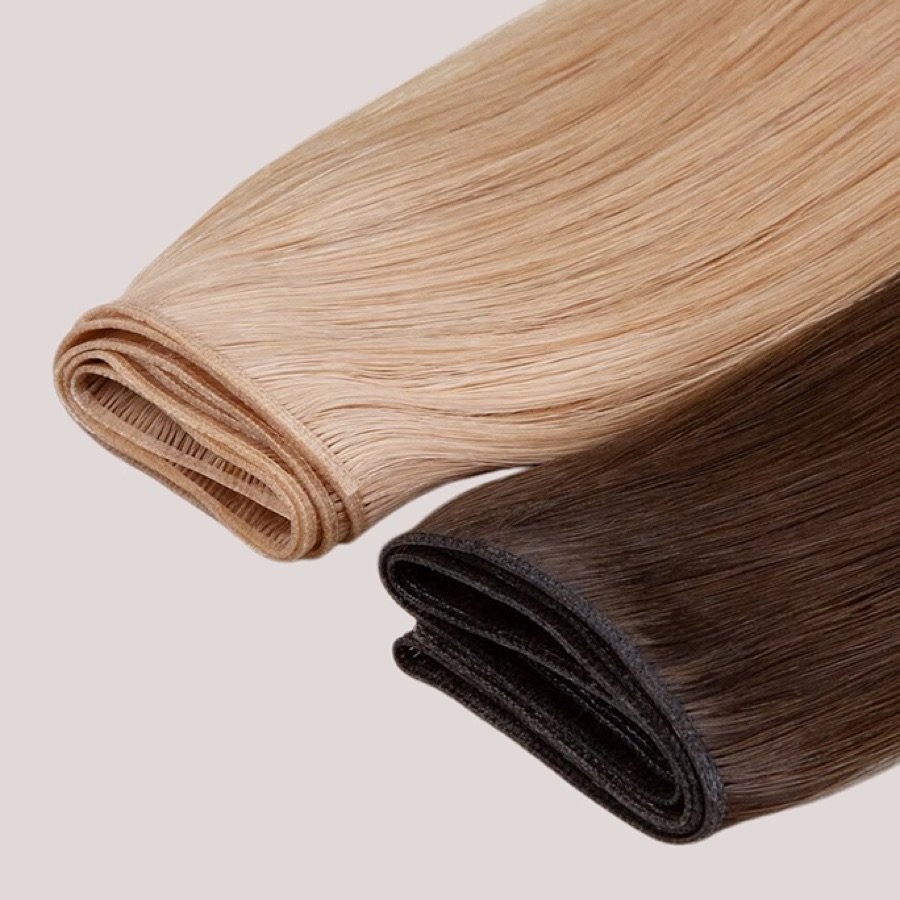
What Is the Difference Between Human Hair and Virgin Human Hair?
“100% Human Hair” describes the material category.
“Virgin Human Hair” is a more specific industry term, although definitions can vary between suppliers. For that reason, professional stylists should still evaluate the actual product rather than relying only on the wording used on the package.
LumenFlow’s main professional extension methods use 100% Virgin Human Hair.
The more useful question for a stylist is not simply whether a supplier uses the word “virgin,” but whether the hair also shows consistent cuticle condition, density, color performance, and long-term usability.
Do Hair Grades Like 8A, 10A, or 12A Prove Quality?
Not by themselves.
Hair grades such as 8A, 10A, and 12A are not based on one universal industry standard. Different suppliers may use the same grade number to describe very different products.
That makes direct comparisons difficult.
Professional stylists are better served by evaluating the actual hair: its condition, cuticle alignment, density, color consistency, washing performance, and repeat-order reliability.
A higher number on a package does not automatically mean better extension hair.
How Should Stylists Evaluate Hair Before Trusting a Supplier?
Start with the physical product.
Before installation, look at shade consistency, texture, density through the lengths, and the condition of the ends. If possible, compare more than one pack rather than judging an entire product line from a single sample.
Then observe how the hair behaves after washing and styling.
Does it remain manageable? Does the texture stay consistent? Do the lengths and ends still look healthy? Does the hair behave the way you expected after the initial inspection?
The next step is repeat ordering.
If the same product performs very differently from one order to the next, that inconsistency becomes a salon issue even if every package says “100% Human Hair.”
Stylists evaluating a supplier should think in terms of repeatable service quality, not just first-touch softness.
Why Does Hair Quality Matter to a Salon Business?
Hair quality affects more than the appearance of one installation.
Inconsistent extension hair can create additional blending time, corrective work, client complaints, and less predictable maintenance appointments.
For a professional salon, quality means greater consistency behind the chair.
When a stylist can trust how a product will perform, it becomes easier to set realistic client expectations and repeat a service with more confidence.
For an example of how hair quality and extension construction work together in a specific method, see LumenFlow’s professional Genius Weft extensions guide.
Frequently Asked Questions
Is 100% human hair always high quality?
No. It confirms that the fiber is human hair, but overall quality also depends on factors such as cuticle condition, processing, density, consistency, and real-world performance.
What is the difference between human hair and virgin human hair?
Human hair describes the material itself. Virgin human hair is a more specific industry term, but definitions vary, so stylists should still evaluate the actual product rather than relying on the label alone.
Is fuller end density a sign of better extensions?
It can be a useful quality indicator because fuller lengths and ends affect the finished density and blending of an installation. However, end density should be considered together with cuticle condition, processing, consistency, and overall performance.
Are 10A or 12A extensions always better?
No. Hair-grade numbers are not standardized across the industry, so one supplier’s 12A hair cannot automatically be assumed to be better than another supplier’s 10A hair.
How can stylists tell if extension hair is good quality?
Look beyond first-touch softness. Evaluate cuticle condition, density through the lengths, color and texture consistency, how the hair behaves after washing and styling, and whether repeat orders perform consistently.