Planning Butterfly Weft quantity for a full-head service should start with the finished result, not a fixed gram chart. Natural density matters, but so do the client’s starting length, target length, haircut, blending needs, available support, and the amount of fullness they want.
For stylists, the better question is not simply “How many grams?” but “What does this full-head service need to look like when it is finished?”
What Does “Full Head” Actually Mean?
A full-head service describes the scope of the installation. It does not automatically equal one specific amount of hair.
Two clients can both book a full-head Butterfly Weft service and need very different quantities.
One client may already have long hair and mainly want additional fullness. Another may want a major increase in length while also needing enough density through the ends to blend with a heavier natural perimeter.
That is why “full head” should be treated as a service plan, not a gram number.
Which Type of Full-Head Service Are You Planning?
Before deciding how much hair to order, define what the client is actually trying to achieve.
Volume-Focused
If the client’s natural hair is already close to the desired length, the main goal may be additional fullness.
In this case, quantity planning is more about creating the right density and balance through the areas that need volume than building a completely new length profile.
Length and Volume
When the client wants both added length and added fullness, the stylist needs enough finished density through the mid-lengths and ends to keep the result balanced.
The larger the difference between the starting length and the target length, the more important blending becomes.
Major Transformation
A major transformation may involve significantly shorter natural hair, a heavy blunt perimeter, or a substantial increase in both length and fullness.
These services usually require the most careful quantity planning because the extension hair must create enough density below the natural hair to avoid a visible disconnect.
That does not mean “use as much hair as possible.” It means the stylist needs to plan enough finished density for the transformation while staying appropriate for the client’s natural-hair support.
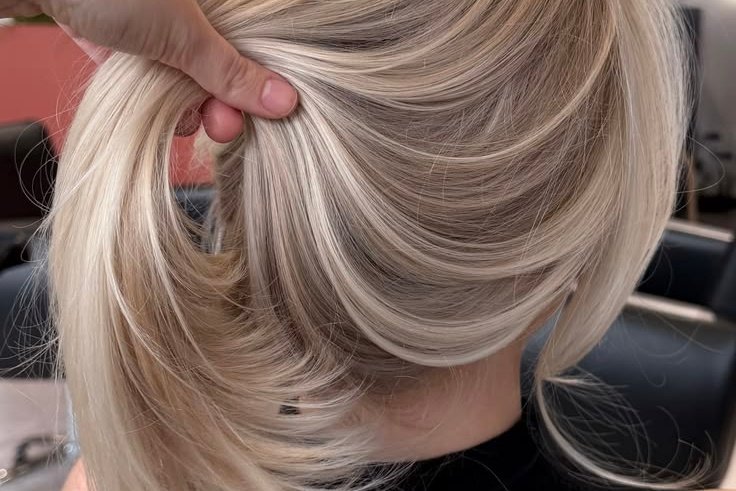
What Changes the Quantity Within Each Service Type?
Even after deciding whether the service is volume-focused, length-focused, or a larger transformation, the final quantity still needs to be customized.
Natural Hair Density
Density affects how much natural hair is available for support and concealment.
Lower-density areas may require more controlled weight and placement, while higher-density hair may need enough extension density through the lengths to blend naturally.
Density should not be used as a stand-alone gram formula.
For more detail, see LumenFlow’s guide to how natural hair density changes an extension plan.
Starting Length
Starting length changes how much blending work the service requires.
If the client is already close to the desired length, the stylist may be building mostly fullness. If the natural hair is much shorter than the target, the finished lengths need enough density to support a natural-looking transition.
Haircut and Perimeter
A soft, layered haircut usually blends differently from a dense blunt cut.
A heavier natural perimeter can require more finished extension density so the natural hair does not appear to “sit on top” of thinner extension lengths.
Quantity planning is therefore partly a blending decision.
Support and Placement
The total amount of hair is only useful if the natural hair can support it appropriately.
Placement and weight distribution matter just as much as the final gram total. A reasonable total amount can still become a poor installation if too much weight is concentrated in the wrong area.
Why Should Stylists Plan in Grams Instead of Packs?
Pack sizes are not standardized across extension brands.
One supplier may package 25g, another 50g, and another 100g. That means saying “two packs” does not tell a stylist much unless the actual weight is known.
A cleaner planning process is:
Plan the required grams first. Convert that amount into product units second.
LumenFlow Butterfly Weft is available in 50g and 100g options, with 18″, 20″, and 22″ lengths.
This allows stylists to build the quantity around the service instead of forcing the service around a pack size.
How Do You Know You Have Planned Enough Hair?
The best check is the finished shape you are trying to create.
Ask whether the planned amount can:
- support the desired fullness
- blend through the client’s natural perimeter
- carry enough density through the mid-lengths and ends
- remain appropriate for the available natural-hair support
A plan can be technically “enough” in grams but still look under-filled if the finished density does not match the client’s natural hair.
The reverse is also true: more hair is not automatically better if the client does not have the support or coverage for it.
Can You Plan Too Much Butterfly Weft Hair?
Yes.
A full-head service should not be treated as a goal to install the maximum possible quantity.
Butterfly Wefts can be stacked when additional volume is needed, but there is no universal stacking limit that fits every client.
The stylist should consider natural density, strand strength, support, concealment, placement, and the desired result before deciding how much hair to add.
How Should Quantity Be Planned During the Consultation?
Quantity planning should happen before the installation begins.
A simple sequence is:
Natural Density → Starting Length → Target Result → Haircut → Blending → Placement → Total Quantity
This keeps the decision connected to the full service instead of reducing the consultation to a single gram number.
For a broader assessment process, see LumenFlow’s hair extension consultation checklist.
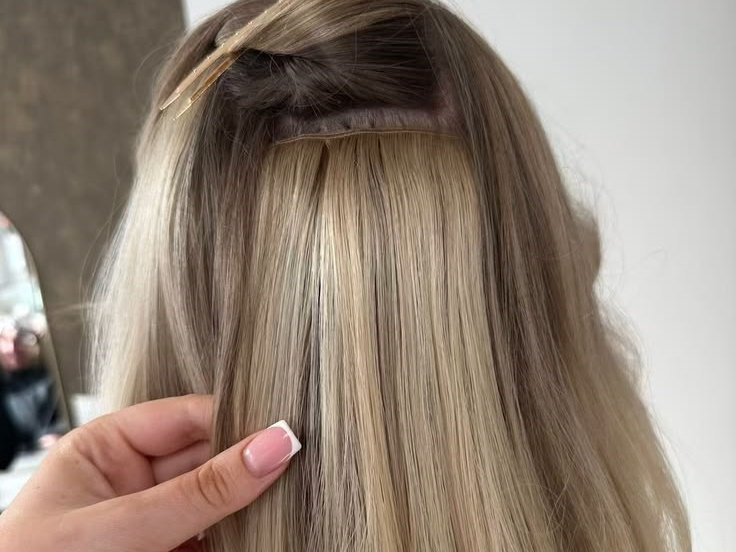
What Are the Most Common Butterfly Weft Quantity Mistakes?
Using a Universal Gram Chart
A chart may be convenient, but it cannot account for every client’s starting length, haircut, support, and desired result.
Planning From Density Alone
Natural density matters, but it is only one part of the quantity decision.
Two clients with similar density may need different amounts because their starting lengths and goals are different.
Underestimating Blending
A large length transformation can look under-filled if there is not enough finished density below the natural perimeter.
Treating Full Head as Maximum Hair
Full head describes the service area, not the maximum amount of hair that should be installed.
Frequently Asked Questions
Is 100g of Butterfly Weft enough for a full-head service?
It can be appropriate for some services, especially when the goal is focused more on fullness than a major transformation. It should not be treated as a universal full-head standard.
How many Butterfly Wefts are needed for a full head?
That depends on the weight of the individual wefts and the total quantity planned for the service. Plan in grams first, then convert the total into product units.
Does low-density hair always need less Butterfly Weft?
Not necessarily. Density affects support and concealment, but starting length, target result, haircut, placement, and blending also influence the amount.
Can Butterfly Wefts be stacked?
Yes. Multiple Butterfly Wefts can be stacked when additional volume is needed. The amount should be based on the client’s natural hair and service plan rather than a fixed maximum.
Do longer services always need more Butterfly Weft?
A larger length transformation often requires more careful finished-density planning, but there is no single gram rule based only on extension length.