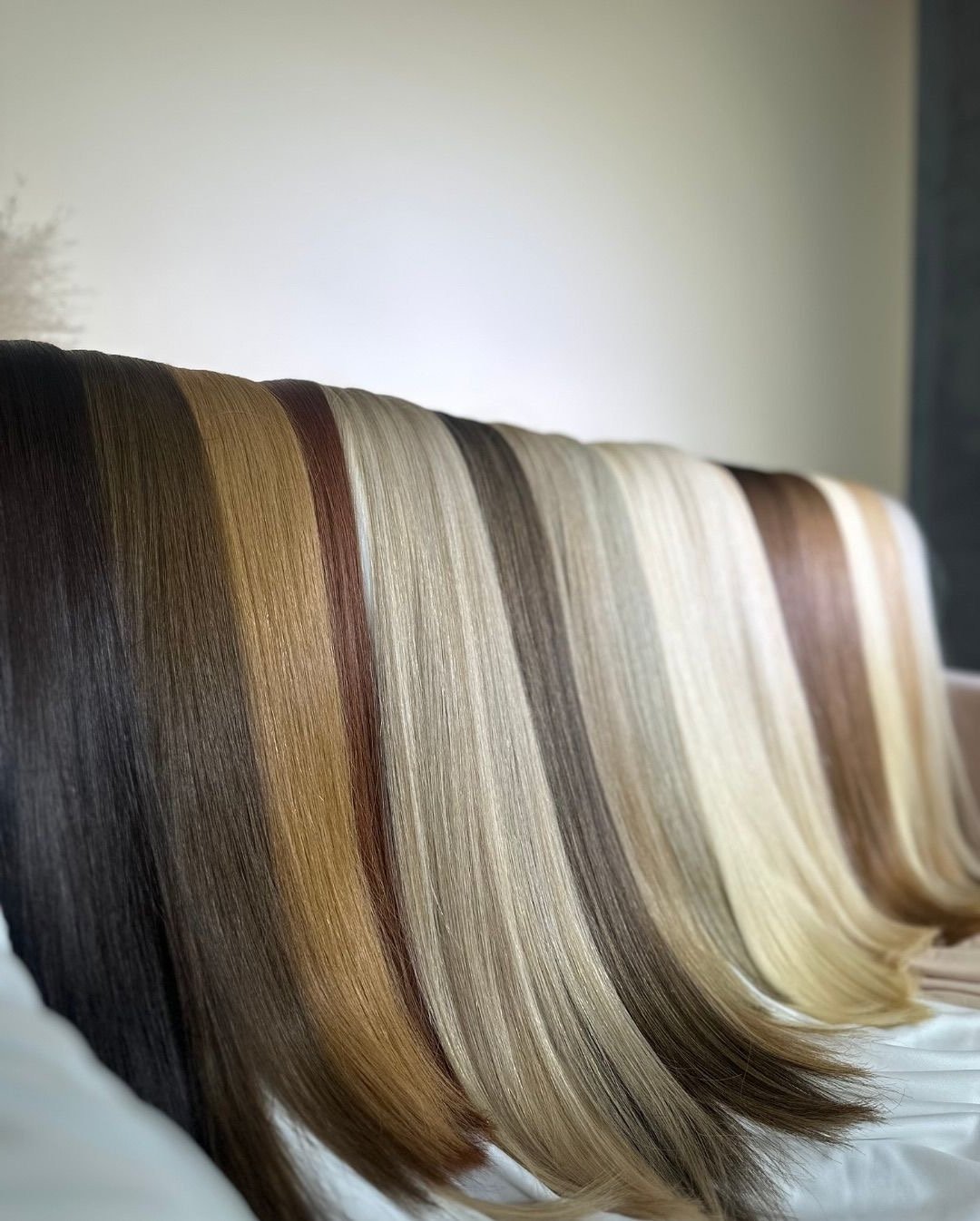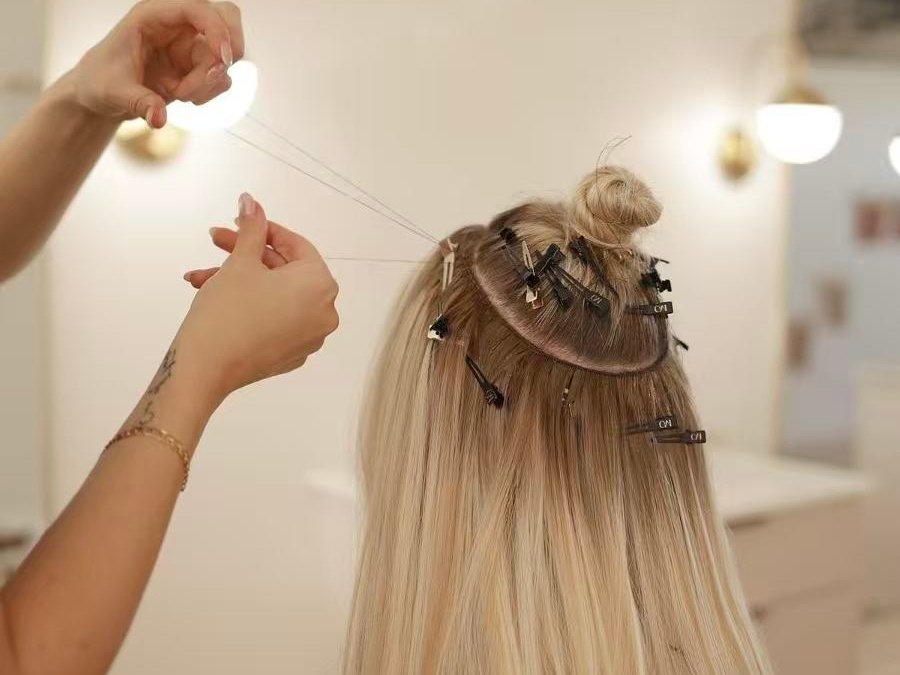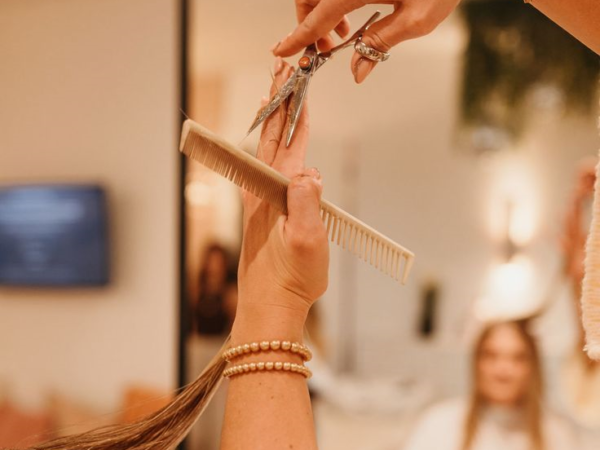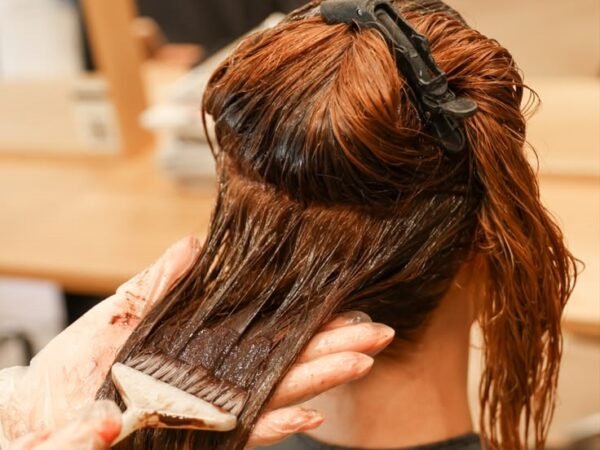
Working with fine or thin hair usually takes a little more planning. The lightest or thinnest extension is not automatically the best choice.
For a stylist, the bigger picture matters: natural density, hair condition, placement, added weight, and what the client actually wants to achieve.
There is no single method that works for every client. A good extension plan starts with the hair in front of you — then comes the method.
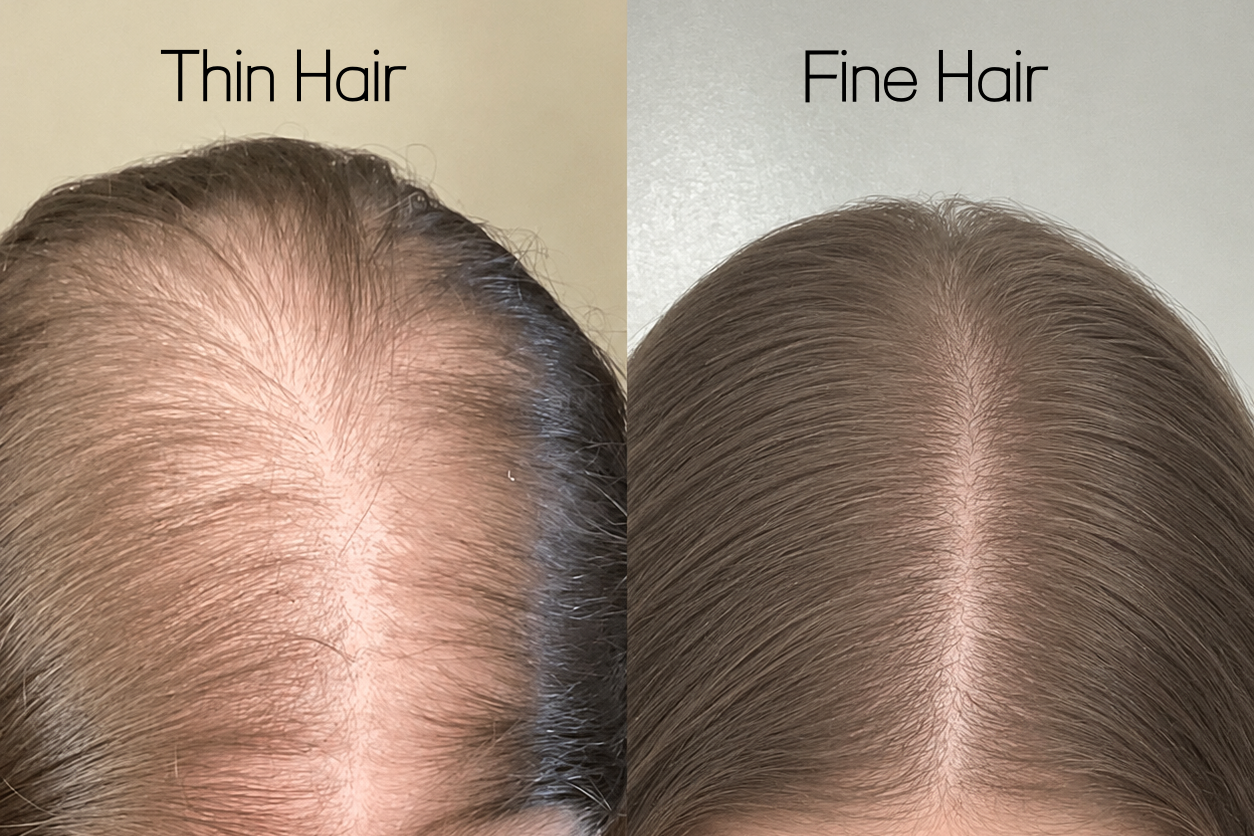
Fine Hair and Thin Hair Are Not the Same
These terms are often used together, but they describe two different things.
Thin hair refers to overall density. The individual strands may not be especially fine, but there may simply be less hair on the scalp.
Fine hair refers to the diameter of each individual strand. Someone can have very fine strands and still have plenty of hair overall.
For extension work, that difference matters.
Fine but relatively dense hair may still provide enough support for a weft. With lower-density hair, you may need less extension hair, different placement, or a more targeted method.
Start With the Natural Hair
Before deciding on a method, look at what the natural hair can realistically support.
A few things we would look at during the consultation:
- Overall density and strand strength
- Hair condition and weaker areas
- Desired length and volume
- Placement and attachment visibility
- Total added weight
- Styling and maintenance habits
More hair does not automatically create a better result. With finer hair especially, a natural-looking service often comes down to using the right amount of hair in the right areas.
1. Butterfly Weft
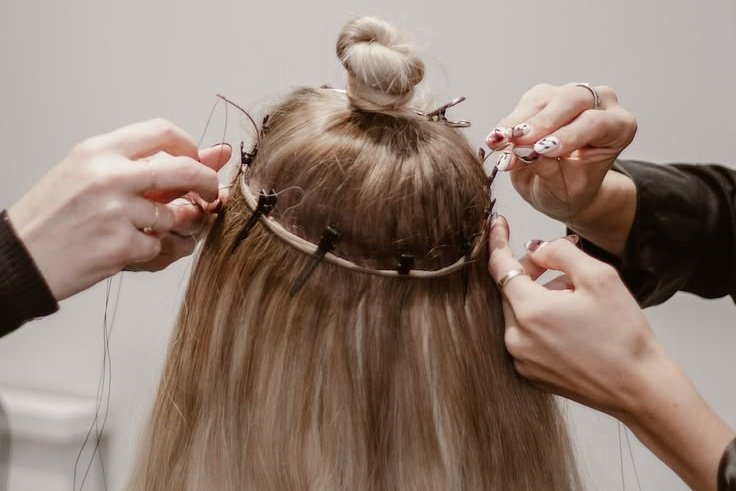
For clients with enough natural density to support a weft, Butterfly Weft offers a more streamlined approach to weft installation.
Instead of sewing the weft in place, Butterfly Weft is secured with beads only. There is no sewing, tape, glue, or heat involved in the installation.
What Makes It Different
- Beads-only installation — no sewing required
- Flat placement — designed to sit close to the head
- Streamlined service — removing the sewing step can make installation more efficient
- Flexible volume planning — the amount of hair can be adjusted around the client
Butterfly Weft can make sense when the client wants length or volume, has enough natural hair to support a weft, and prefers a flat, bead-based installation.
For very low-density or fragile hair, however, a full weft may not always be the first option.
2. Genius Weft
Genius Weft is useful when you want the flexibility of a traditional weft with a thin, customizable base.
Because the weft can be cut to the width needed for the installation, it gives the stylist more freedom to work around the client’s head shape, density, and placement plan.
Thin construction, customizable width, and a flat finish make it especially useful when you want to keep the weft area discreet without adding unnecessary bulk.
One thing to keep in mind: a thin weft does not automatically mean a lightweight installation. The final weight still depends on how much hair you use and how that weight is distributed.
3. K-Tip Extensions
Sometimes a full weft is not what the client needs.
K-Tips let you work strand by strand, giving you more control over exactly where additional hair is placed.
This can be especially helpful when density is uneven, only certain areas need more fullness, or you want to work around lower-density sections.
Instead of building one continuous section, individual bonds can be placed where they are actually needed. That makes K-Tips useful for more detailed, customized service plans.
4. Tape-In Extensions
Tape-Ins are another option when the client has enough natural hair to support and conceal a flat attachment.
They are relatively quick to apply and can create a clean, discreet result when placed correctly.
With finer hair, though, sectioning and placement become especially important. Each attachment needs enough natural hair for support while still remaining properly concealed.
The number of pieces should also be planned around the individual client rather than treated as a fixed formula.
Sometimes Less Is the Better Plan
Whichever method you choose, the extension itself is only one part of the service.
- Weight, placement, section size, and tension all matter, especially when working with fine or lower-density hair.
The hair should also be reassessed during maintenance appointments. Density and condition can change, so there is no reason to automatically repeat exactly the same placement or amount of hair every time.
And sometimes, the professional decision is not to install.
If the natural hair is extremely fragile, experiencing unusual shedding, or cannot comfortably support the planned attachments, it may be better to wait or adjust the service plan.
Choosing the Right Method
Instead of asking:
- “What is the best hair extension method for thin hair?”
A better question is:
- “What makes the most sense for this client’s hair?”
For one client, that may be a beads-only Butterfly Weft installation. Another may benefit from the customizable structure of Genius Weft, the targeted placement of K-Tips, or a flat Tape-In application.
The method matters, but so do the decisions around it — how much hair you add, where you place it, and how well the natural hair can support it.
That is where a thoughtful consultation and a well-planned extension service really make the difference.
Explore Professional Hair Extension Methods
Discover Butterfly Weft, Genius Weft, K-Tip, and Tape-In solutions designed for different professional service needs.