For extension planning, density changes the plan—not just the amount of hair.
What Does Hair Density Mean in Extension Planning?
Hair density refers to how much natural hair is growing in a given area of the head.
It is different from strand thickness. A client can have fine individual strands but still have relatively high density, while another client may have thicker strands but lower overall density.
That distinction matters because the amount of natural hair available for support and concealment can change even when strand thickness looks similar.
For a deeper explanation of fine hair versus low-density hair, see LumenFlow’s guide to choosing extensions for fine or thin hair.
Density Can Change Across the Same Head
A client should not always be labeled simply “low,” “medium,” or “high density” across the entire head.
The back may have strong density while the sides, temples, or perimeter are noticeably lighter. Crown coverage can also differ from the areas below it.
For that reason, density should be assessed by placement zone rather than treated as one whole-head number.
How Does Low-Density Hair Change an Extension Plan?
With low-density hair, the stylist has less natural hair available for support and concealment.
That usually means the plan needs to be more controlled. Placement, extension weight, and attachment visibility all need closer attention.
The goal is not to force a full-density result onto hair that cannot comfortably support it. A better plan works with the natural hair that is actually available.
Prioritize Support and Concealment
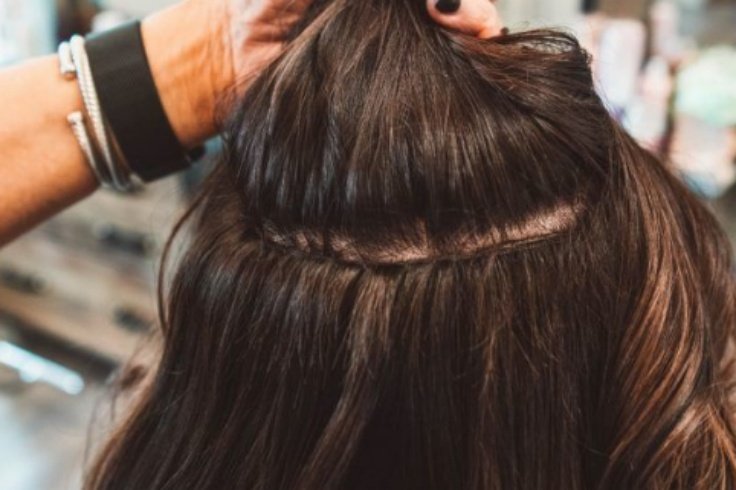
Every attachment area needs enough natural hair to support the planned extension weight.
At the same time, there must be enough surrounding hair to conceal the attachment during normal movement and styling.
This is why low density does not automatically mean one specific extension method is always best. The stylist still needs to consider strand strength, condition, coverage, client goals, and placement.
How Does Medium-Density Hair Change the Plan?
Medium-density hair often gives the stylist more flexibility with placement and extension amount.
There may be more natural hair available to distribute weight and conceal attachment areas, which can open up more options when building length or volume.
That flexibility should not be confused with unlimited support.
Strand strength, hair condition, haircut, desired length, and the extension method still influence the final plan.
How Does High-Density Hair Change the Plan?
High-density hair creates a different challenge.
The issue may be less about concealment and more about creating enough finished density through the lengths so the extensions blend with the client’s natural hair.
If a client has a heavy perimeter or dense, blunt haircut, using too little extension hair can create a visible disconnect between the natural hair and the added length.
Avoid Under-Filling the Lengths
A high-density client may need more attention to the finished silhouette and blending through the mid-lengths and ends.
That does not mean higher density automatically allows unlimited extension weight.
The stylist still needs to distribute the added hair appropriately and consider what each placement area can support.
How Does Density Affect Placement and Weight Distribution?
Density affects where extensions can be placed and how the added weight should be distributed.
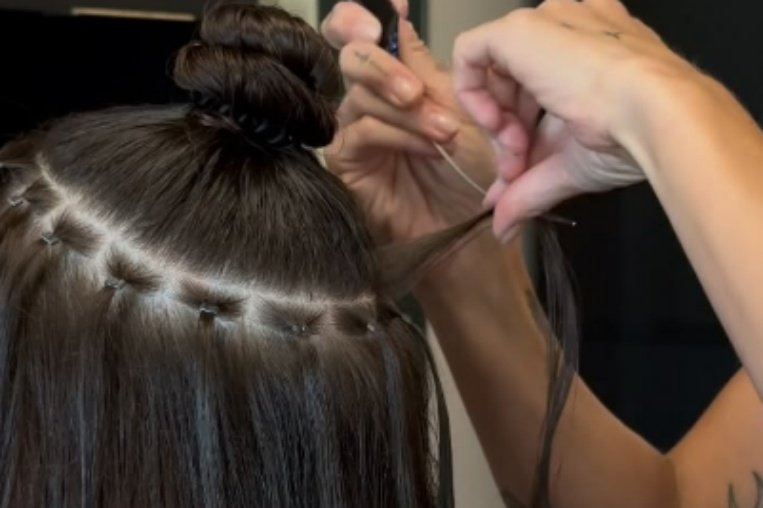
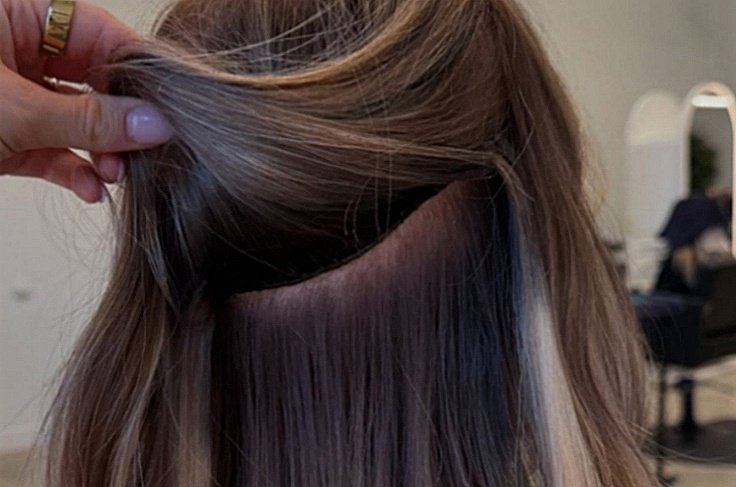
With weft methods, the stylist is working with weight distributed across a row or foundation. With K-Tips, weight is divided across individual attachment points. Tape-In distributes hair through adhesive attachment panels.
The construction is different, but the principle is the same:
the natural hair available in each area should support the extension weight placed there.
A correct total amount of extension hair can still create a poor result if too much of that weight is concentrated in one area.
Density planning is therefore not just gram planning. It also affects row design, bond distribution, concealment, and movement.
Does Hair Density Decide Which Extension Method to Use?
No.
Density is an important part of method selection, but it should not make the decision by itself.
The stylist should also assess:
- strand strength
- current hair condition
- available coverage
- styling habits
- maintenance expectations
- desired length and volume
A client with lower density but strong hair and good coverage may require a very different plan from another client with similar density but fragile or compromised hair.
For a broader client-assessment process, see LumenFlow’s hair extension consultation checklist.
What Are the Most Common Density-Planning Mistakes?
Treating the Whole Head as One Density
Density can vary significantly from the back to the sides, crown, and perimeter.
Placement decisions should be based on the area being worked on rather than one general label for the client.
Confusing Fine Hair With Low Density
Fine hair describes strand diameter. Low density describes how much hair is present.
Those are different characteristics and should be assessed separately.
Using a Universal Gram or Row Formula
There is no single amount of hair or number of rows that fits every low-, medium-, or high-density client.
Starting length, desired result, haircut, extension method, support, and distribution all affect the plan.
Assuming More Natural Hair Means Unlimited Extension Weight
Higher density may provide more support and concealment in some areas, but density alone does not determine appropriate extension weight.
Professional judgment is still required.
Frequently Asked Questions
Does natural hair density affect hair extensions?
Yes. Density can affect support, concealment, placement, weight distribution, blending, and how much extension hair may be appropriate.
Is fine hair the same as low-density hair?
No. Fine hair refers to the thickness of each individual strand, while density refers to how much hair is growing in an area.
Can low-density hair wear weft extensions?
Possibly. Suitability depends on available support, concealment, strand strength, hair condition, placement, and planned extension weight.
Do clients with thick or high-density hair need more extension hair?
Sometimes more finished density may be needed for blending, especially with heavier natural hair or a blunt perimeter. That does not mean there is one fixed amount that applies to every high-density client.
How many grams of extensions should be used for each density?
There is no universal gram chart that works for every client. The amount should be planned according to starting length, desired result, extension method, natural-hair support, and how the weight will be distributed.