When a client is considering hair extensions, one of the first questions they often ask is:
“Will extensions damage my hair?”
It’s an important question—and one that professional stylists should be prepared to answer.
Hair extensions themselves are not the only factor that determines whether a client experiences breakage or stress. The condition of the natural hair, the amount of added weight, placement, installation tension, maintenance schedule, and at-home care all play a part.
A beautiful extension service should do more than create instant length and volume. It should also be planned around the health and comfort of the client’s natural hair.
Why Can Hair Extensions Cause Damage?
Most extension-related problems are not caused by one single mistake. They usually develop when too much stress is placed on the natural hair over time.
Some of the most common issues include:
- Adding too much extension weight for the client’s natural density
- Creating sections that are too small to support the added hair
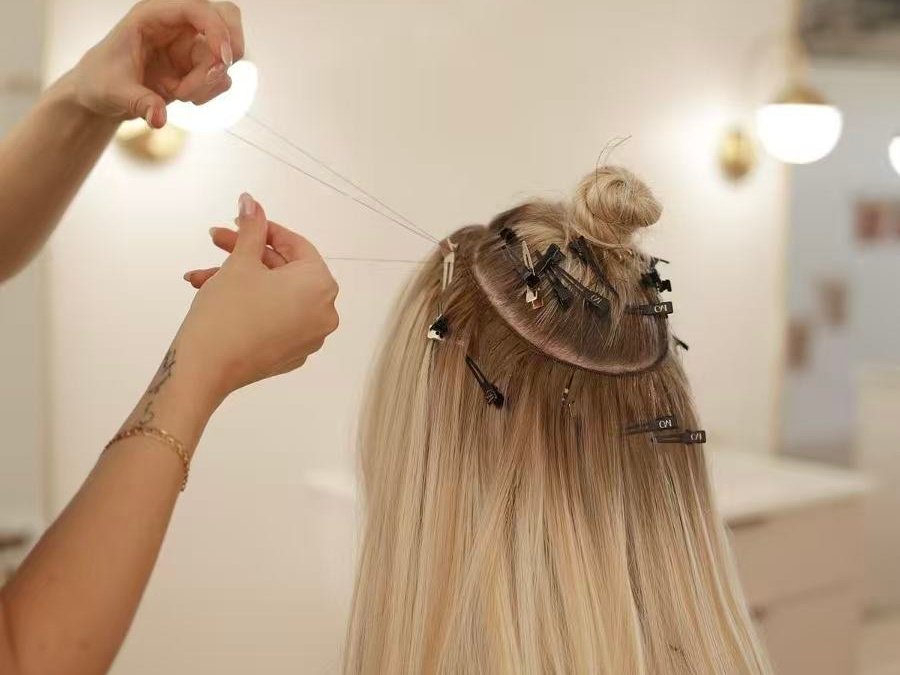
- Installing attachments too tightly
- Placing extensions too close to sensitive areas or the hairline
- Ignoring the client’s natural growth pattern
- Going too long between maintenance appointments
- Excessive pulling, heat, or improper care at home
The goal of a professional installation is not simply to make the extensions secure. It is to create a balance between security, comfort, weight distribution, and natural movement.
1. Start With the Natural Hair
Before deciding how much hair to add or where to place it, take a closer look at the client’s natural hair.
Consider:
- Hair density
- Strand thickness
- Scalp sensitivity
- Existing breakage
- Previous bleaching or chemical services
- Hairline density
- The client’s usual styling habits
Two clients may want exactly the same length and volume but still require completely different extension plans.
For example, someone with dense, healthy natural hair may comfortably support more added hair, while a client with fine or fragile hair may need lighter placement and less overall weight.
The installation should be designed around the hair—not the other way around.
2. Choose Quality Hair and the Right Amount of Weight
Hair quality matters, but so does how much hair you use.
Poor-quality extensions that tangle easily can require more aggressive brushing and maintenance, which may create unnecessary pulling during everyday wear.
At the same time, even high-quality hair can become too much for the natural hair if too much weight is installed.
A professional stylist should consider how much extension hair each section of natural hair is being asked to support.
Sometimes adding slightly less hair creates a better result: the extensions move more naturally, blend more easily, and feel more comfortable for the client.
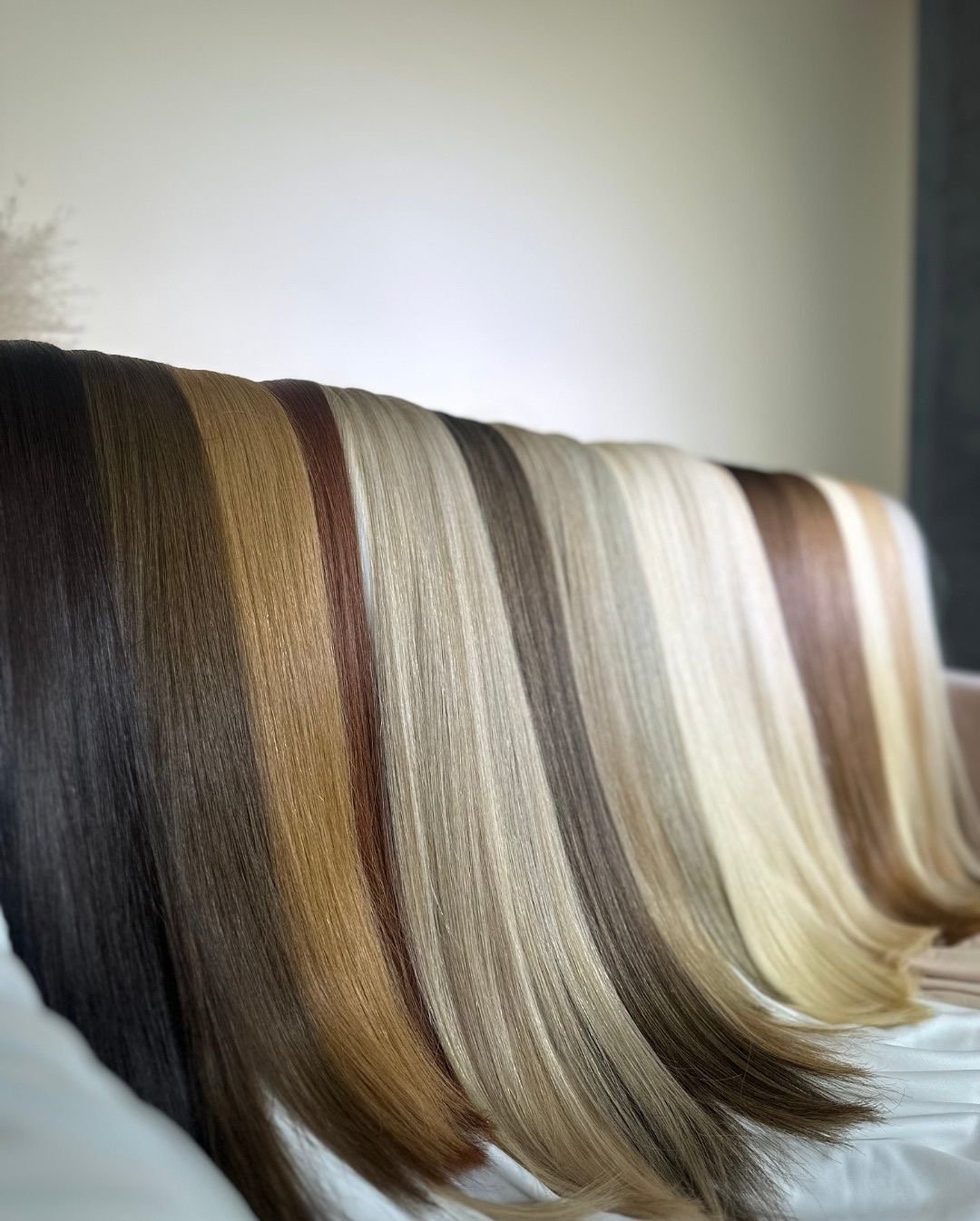
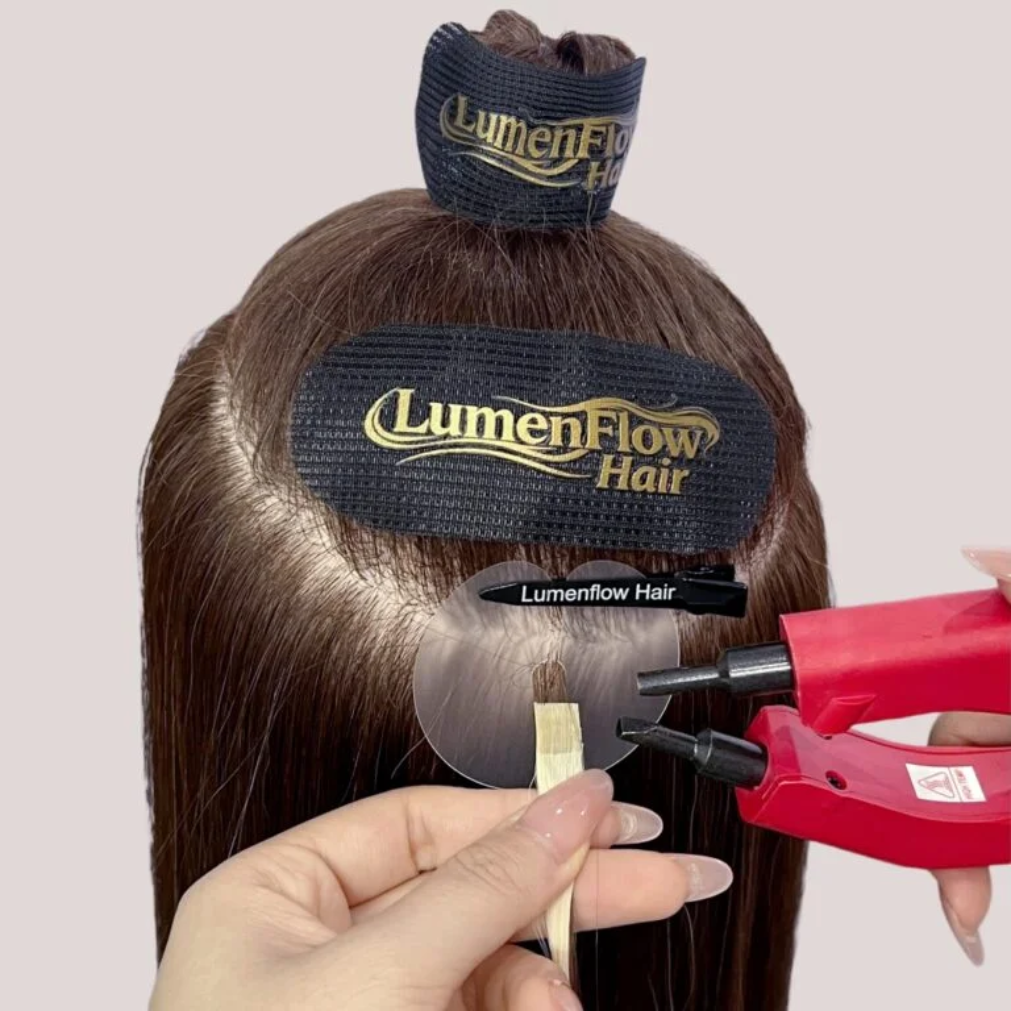
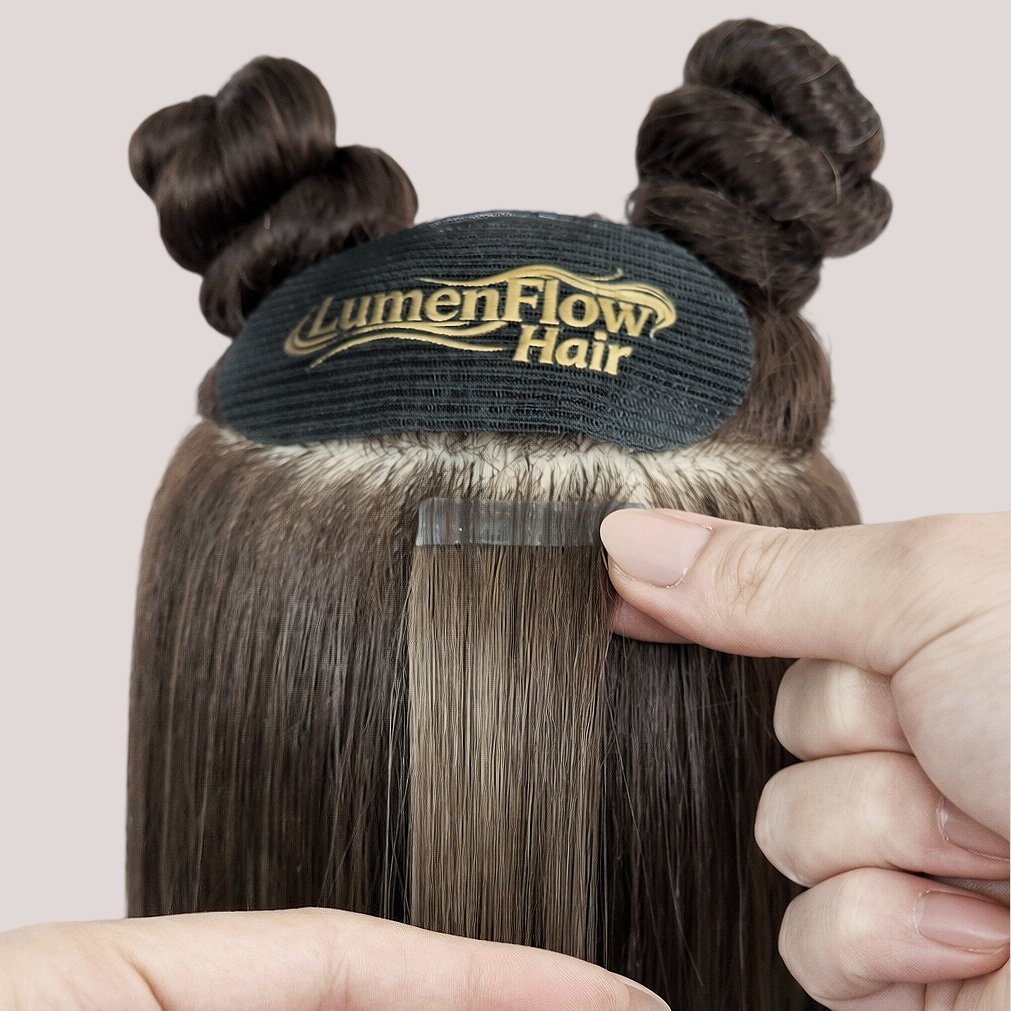
At LumenFlow Hair, our professional extensions are made with premium human hair and designed with natural movement, seamless blending, and professional salon use in mind.
3. Keep the Tension Controlled
One of the most important principles in extension application is simple:
Secure does not mean tight.
Extensions need to remain stable, but excessive tension should never be used as a way to make an installation feel “more secure.”
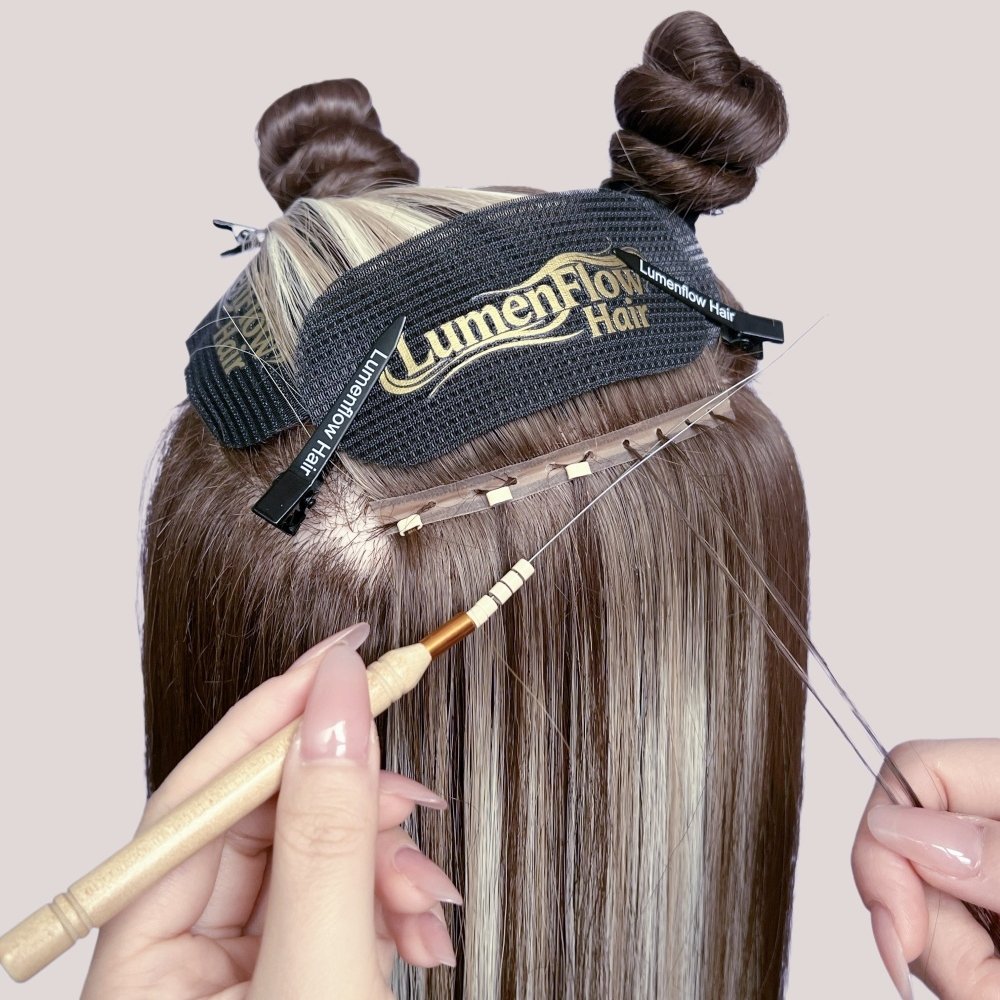
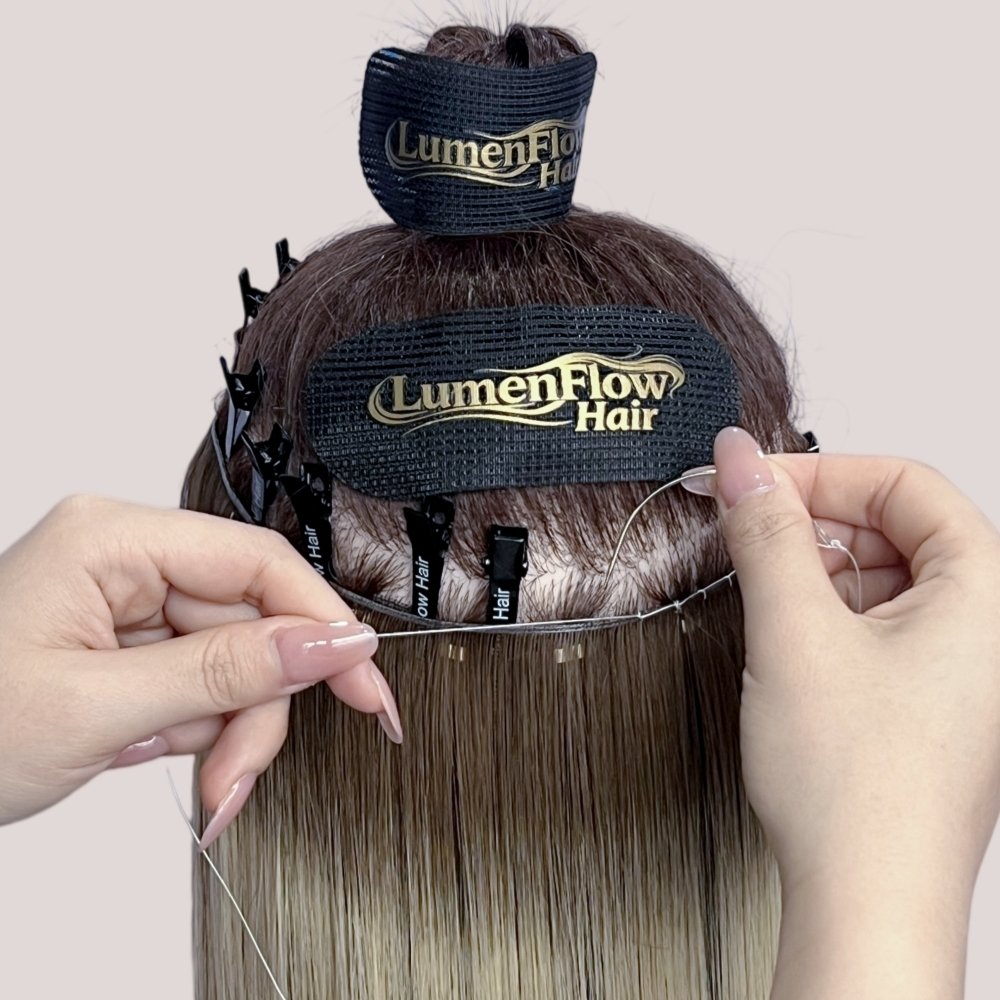
Pay attention to how the natural hair grows and falls. Avoid forcing strands into an unnatural direction simply to fit a standard placement pattern.
After installation, gently move the hair in different directions and check how the attachment areas feel.
Clients should not leave the salon experiencing strong pulling, pinching, or persistent discomfort.
If something feels too tight during the appointment, it is better to adjust it immediately.
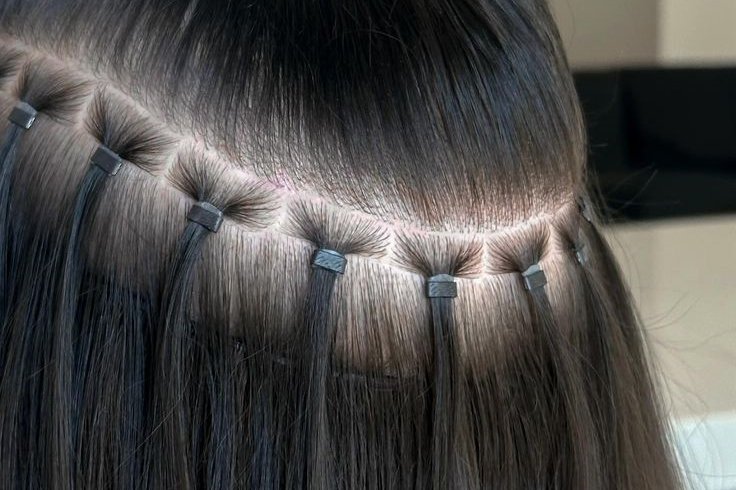
4. Placement and Sectioning Matter More Than You Think
Good sectioning helps distribute weight evenly.
If a section is too small, a small amount of natural hair may be forced to support too much extension weight. But if the section is too large, the installation may become bulky or difficult to blend.
Placement should also be customized.
Pay extra attention around:
- The hairline
- The temples
- Fine or fragile areas
- Areas where the client frequently ties their hair up
- Sections with unusual growth patterns
A standard installation map can be useful as a starting point, but it should never replace professional judgment.
The best placement is the placement that makes sense for the individual client.
5. Teach Your Client How to Care for Their Extensions
Your work does not end when the installation is finished.
The way a client cares for their extensions at home has a major impact on both the extensions and their natural hair.
Keep aftercare instructions simple and realistic.
Encourage clients to:
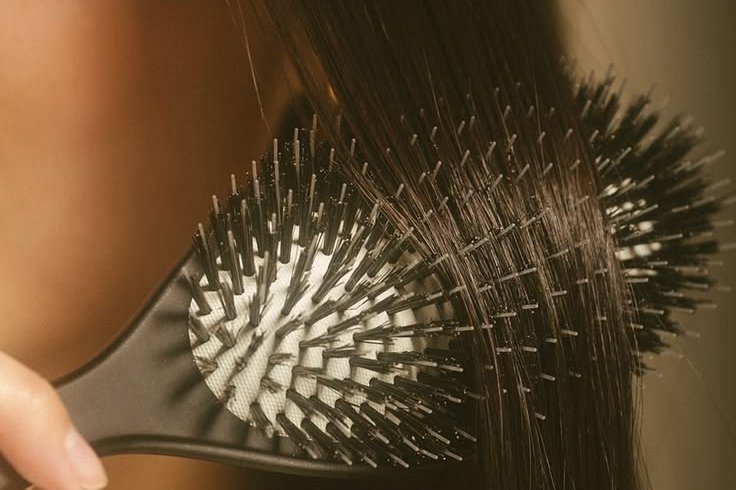
- Brush gently and regularly
- Support the hair when brushing near attachment areas
- Avoid unnecessary pulling
- Keep attachment areas clean
- Avoid excessive heat
- Sleep with the hair dry and secured in a loose braid or ponytail
- Contact their stylist if an attachment feels uncomfortable or unusually loose
Clients are much more likely to follow aftercare advice when the instructions are easy to understand and fit into their normal routine.
Why Regular Hair Extension Maintenance Matters
Even a great installation changes as the client’s natural hair grows.
Over time, attachment points move farther away from the scalp. Naturally shed hairs may also remain around the attachment area until the extensions are professionally maintained or removed.
This is completely normal—but it is also why extensions should not simply be installed and forgotten.
Depending on the extension method, maintenance may involve moving the extensions up, removing and reinstalling them, or replacing the attachment.
Leaving extensions too long without maintenance can increase the chance of:
- Tangling around the attachment area
- Matting
- Uneven weight distribution
- Excessive pulling
- More difficult removal
The correct maintenance schedule depends on the method, the client’s hair growth, and their natural hair condition.
Instead of giving every client exactly the same timeline, professional stylists should recommend a maintenance schedule based on the individual wearer.
Healthy Extensions Start With Professional Decisions
There is no single extension method that is perfect for every client.
Keeping natural hair healthy is about looking at the full picture: hair condition, weight, placement, tension, product quality, maintenance, and aftercare.
For stylists, the goal should never be simply to install more hair.
It should be to create an extension service that looks beautiful on day one, feels comfortable during wear, and continues to work with the client’s natural hair over time.
At LumenFlow Hair, we believe better extension services come from the combination of professional-quality hair, thoughtful application, and continued education.
Explore our professional hair extension collections and education resources to find the products, methods, and knowledge that support better work behind the chair.