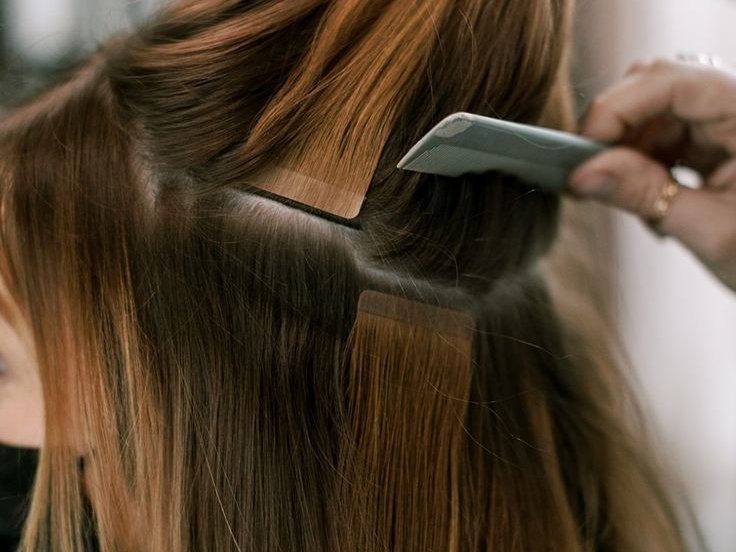
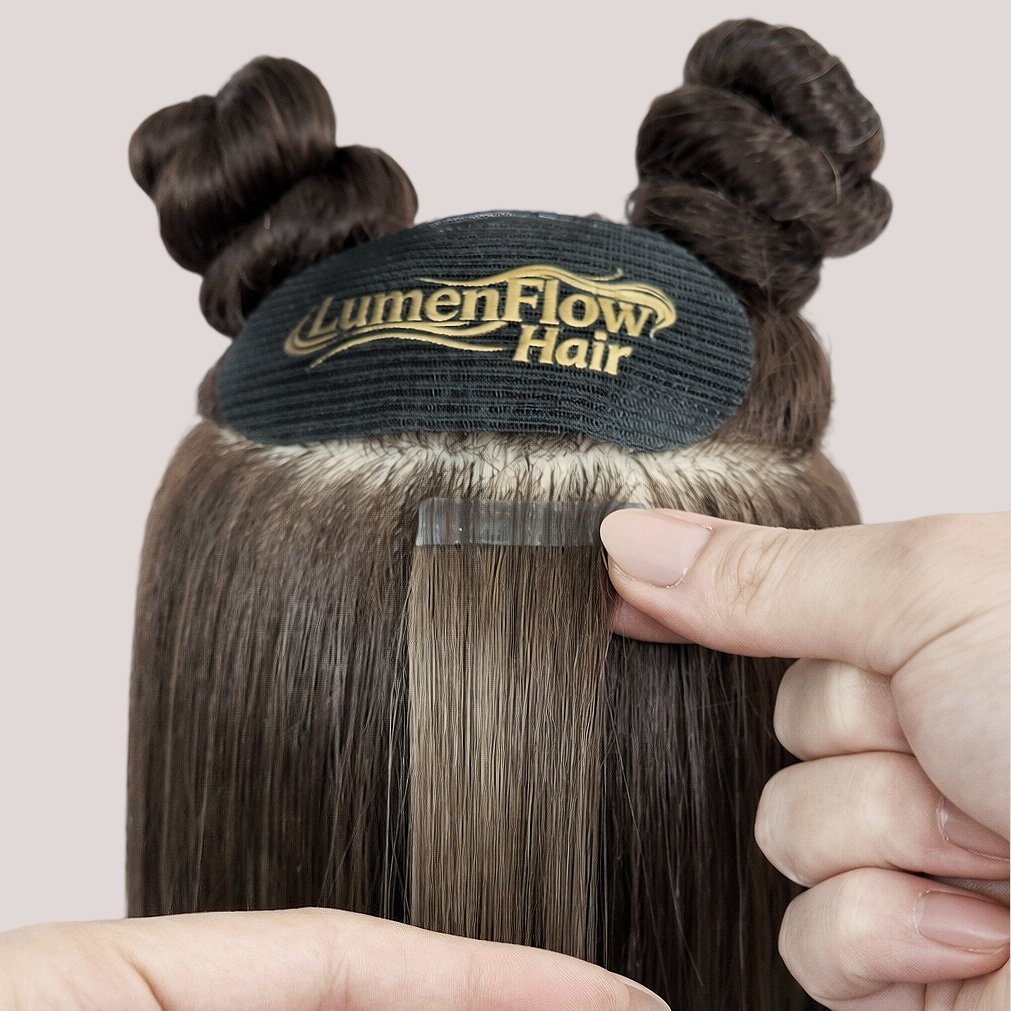
A professional Tape-In installation depends on clean preparation, balanced natural-hair sectioning, thoughtful placement, and even contact between the tabs. Each step should support a flat, concealable result that moves naturally with the client’s hair—not simply an attachment that holds.
What Should Be Confirmed Before the First Tape-In Is Applied?
Before installation begins, the method, color, length, and overall service plan should already be confirmed.
Make sure:
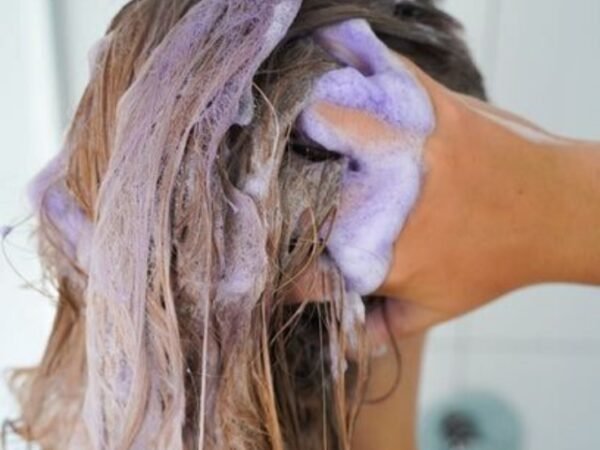
- the natural hair is clean and fully dry
- the attachment area is free from unnecessary oil or product residue
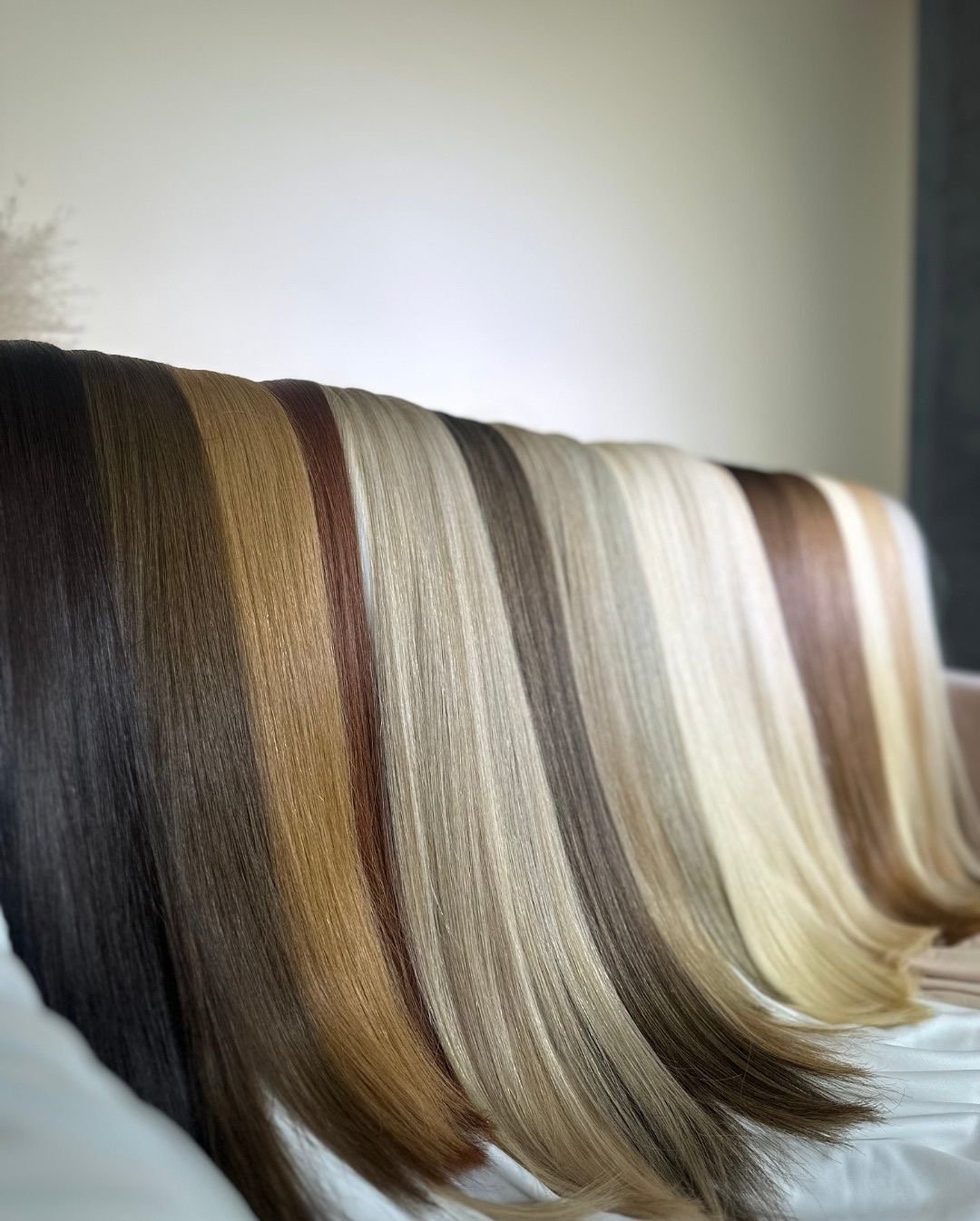
- the Tape-In hair and shade selection are ready
- the placement plan has been established
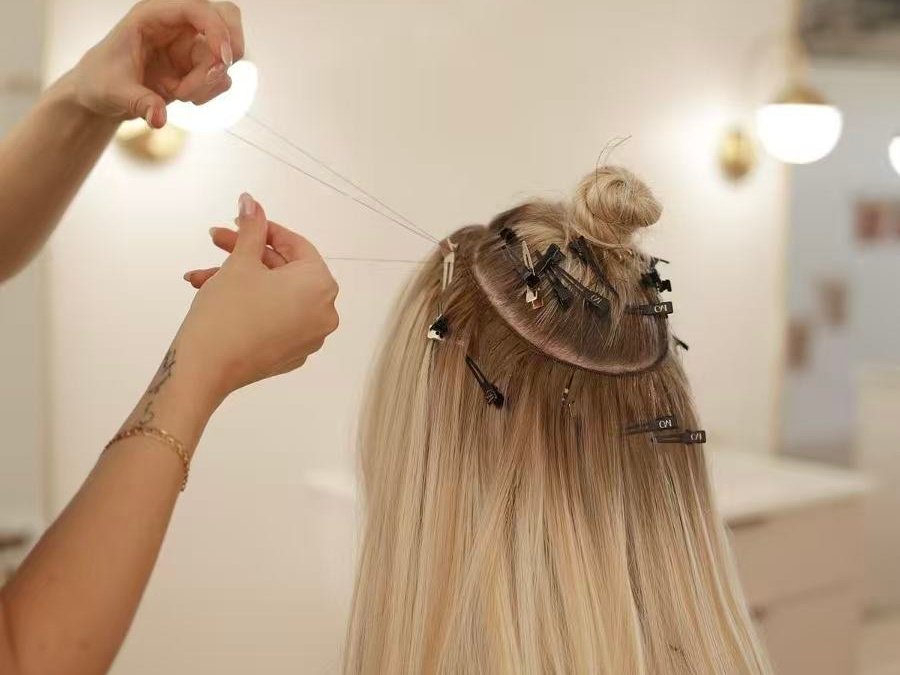
- the natural hair can be sectioned cleanly and consistently
Avoid heavy products around the planned attachment areas, as residue may interfere with proper tape contact.
For a broader overview of the method and maintenance, see LumenFlow Hair’s professional Tape-In extension guide.
How Much Natural Hair Should Be Used in Each Section?
There is no single section thickness that works for every client.
The natural-hair section needs to provide enough support for the attachment without being so thick that it prevents the upper and lower tabs from making proper contact.
If too much natural hair is placed between the tabs, the attachment may become bulky, the edges may not close evenly, and retention may be affected.
If too little natural hair is used, the extension weight may be concentrated on a smaller number of strands, which can create pulling or discomfort.
Section size should be adjusted according to the client’s natural density, strand strength, tab size, and the amount of hair available in that placement area rather than following one fixed measurement.
How Close Should Tape-In Extensions Be Placed to the Scalp?
A common professional reference is to place the attachment about 1/4 inch (approximately 6 mm) from the scalp.
Use this as a starting reference rather than a fixed rule for every client.
The final placement should allow natural movement, client comfort, enough surrounding hair for concealment, and normal styling.
The sides, perimeter, and parting areas often require more attention to concealment than interior sections.
An attachment can be secure and still be poorly positioned if it becomes visible as soon as the client changes her part or wears her hair up.
How Should the Tape-In Sandwich Be Applied?
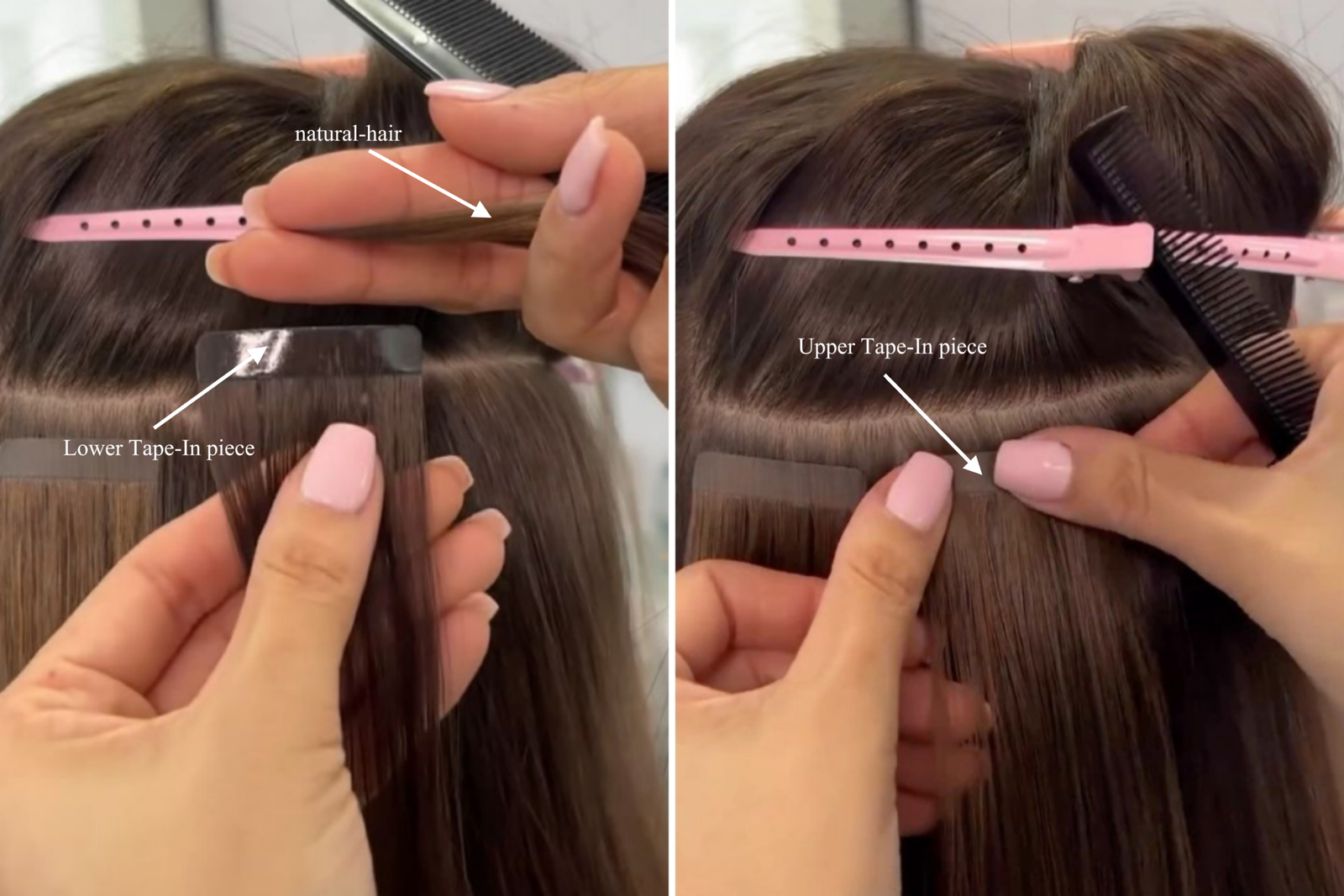
LumenFlow Hair supports the traditional sandwich method.
The structure is:
Lower Tape-In piece
↓
Controlled natural-hair section
↓
Upper Tape-In piece
Distribute the natural hair evenly across the lower tab, then align the upper tab directly with it.
Before moving to the next attachment, confirm four things:
- the upper and lower tabs are aligned
- the adhesive surfaces have even contact
- no loose or crossing strands are trapped incorrectly
- the attachment sits flat without folding or twisting
If any of these are not correct, adjust the attachment before continuing.
Does LumenFlow Tape-In Require Heat During Installation?
No.
LumenFlow Tape-In does not require heat during installation.
Do not use a flat iron, heated pressing tool, or other heat source to activate the adhesive.
The attachment should be created through correct preparation, balanced sectioning, proper tab alignment, and even adhesive contact.
How Should Stylists Check the Finished Tape-In Installation?
Once all attachments are installed, shift the focus from individual tabs to the overall result.
Let the hair fall naturally and check the installation from the front, sides, and back. Change the client’s part and move the hair through the styles she normally wears.
Confirm that:
- the overall placement looks balanced
- attachments remain concealed when the hair moves
- the sides and perimeter have enough natural coverage
- changing the part does not immediately expose the tabs
- the client’s normal styling is not unnecessarily restricted
- there is no obvious pulling or discomfort
- the finished density and distribution look balanced
If the main concern is early movement or poor retention, refer to LumenFlow Hair’s Tape-In slippage guide for a separate troubleshooting process.
How Much Hair Is Commonly Used for a Full Tape-In Installation, and How Long Does It Take?
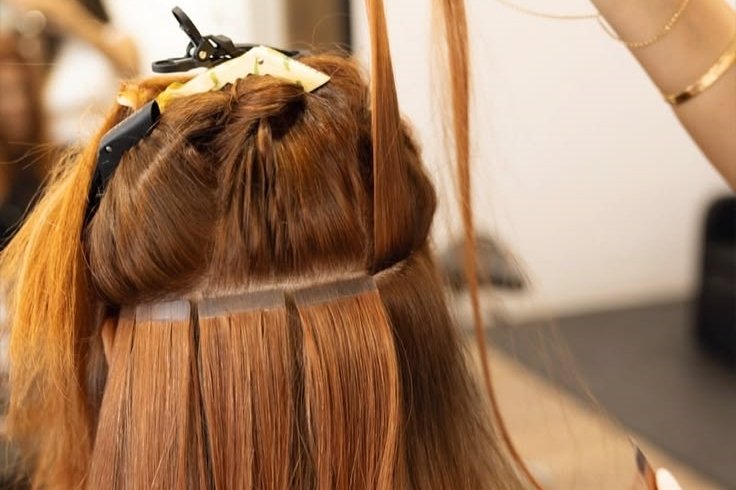
A full-head Tape-In service commonly uses around 40–80 individual pieces, or approximately 20–40 sandwiches.
By weight, many full-head installations fall around 100–200g of extension hair.
These are professional reference ranges rather than fixed formulas. The final amount should reflect the client’s natural density, starting length, target length, haircut, desired fullness, and overall service plan.
A professional full-head Tape-In installation commonly takes around 45 minutes to 2 hours.
Actual timing depends on the amount of hair, placement, blending needs, and the stylist’s workflow.
What Should the Client Know After Installation?
After a LumenFlow Tape-In installation, wait 48 hours before washing the hair.
Once normal washing resumes, clean the attachment area appropriately and dry it thoroughly.
LumenFlow Hair recommends professional Tape-In maintenance every 6–8 weeks.
At reinstallation, use fresh replacement tape and reassess the client’s natural hair before reinstalling the extensions.
With proper care, LumenFlow Tape-In hair can last more than one year and may be reused when the hair remains suitable for reinstallation.
Frequently Asked Questions
How much natural hair should be placed between Tape-In tabs?
There is no universal fixed thickness. Use enough natural hair to support the attachment while still allowing the upper and lower tabs to make even contact.
How far from the scalp should Tape-In extensions be installed?
A common professional reference is about 1/4 inch (approximately 6 mm) from the scalp. Exact placement should still allow natural movement, concealment, support, and client comfort.
Does LumenFlow Tape-In need heat to activate the adhesive?
No. LumenFlow Tape-In does not require heat during installation.
How long should a client wait before washing after a Tape-In installation?
Wait 48 hours before washing after a LumenFlow Tape-In installation.
How often should Tape-In extensions be maintained?
LumenFlow Hair recommends professional maintenance every 6–8 weeks.
Can LumenFlow Tape-In hair be reused?
Yes. When the hair remains in suitable condition, it may be reused during reinstallation. Always use fresh replacement tape and reassess the client’s natural hair before reinstalling.