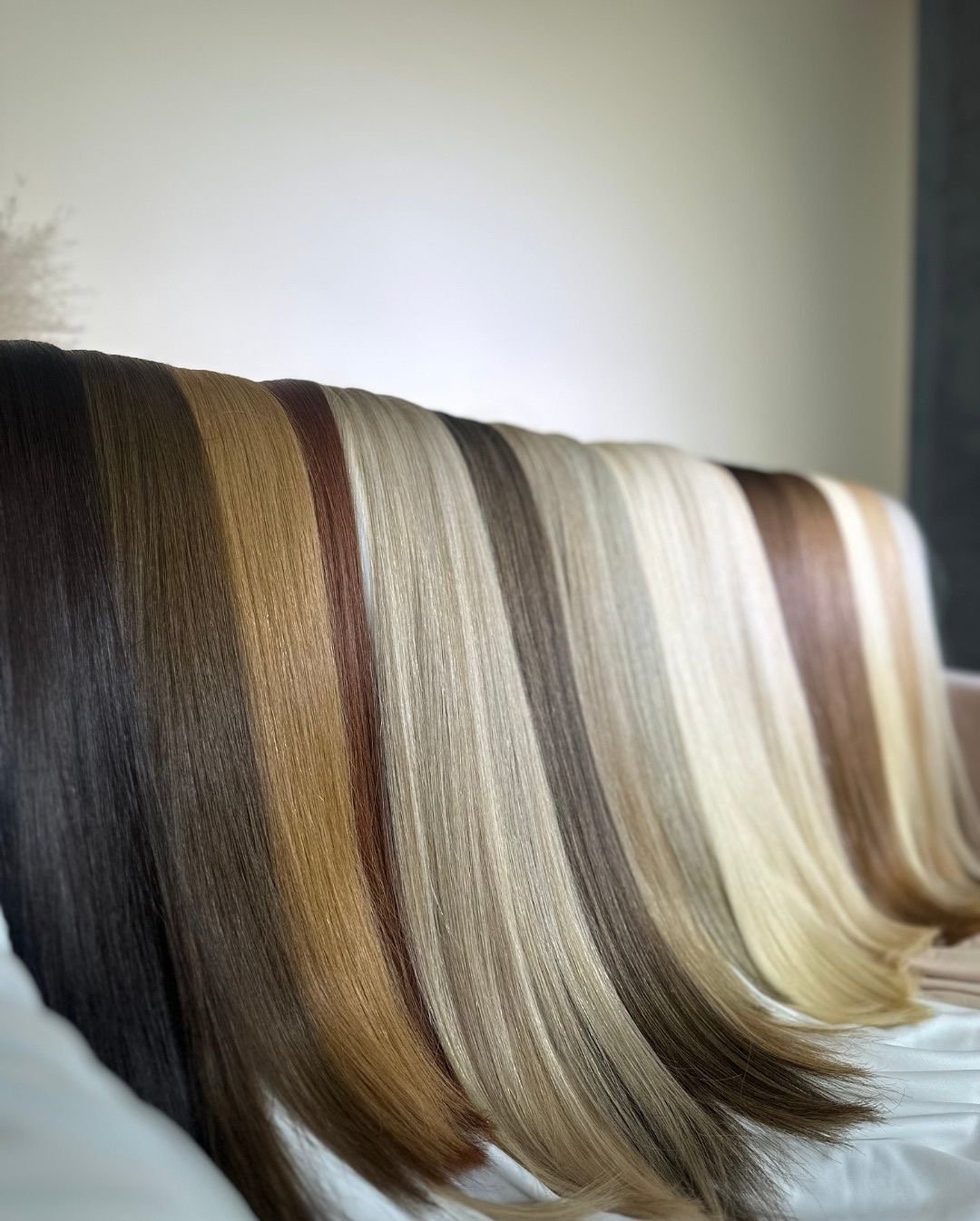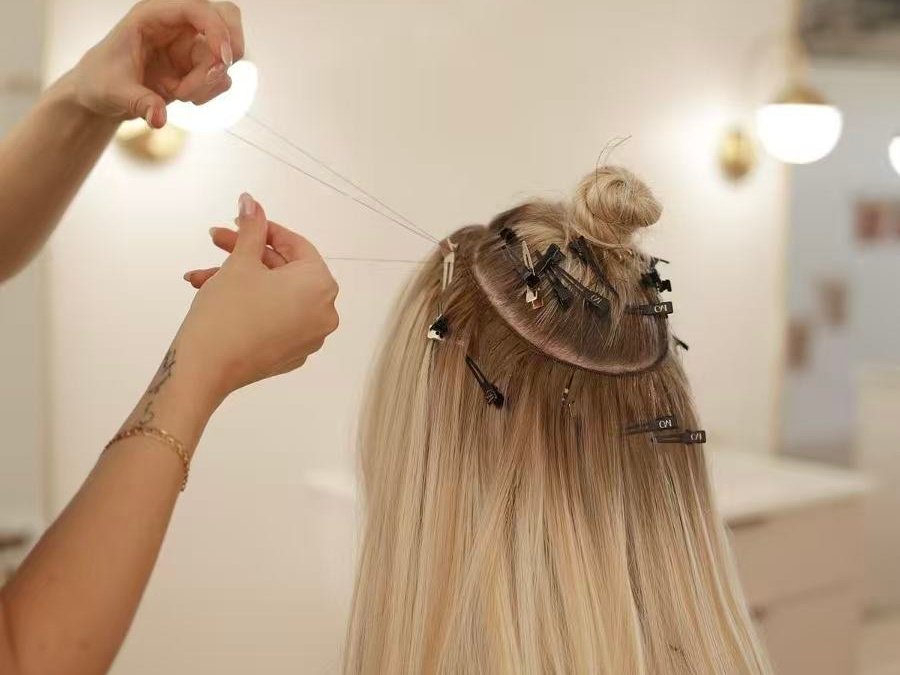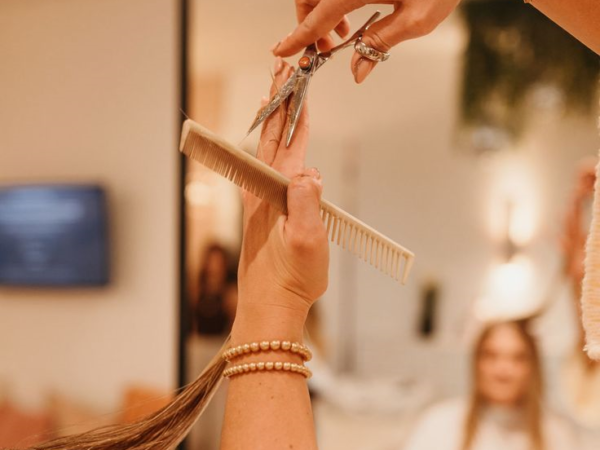
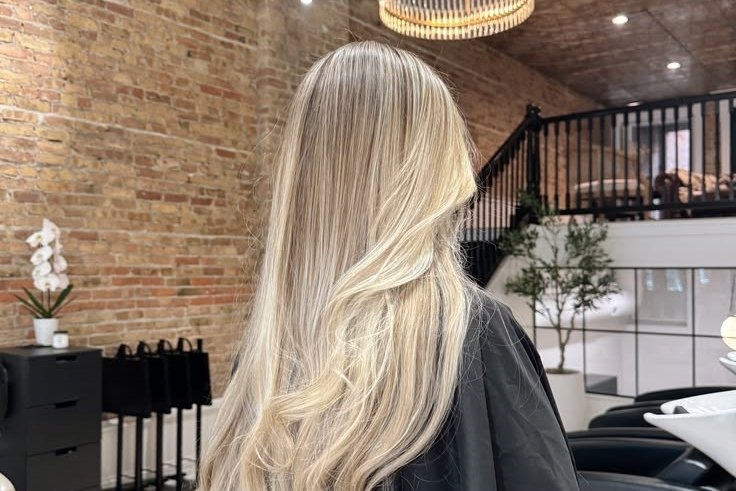
LumenFlow Butterfly Weft uses a bead-only installation through pre-punched holes in the central PU strip. A clean installation depends on more than securing the beads: sectioning, placement, tension, weight distribution, and enough natural hair for support and concealment all affect how the finished weft sits and wears.
How Is LumenFlow Butterfly Weft Installed?
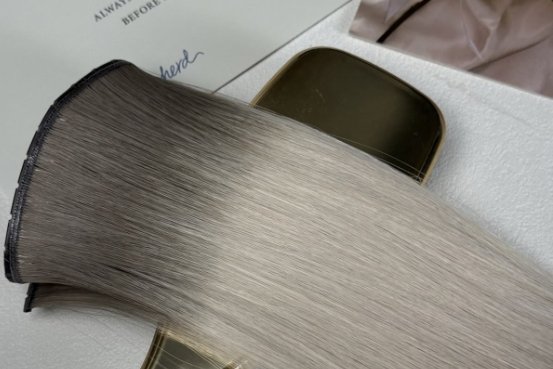
LumenFlow Butterfly Weft is built with a double-layer Genius Weft construction and a central PU strip with pre-punched attachment holes.
The weft is secured with silicone-lined beads. In most installations, two pre-punched holes correspond to one bead, though the exact placement plan still depends on the client’s natural hair and the stylist’s professional judgment.
The attachment method does not require sewing, tape, glue, or heat.
Because “Butterfly Weft” is not a completely standardized term across every manufacturer, stylists should always check the construction and installation method of the specific product they are using.
How Should Stylists Prepare Before Butterfly Weft Installation?
Start with the client’s natural hair, not with a fixed installation map.
Look at density, strand strength, coverage, growth pattern, and the areas where the client wants additional length or volume. The amount of natural hair available for support should influence both placement and how much extension hair is added.
Client styling habits matter as well. Someone who regularly wears a high ponytail or upstyle may require a different placement plan than someone who wears the hair down most of the time.
There is no universal section size, row shape, or scalp distance that works for every client.
How Should Butterfly Weft Placement Be Planned?
Good placement needs to balance three things:
support, concealment, and natural movement.
The natural hair section should provide enough support for the extension weight without concentrating too much tension in a small area.
At the same time, there needs to be enough surrounding hair to conceal the attachment when the client moves or styles the hair.
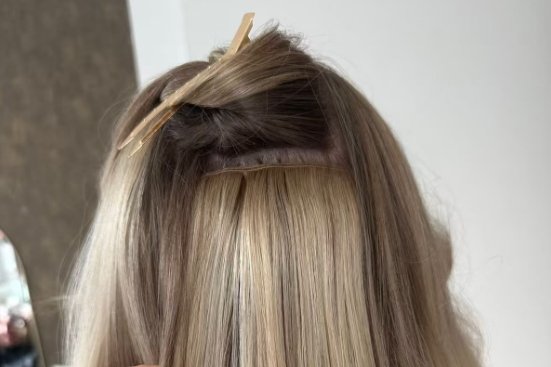
Placement should also follow the natural growth direction rather than forcing the hair into an unnatural position. This becomes especially important around the perimeter, temples, crown, and other areas where coverage may be more limited.
How Should Tension and Weight Be Managed?
A secure installation does not mean the row should feel as tight as possible.
The goal is stable, balanced support while allowing the natural hair and scalp to move comfortably. Too much tension can make an installation feel tight or create unnecessary stress on individual sections.
Weight distribution matters just as much.
Butterfly Wefts can be stacked when the service requires more volume, but there is no single number of wefts or grams that is appropriate for every row. The stylist should decide how much hair to use based on natural density, support, coverage, and the client’s desired result.
More hair is not automatically a better installation.
How Does the Bead-Only Attachment Work?
Once the row has been planned, the Butterfly Weft is positioned against the natural hair and the appropriate sections are worked through the pre-punched attachment area.
Silicone-lined beads are then used to secure the weft. In most LumenFlow installations, one bead works with two corresponding pre-punched holes.
As the row is secured, the stylist should continue checking alignment, tension, support, and movement rather than waiting until the entire weft is finished.
The weft should sit cleanly without being pulled unevenly across the row.
Stylists who want full technical instruction and hands-on assessment can explore LumenFlow’s Butterfly Weft professional education.
Can Butterfly Weft Be Cut?
Yes.
LumenFlow Butterfly Weft can be cut where needed, allowing the stylist to adjust the width to the planned section instead of forcing a full piece into an area where it does not belong.
This gives the stylist more flexibility when customizing placement around the client’s head shape and desired style.
What Are the Most Common Butterfly Weft Installation Mistakes?
Using Too Little Natural Hair for Support
If a section does not contain enough natural hair to comfortably support the extension weight, the attachment may place too much stress on that area.
The solution is not simply to make the bead tighter. The section and weight need to work together.
Installing Too Tight
A row can feel secure without feeling excessively tight.
Over-tightening can restrict natural movement and create unnecessary pulling. Consistent, controlled tension is more important than maximum tension.
Inconsistent Placement Across the Row
If attachment points are uneven, the weft may not sit cleanly against the head.
The stylist should continue checking row alignment as the installation progresses rather than relying only on a final adjustment.
Adding Too Much Weight in One Area
Stacking is possible, but added volume needs to be planned around the natural hair that is supporting it.
A client with strong density may support a different service plan from someone with finer or lower-density hair.
Ignoring Concealment and Styling Habits
A technically secure row can still be a poor placement if the attachment becomes visible when the client moves, parts, or ties up the hair.
Placement should be planned around how the client actually wears their hair.
If a bead-based installation begins slipping earlier than expected, see LumenFlow’s guide to hair extension slippage for a broader troubleshooting approach.
What Should You Check Before the Client Leaves?
Before finishing the service, check how the weft sits with the client’s head in a natural position.
The row should feel balanced, the attachment should be concealed, and the client should not feel strong pulling or pinching in one specific area.
Move the hair through different directions and check how the weft behaves when the client turns the head or lifts the hair.
The client should also understand the basic aftercare and when to return for professional maintenance.
How Often Does Butterfly Weft Need Maintenance?
LumenFlow recommends a move-up every 6–8 weeks.
The exact appointment timing can vary with natural hair growth and how the installation is wearing, but 6–8 weeks is the standard maintenance interval.
The maintenance schedule is separate from the lifespan of the extension hair itself.
LumenFlow Butterfly Weft is made with 100% Virgin Human Hair and can last more than 12 months with proper care.
Frequently Asked Questions
Does LumenFlow Butterfly Weft require sewing?
No. LumenFlow Butterfly Weft uses a bead-only attachment through the pre-punched PU section and does not require sewing.
What type of beads are used for Butterfly Weft installation?
LumenFlow Butterfly Weft is installed with silicone-lined beads.
Can Butterfly Weft be cut?
Yes. The weft can be cut where needed to fit the planned section.
How tight should Butterfly Weft extensions be?
They should feel secure and balanced, not excessively tight. Tension should support the installation without creating unnecessary pulling on the natural hair.
Why might a Butterfly Weft start slipping?
Slippage can be related to preparation, sectioning, bead placement, tension, weight distribution, or maintenance. The cause should be assessed before assuming the product itself is the problem.
How often should Butterfly Weft be moved up?
LumenFlow recommends professional move-up maintenance approximately every 6–8 weeks.