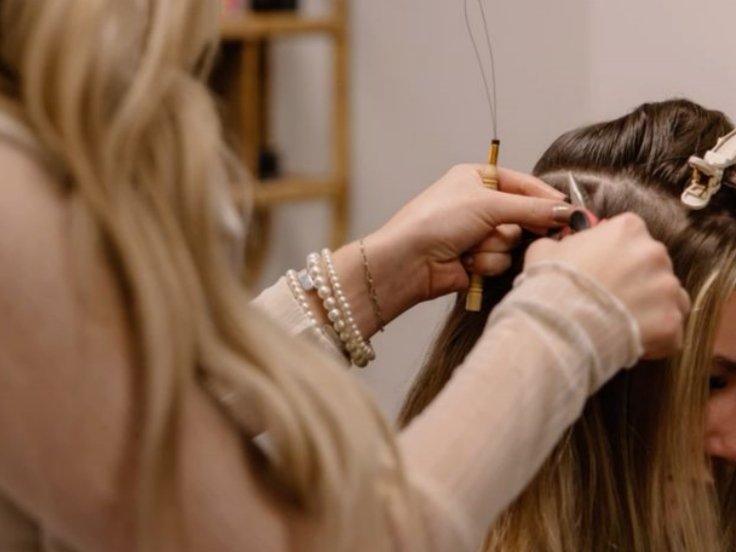
Hair extensions should feel secure without creating strong pulling, pinching, or persistent scalp discomfort. Excessive tension can come from attachments that are too tight, too much extension weight, sections that cannot properly support the load, poor placement, or working against the natural growth direction. If a client reports significant discomfort, the installation should be assessed rather than assuming they simply need time to adjust.
What Causes Scalp Tension With Hair Extensions?
Scalp tension is not always caused by one attachment being “too tight.” The entire installation plan can affect how much pulling the natural hair experiences.
A stylist should look at attachment tension, extension weight, section size, placement, and the direction in which the natural hair is being held.
Attachment Tightness
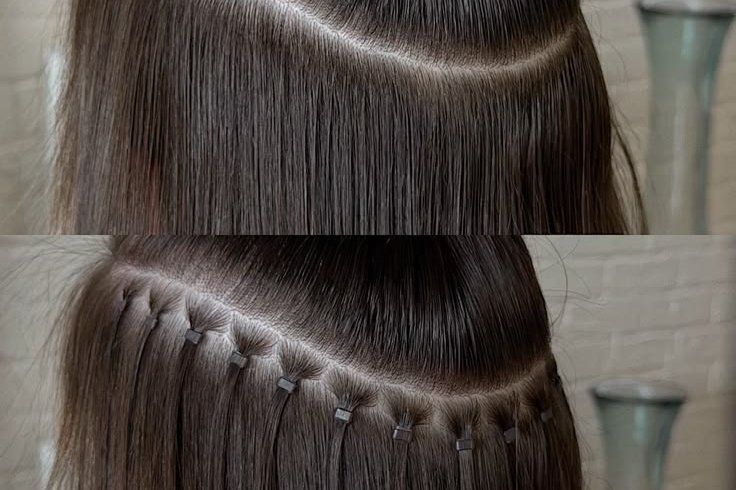
An extension attachment needs to be secure, but secure does not mean tight.
If an attachment restricts normal movement or creates a strong pulling sensation, the placement should be reassessed. The goal is to hold the extension securely while allowing the natural hair to move comfortably.
Too Much Weight for the Natural Hair
The natural hair supporting an extension also needs to be able to manage the planned load.
Adding too much extension weight to a small or weak section can create tension even when the attachment itself does not appear unusually tight. Weight should be distributed according to the natural density and strength available in each area.
There is no single gram amount that is appropriate for every client.
Sectioning and Placement
Section size plays a major role in both support and comfort.
Too little natural hair inside an attachment may not provide enough support for the extension weight. Placement that is too close to a sensitive area or difficult to conceal can also create unnecessary pulling during normal movement and styling.
Working Against the Natural Growth Direction
Natural hair should not be forced into an attachment at an unnatural angle simply to make a placement work.
When hair is redirected too aggressively, the attachment can create constant tension as the client moves, brushes, or styles the hair.
The installation should work with the client’s natural growth pattern rather than against it.
How Can a Stylist Tell When Extensions Are Too Tight?
The client’s feedback during and after installation matters.
Extensions may feel different from natural hair because additional weight and attachment points are present, but strong pulling, pinching, persistent soreness, or headaches associated with the installation should not be dismissed.
Other warning signs can include visible tension around an attachment, restricted movement, redness, bumps, or an area that becomes increasingly uncomfortable instead of settling into normal wear.
A client should be able to move and style the hair without feeling that individual sections are constantly pulling at the scalp.
What Should a Stylist Check First?
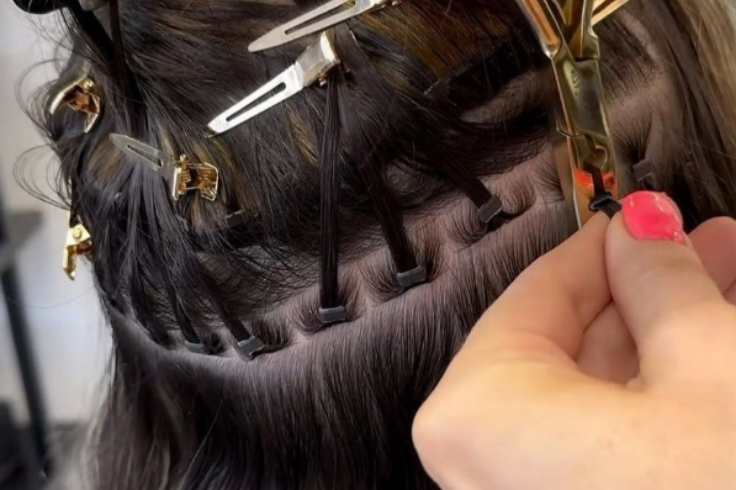
If a client says the extensions feel too tight, begin with the installation itself rather than immediately assuming the client is simply sensitive.
A structured check usually makes it easier to identify where the tension is coming from.
Check the Section Size
Look at how much natural hair is supporting each attachment.
The section needs enough natural hair to support the extension without concentrating too much weight on a small number of strands.
Sectioning should also be consistent with the extension method being used.
Check Weight Distribution
Next, look at how the extension weight is distributed across the head.
A technically secure attachment can still create discomfort if too much weight is concentrated in one area.
This is especially important around lower-density areas where the stylist has less natural hair available for support.
Check Placement
Consider where the attachment sits in relation to the hairline, temples, parting, and other sensitive or highly mobile areas.
Placement should provide enough coverage while allowing the attachment to move naturally with the client’s hair.
If you are also troubleshooting movement or retention, LumenFlow’s hair extension placement and slippage guide covers the other side of this balance.
Check Natural Movement
Ask the client to move the hair naturally.
Lift it, part it, and check how the attachment responds when the hair changes direction.
If the natural hair cannot move without creating pulling at the attachment, the installation may need to be adjusted.
Is Some Tightness Normal After Hair Extensions?
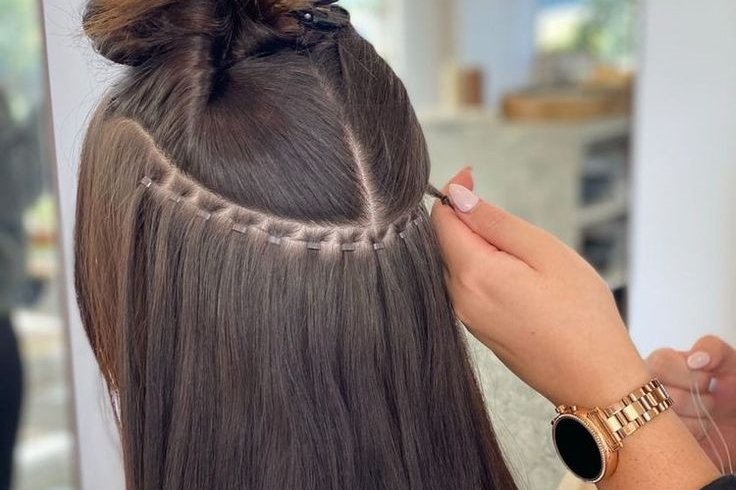
A client may notice the presence or added weight of a new extension installation, especially if they have never worn extensions before.
That is different from strong pulling or pain.
There is no professional reason to tell every client that they simply need to tolerate significant discomfort for a set number of days. If the client reports pinching, headaches, strong pulling, or persistent pain, the installation should be checked.
When discomfort is noticeable during the appointment, the best time to make an adjustment is before the client leaves the salon.
Can Excessive Extension Tension Affect Natural Hair?
Repeated or prolonged mechanical tension can place unnecessary stress on the natural hair and attachment area.
Persistent tension is also recognized as a risk factor associated with traction-related hair loss. A stylist should understand that risk, but should not diagnose a scalp or hair-loss condition.
If a client develops significant or persistent scalp pain, unusual thinning, inflammation, open areas, or other concerning changes, they should be advised to seek assessment from an appropriate healthcare professional or dermatologist.
How Can Stylists Reduce Unnecessary Tension?
Prevention comes back to the same fundamentals: match extension weight to the amount and strength of natural hair available, allow the attachment to move naturally, and adjust placement around lower-density or sensitive areas.
The same installation pattern should not be applied automatically to every client. Hairline density, temples, parting, haircut, natural growth direction, and styling habits can all influence where and how an attachment should sit.
Tension should also be reassessed as the natural hair grows. Maintenance appointments give the stylist a chance to check placement, attachment condition, natural hair, and whether the original installation plan is still appropriate.
For a broader look at installation choices that help protect the client’s natural hair, see LumenFlow’s guide to applying hair extensions without compromising natural hair.
Frequently Asked Questions
Are hair extensions supposed to hurt?
Extensions should not create strong pulling, pinching, headaches, or persistent pain. If a client reports significant discomfort, the installation should be assessed.
How do I know if hair extensions are installed too tightly?
Signs can include persistent pulling, restricted movement, pinching, soreness, redness, or discomfort around specific attachment points. The stylist should check section size, weight, placement, and attachment tension.
Can heavy extensions create scalp tension?
Yes. Too much extension weight for the amount or strength of natural hair supporting it can create unnecessary tension, even when the attachment itself does not appear unusually tight.
Can tight extensions cause hair loss?
Repeated or prolonged mechanical tension can contribute to traction-related hair loss. Stylists should avoid diagnosing hair-loss conditions and refer clients for medical assessment when concerning symptoms are present.
What should a stylist do if a client reports scalp pain?
Check the installation rather than assuming the client needs to tolerate the discomfort. Review attachment tension, section size, weight distribution, placement, and natural movement, and adjust the installation when necessary.