A short-hair extension blend should work before styling is used to finish the look. If the result still appears like two separate haircuts, first identify whether the problem is attachment concealment, the natural perimeter, finished density, side transitions, or color. Correcting the visible problem is more effective than immediately adding more hair, moving attachments, or curling the finished style.
Is the Problem Concealment or the Haircut Blend?
Start by deciding what is actually visible.
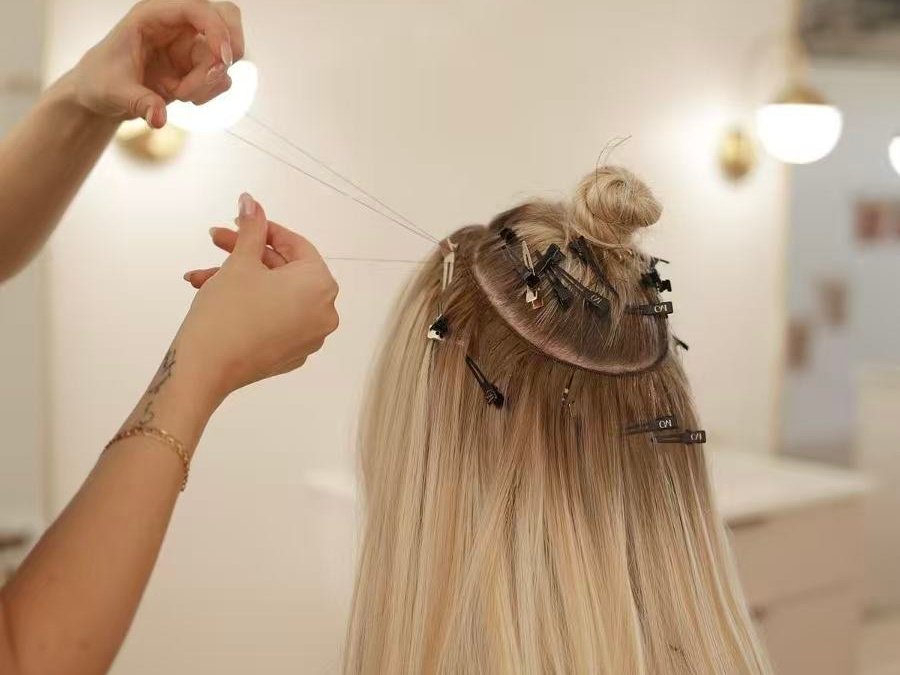
Attachment concealment means the bonds, tape, beads, or weft are hidden during normal movement and styling.
Haircut blending means the natural hair and extension length read as one connected finished shape.
If every attachment is covered but the client’s natural hair still looks like a separate layer sitting above the extensions, stop adjusting attachment placement first. The issue is more likely in the haircut shape, density transition, or relationship between the natural hair and finished length.
For clients who are still in the planning stage, see LumenFlow’s guide to planning extensions for short hair.
What Should You Check First When the Blend Looks Wrong?
Use the visible problem to decide what to inspect first.
| What You See | Check First | What to Consider Next |
|---|---|---|
| Strong horizontal line | Natural perimeter | Is the upper section too visually heavy, or is there not enough density below it? |
| Heavy top, thin bottom | Finished density | Reassess end density and whether the target length is too aggressive |
| Back blends, sides do not | Side transition | Review side density, placement, and the finished silhouette |
| Attachments are hidden but the result still looks disconnected | Haircut shape | Stop adjusting concealment and assess the visual connection |
| Shape looks balanced but the color still separates | Color transition | Recheck depth, undertone, and dimension |
| The result only blends when curled | Base blend | Recheck shape, density, length, placement, and color first |
This prevents the stylist from changing the wrong part of the service.
What Should You Do If the Blunt Line Is Still Visible?
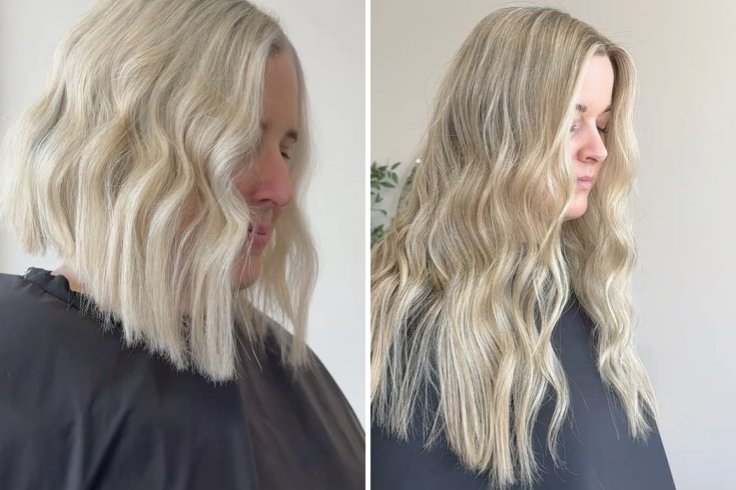
Let the hair fall naturally before styling and locate the exact point where the natural perimeter creates a visible horizontal line.
Compare the visual weight above and below that line.
If the natural hair above the transition looks much heavier, the finished haircut may need professional shaping to create a softer connection into the extension length.
If the extension hair below the line looks too thin, do not automatically keep removing weight from the client’s natural hair. The issue may be insufficient finished density or a target length that is too ambitious for the current plan.
Correct the problem you can actually see rather than making a general adjustment to the whole installation.
What Should You Do If the Top Looks Heavy and the Ends Look Thin?
Step back from the attachment area and look at the finished silhouette.
If the natural hair looks full through the upper section but the extension hair becomes noticeably thinner below it, compare the density through the transition and ends.
The next decision may be more supported density, a shorter finished length, or both.
Adding more extension hair is not automatically the answer. Any additional hair still needs to make sense for the client’s natural support, placement, and overall service plan.
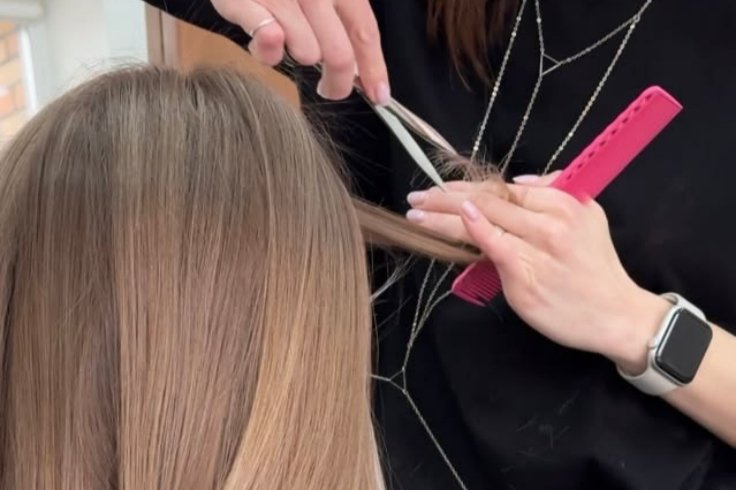
What If the Back Blends but the Sides Don’t?
Do not evaluate a short-to-long transformation only from behind the chair.
Check the result from the:
- front
- three-quarter view
- side
- back
A result may look full and connected from the back while the side profile still shows a gap between the natural hair and added length.
When that happens, check whether the side transition areas have enough visual support and whether the placement contributes to the finished silhouette.
Any adjustment still needs enough natural hair to support and conceal the attachment. The finished shape should connect around the entire head, not just from the back.
What If the Shape Works but the Color Still Looks Separate?
If the haircut shape and density look balanced but the transition still feels obvious, compare the natural hair directly with the extension hair through the visible transition area.
Pay particular attention to the client’s mid-lengths and ends.
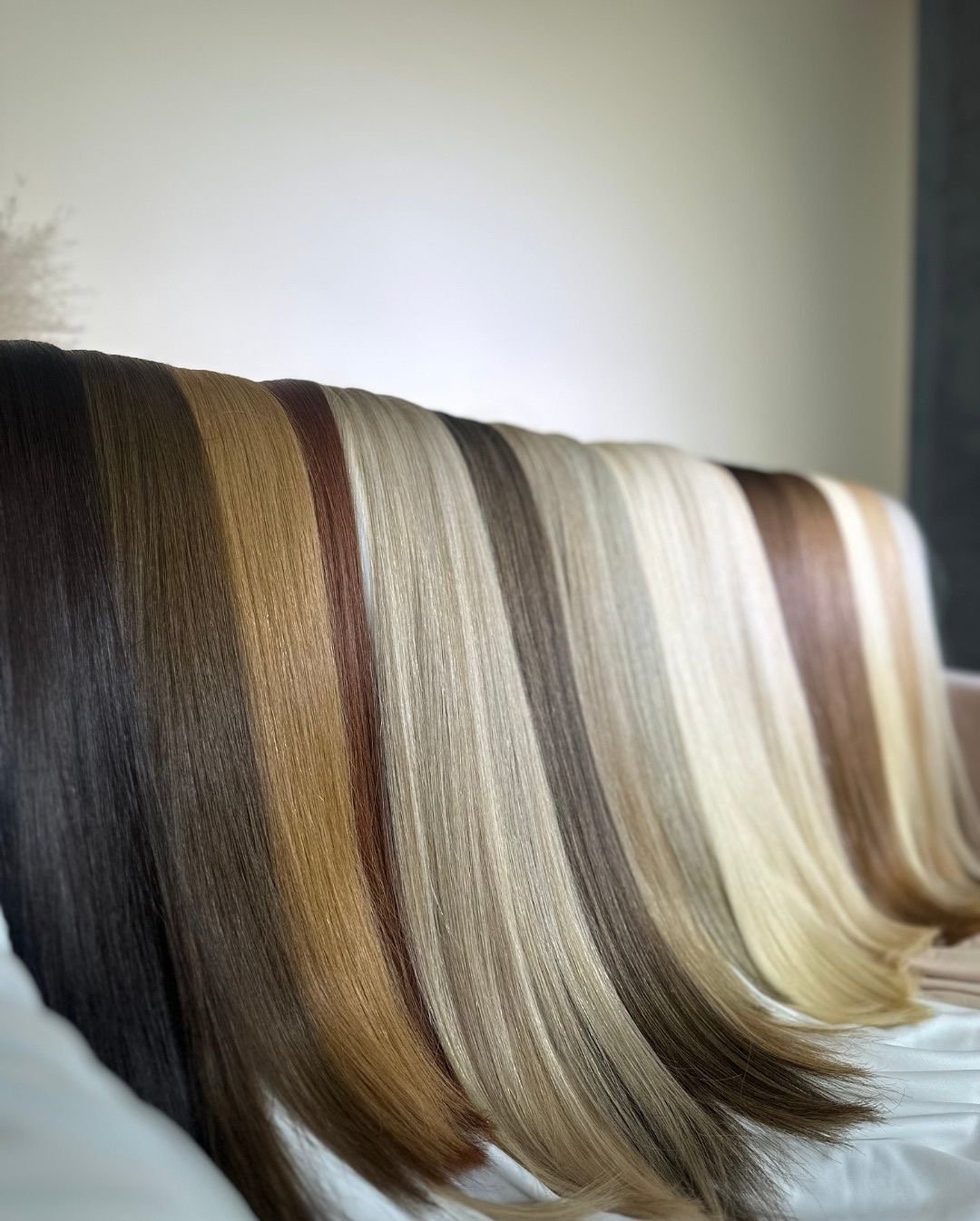
A shade may appear close overall but still separate visually because the depth, undertone, highlights, lowlights, or dimensional pattern do not connect.
For clients with rooted color, balayage, highlights, or visible dimension, one flat shade may not always recreate the natural color pattern.
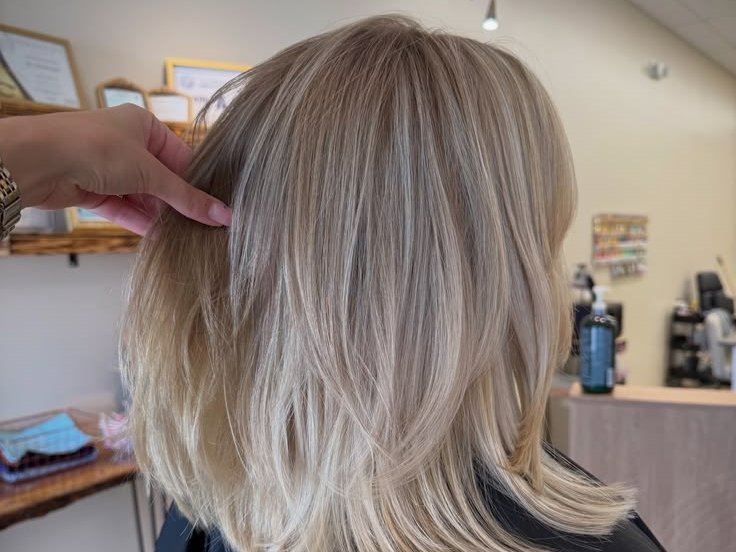
For the complete process, use LumenFlow’s professional hair extension color matching guide.
Should Styling Fix the Blend?
Styling can improve the finished result, but it should not be the first correction.
Use this order:
Shape → Density → Length → Placement → Color → Styling
Once the base blend works, styling the natural hair and extensions together can create shared movement and texture.
Waves or curls may visually soften the transition, but they should not be used to hide a strong blunt line, insufficient density, poor side connection, or obvious color separation.
If the result only looks believable when heavily curled, return to the base blend.
What Should You Check Before the Client Leaves?
Check the hair without relying on one viewing angle or one styled position.
1. Let the Hair Fall Naturally
Before curling or creating the final finish, let the hair sit in its natural position.
Check whether the natural perimeter still appears as a separate line.
2. Check the Front and Three-Quarter View
Look at how the natural hair transitions into the extensions around the face and sides.
A blend that works only from the back is not finished.
3. Check Both Side Profiles
Look for empty or disconnected areas between the shorter natural hair and the longer extension silhouette.
If one side feels weaker, identify whether the problem is shape, density, or placement before making an adjustment.
4. Bring the Hair Forward
Move the hair over the client’s shoulders.
This can reveal density differences that are less obvious when all the hair sits behind the back.
5. Change the Part and Move the Hair
Check whether the attachments remain reasonably concealed and whether the shape stays connected as the hair moves.
6. Check the Color in the Transition Area
Compare the client’s mid-lengths and ends directly with the extensions.
If the shape works but the hair still appears visually separate, color may be the remaining issue.
7. Style Last
Once shape, density, length, placement, and color work together, finish the service with the appropriate styling.
The blend should already make sense before styling is used to polish it.
Frequently Asked Questions
Why do hair extensions look like two different lengths?
A strong natural perimeter, insufficient density below that perimeter, or a large visual gap between the natural haircut and extension length can make the result look like two separate layers. Identify whether the problem is shape or density before changing the installation.
What should I check first when blending a blunt bob?
Start with the visible blunt line. Compare the visual weight above and below it to determine whether the natural perimeter is too dominant or the extension density underneath is too weak.
Does adding more hair always improve the blend?
No. More hair only helps when additional density is actually the problem and the natural hair can appropriately support it. In some cases, adjusting the finished length or shape creates a stronger result.
Should short-hair extensions already blend before curling?
Yes, the base blend should already look connected before curling. Styling can add shared movement and texture, but it should not be required to hide a poor shape, density transition, placement issue, or color mismatch.