A good online hair extension course should offer more than video lessons and a certificate. Stylists should look for clear technical training, hands-on practice, meaningful assessment, and a way to receive feedback before using the method on clients. The real value of a course is how well it helps you understand and practice the technique.
Can You Really Learn Hair Extensions Online?
Yes, but watching a technique is not the same as performing it.
Online education gives stylists the flexibility to learn at their own pace, replay difficult sections, and review lessons without traveling to an in-person class.
For a hands-on service like hair extensions, however, the course should include actual practice. A stronger learning process looks more like:
Learn → Practice → Submit → Receive Feedback
That gives the stylist a chance to turn information into a repeatable technique.
What Should an Online Hair Extension Course Teach?
The first thing to look at is the scope of the course.
Some programs focus deeply on the technical installation of one specific method. Others include broader topics such as client consultation, service planning, or multiple extension methods.
Neither approach is automatically better. The right choice depends on what you actually want to learn.
If your goal is to add one specific method to your services, a method-focused course may be more useful than a program that briefly covers several techniques.
LumenFlow’s Butterfly Weft course is method-focused, with training centered on the tools, sectioning, installation process, hands-on practice, submission, and assessment.
A longer course is not automatically a better course. Clear, practical instruction matters more than the number of modules.
Does the Course Include Hands-On Practice?
This is one of the most important things to check before enrolling.
Extension installation requires hand positioning, section control, tension management, and repetition. Those skills are difficult to develop by only watching demonstrations.
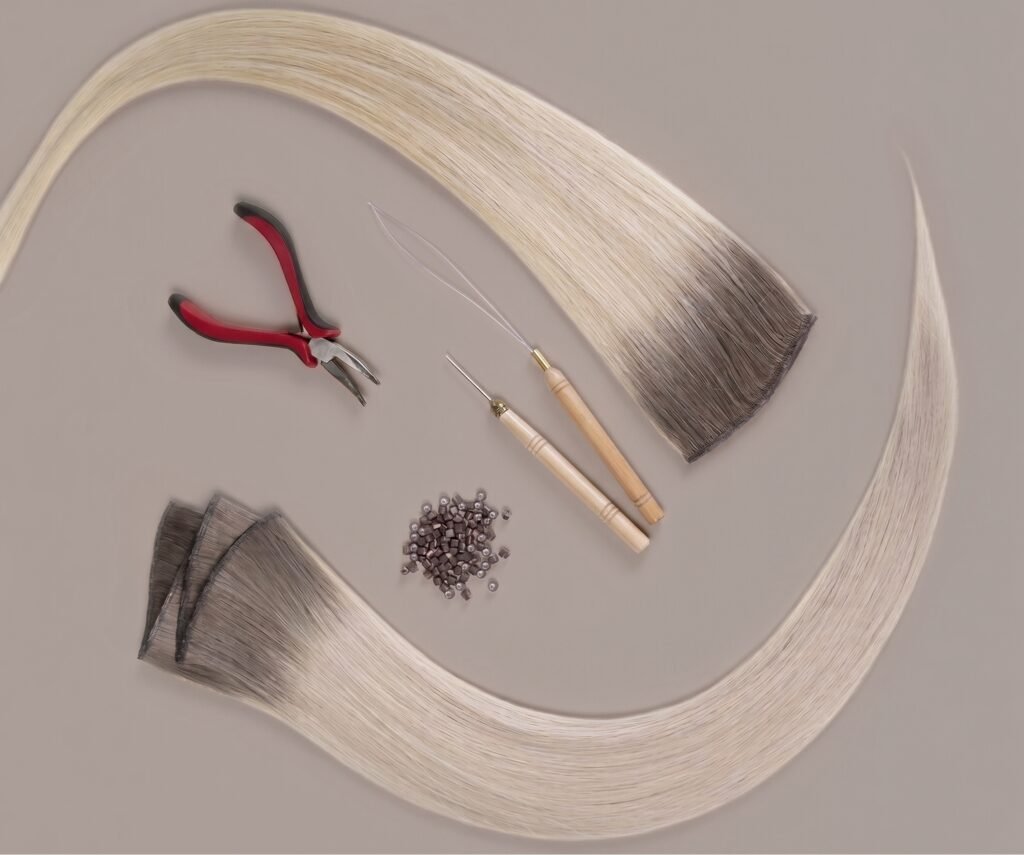
Check whether the course includes extension hair, tools, practice materials, or a structured assignment. If these are not included, find out what you will need to purchase separately before you can begin practicing.

How Does Certification Work?
The certificate itself is less important than the process required to earn it.
Before enrolling, ask what you need to submit. Does the course require practical work? Are photos or video reviewed? Can you receive feedback and resubmit if something needs improvement?
LumenFlow’s Butterfly Weft education follows a learn, practice, submit, and assessment process. Students submit both video and photos, can resubmit when needed, and receive professional feedback before certification.
You can review the LumenFlow Butterfly Weft professional education for more information about the course.
For a hands-on technique, this type of review gives the stylist another checkpoint before treating the certificate as the end of the learning process.
What Should You Check Before Paying for a Course?
Start with what is actually included in the price.
Some online courses provide only digital lessons, while others may include extension hair, tools, practice materials, assessment, or certification. A lower course price does not always mean a lower total training cost.
You should also look at how the course is delivered. If the training is self-paced, make sure the format works for the way you prefer to learn and review techniques.
Support matters as well. If you run into a problem while practicing, check whether there is a way to receive technical feedback.
LumenFlow’s current Butterfly Weft course is $399 and includes the online course, practice materials, professional installation tools, certification assessment, and certificate.
Does a Hair Extension Certificate Replace a Cosmetology License?
No.
A course certificate shows that you completed or passed the requirements of that specific training program. It does not automatically replace state licensing, salon regulations, or other professional requirements.
LumenFlow Education is open to anyone who wants to learn. However, purchasing a course and being legally permitted to perform professional salon services are separate matters.
If you plan to offer extensions professionally, check the requirements that apply in your state or local area.
What Makes an Online Hair Extension Course Worth It?
A useful course should help you do more than recognize what an installation looks like.
You should leave with a clearer understanding of the method, enough practice to identify your own mistakes, and a better idea of how to perform the technique consistently.
Look beyond the number of lessons or the appearance of the certificate.
For hands-on extension training, technical instruction, practice, assessment, and feedback are stronger indicators of value.
Frequently Asked Questions
Can beginners learn hair extensions online?
Yes. Online training can work for beginners when the course provides clear instruction and structured practice. The student still needs to spend time physically practicing the technique.
Do online hair extension courses include a kit?
Some do and some do not. Check whether extension hair, tools, practice materials, shipping, and assessment are included before comparing course prices.
How long does an online hair extension course take?
There is no standard length. Self-paced courses vary, and completing the lessons quickly is less important than understanding and practicing the method correctly.
Is online training better than in-person training?
Neither is automatically better. Online training offers flexibility and replayable lessons, while in-person education provides immediate face-to-face demonstration. Practice and feedback matter in both formats.
Should your work be reviewed before certification?
For hands-on technical training, practical review is a valuable quality indicator. It gives the student an opportunity to identify and correct problems before certification.