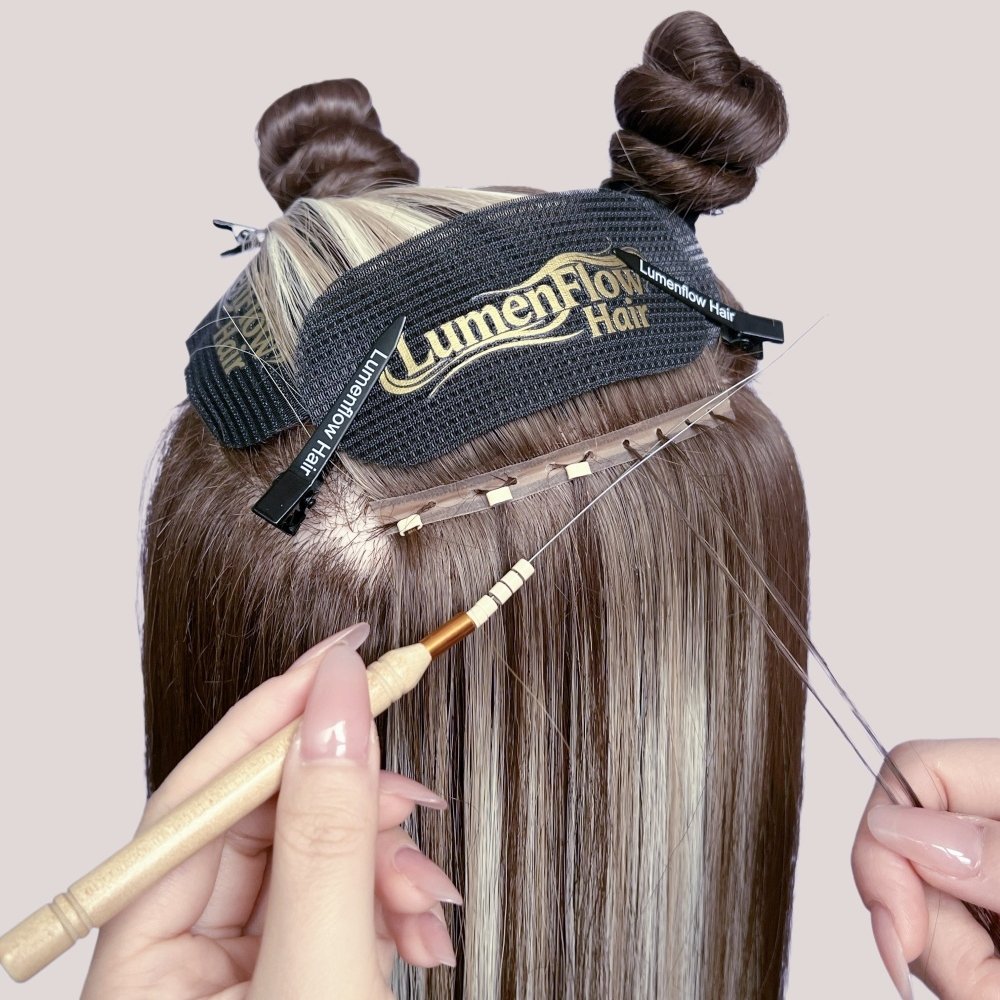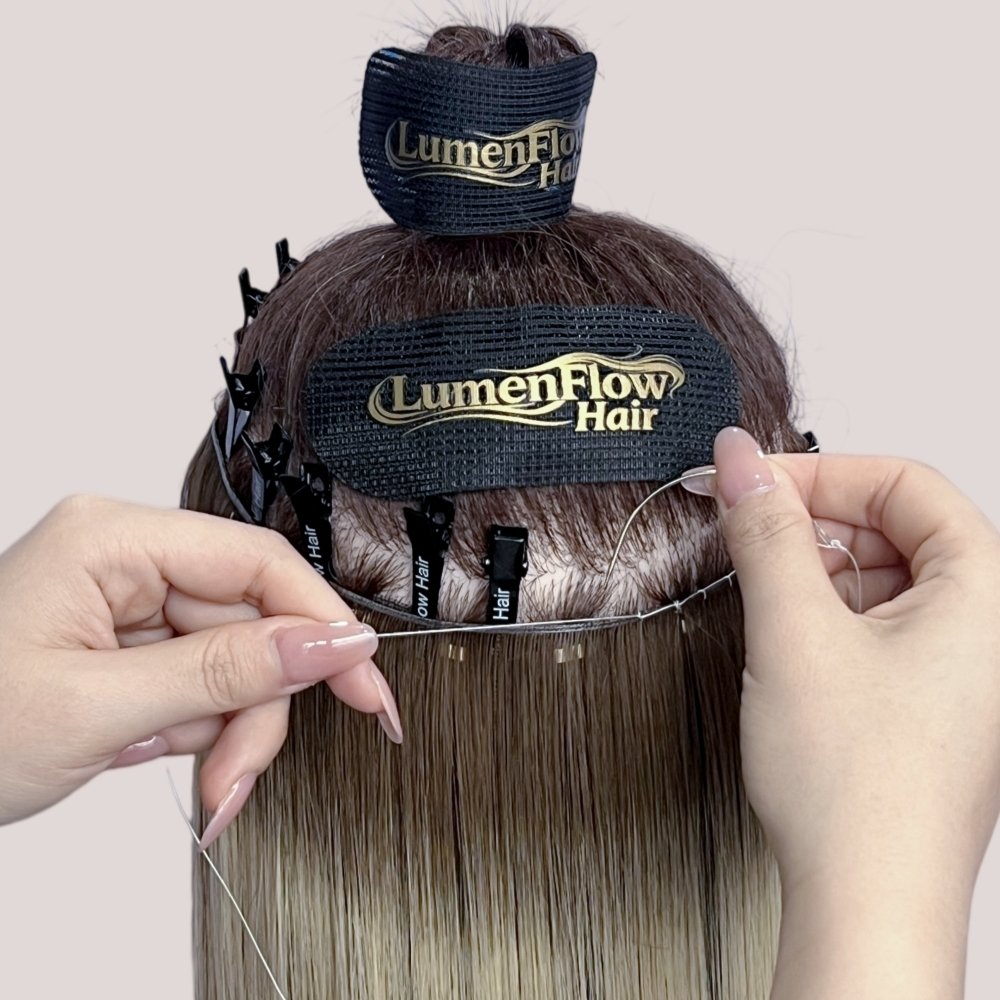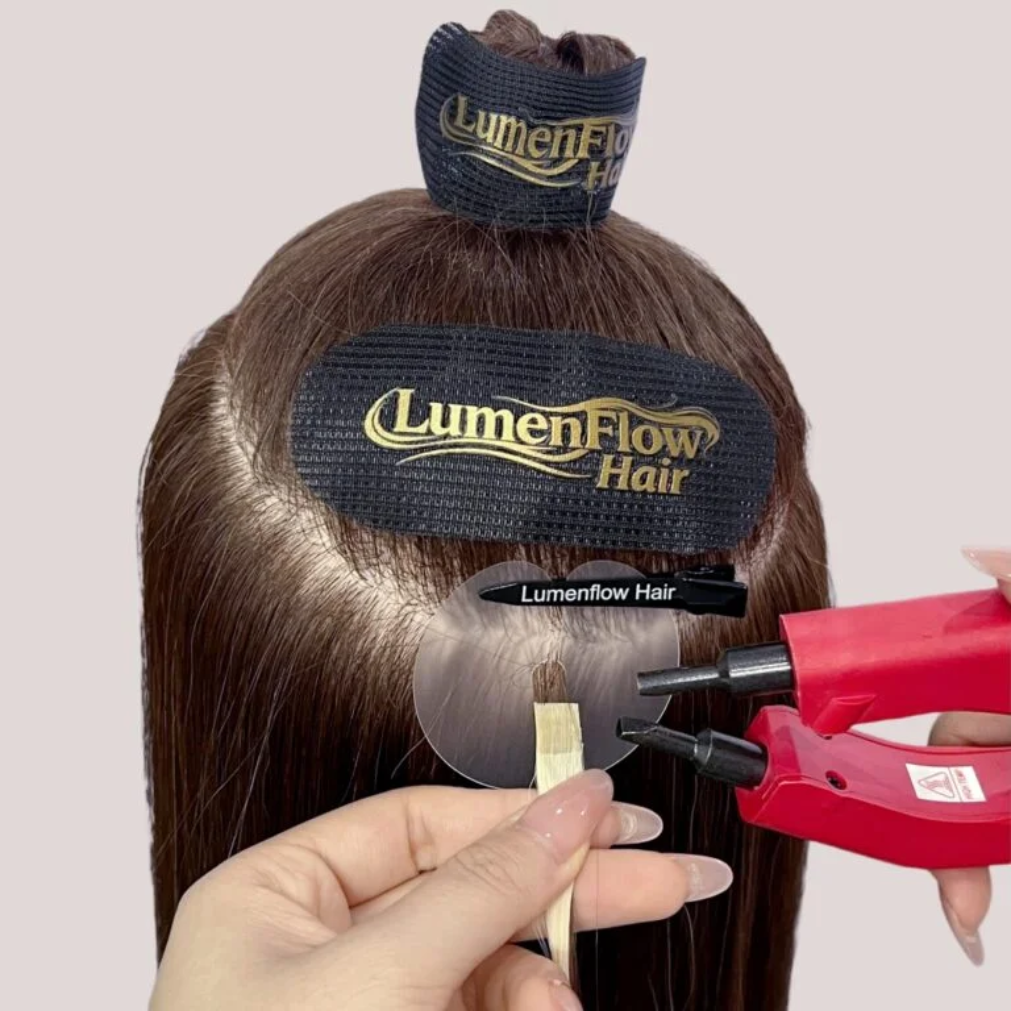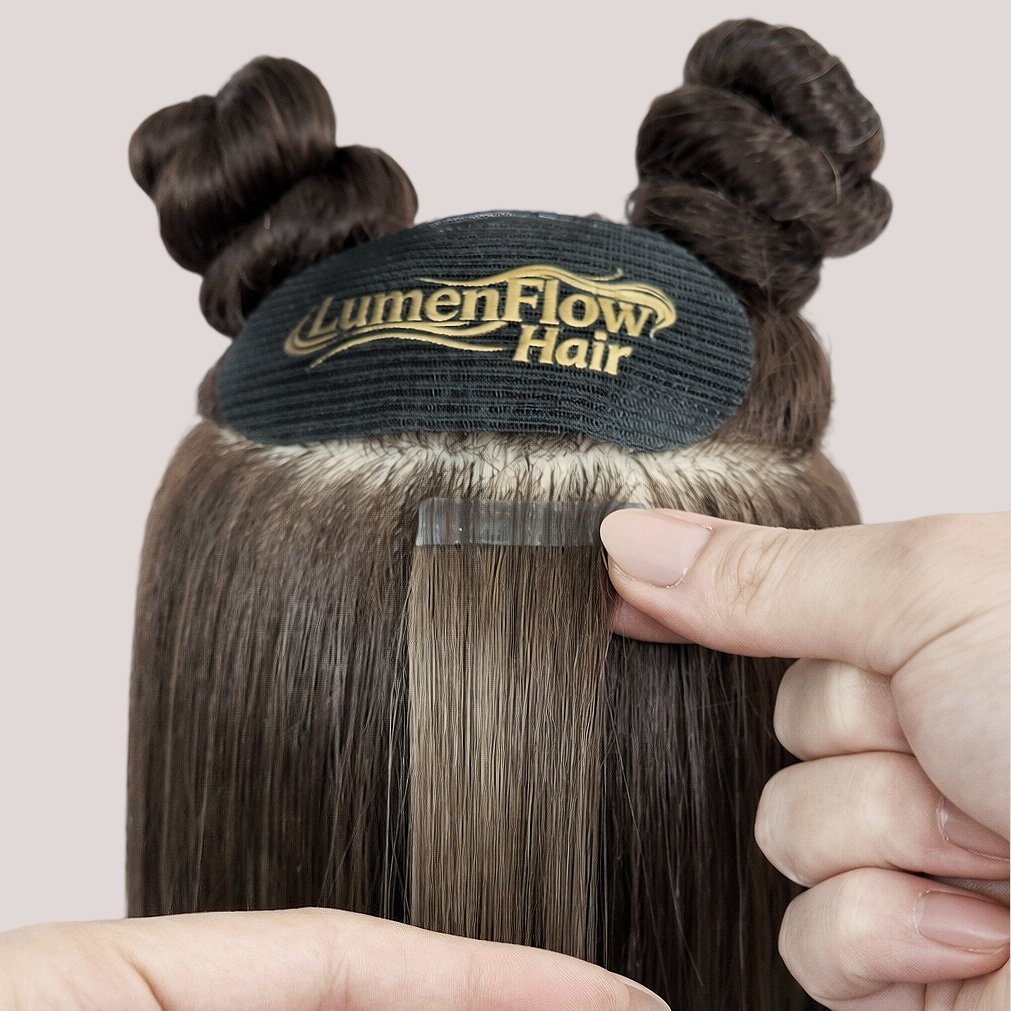
Genius Weft extensions are commonly installed using a beaded row foundation and sewing technique. A clean installation depends on more than simply attaching the weft. Foundation planning, placement, sewing tension, weight distribution, and natural-hair support all influence how the finished row sits, feels, and performs.
What Makes Genius Weft Different From Other Wefts?
Genius Weft is a professional weft construction designed to be thin, flexible, and customizable.
It is useful to separate the weft construction from the installation technique. Genius Weft describes the extension itself, while a beaded row and sewing technique describes how the stylist installs it.
LumenFlow Genius Weft is made with 100% Virgin Human Hair and can be cut as needed to customize the width for different placement areas.
Professional stylists can explore LumenFlow’s Genius Weft hair extensions when planning Genius Weft services.
How Are Genius Weft Extensions Installed?
LumenFlow Genius Weft is officially recommended for installation using a beaded row foundation with a sewing technique.
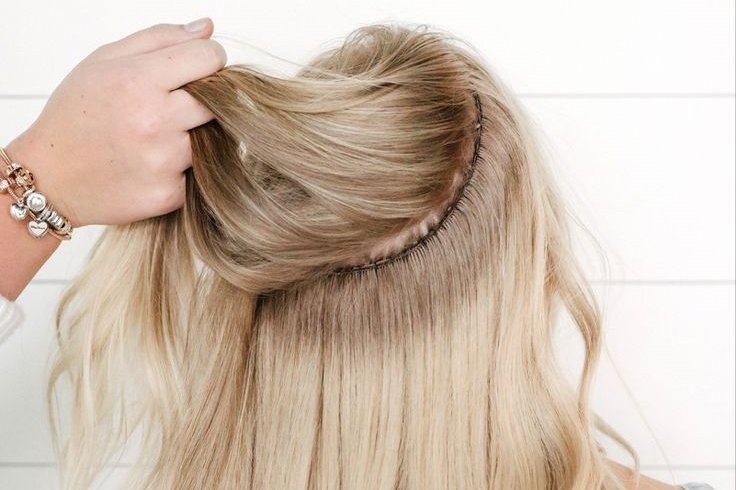
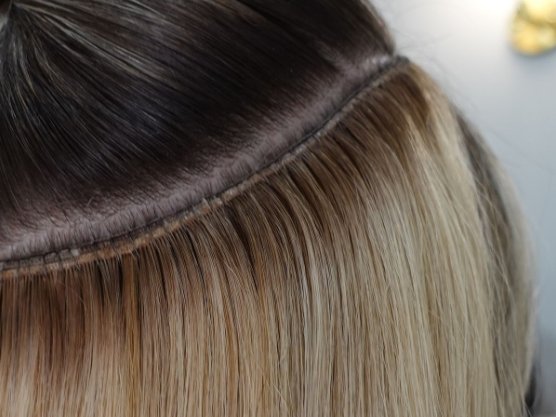
The stylist first creates a stable foundation using silicone-lined beads or micro beads. The weft is then positioned along that foundation and secured with professional extension thread.
The goal is not to make the row as tight as possible. A professional installation should feel secure while allowing natural movement and avoiding unnecessary tension on individual sections of natural hair.
The exact row design should still be adapted to the client’s density, hair condition, head shape, desired result, and the stylist’s professional judgment.
How Should Stylists Prepare the Foundation Before Sewing?
A strong Genius Weft installation starts before the needle and thread are used.
The stylist should first evaluate the client’s natural density, strand strength, growth pattern, coverage, and how much extension weight the natural hair can comfortably support.
The beaded foundation should provide enough stability for the planned weft while allowing the row to sit naturally against the head.
If the foundation is uneven, poorly positioned, or carrying too much weight, the finished installation may feel less balanced and may not sit as cleanly.
What Should Stylists Focus on When Sewing Genius Weft?
When sewing Genius Weft onto the beaded foundation, the goal is to keep the weft secure, flat, and evenly supported across the row. The thread tension should remain controlled throughout the installation rather than being pulled excessively tight.
LumenFlow’s sewing technique uses double thread with a lock stitch and closed blanket stitch to secure the weft. Avoid sewing directly over the beads; the stitching should work with the foundation without placing unnecessary pressure on the bead attachment points.
As the row progresses, continue checking alignment, tension, and how the weft sits against the head. The end of the row should be secured with the recommended 2 × 3 knots so the stitching remains stable.
A clean sewing technique is not about adding more stitches. It is about keeping the attachment consistent, balanced, and appropriate for the client’s natural hair and row design.
How Should Genius Weft Placement Be Planned?
Placement should be designed around the client rather than copied from a fixed row map.
The stylist needs to consider where the client wants more length or volume, how the natural hair falls, and how the client normally styles their hair.
Areas such as the perimeter, crown, and sides may require different planning because coverage and visibility can vary from one client to another.
A well-planned row balances three things:
support, concealment, and natural movement.
How Should Tension and Weight Be Managed During Sewing?
A secure Genius Weft row should not feel excessively tight.
The beaded foundation, sewing tension, and amount of extension hair all need to work together. Too much tension or too much weight concentrated in one area can create unnecessary stress on the natural hair.
Multiple Genius Wefts can be stacked when additional volume is needed.
There is no universal maximum number of wefts or fixed amount of hair that works for every client. The stylist should decide how much to use based on natural-hair density, support, coverage, hair condition, and the desired result.
What Are the Most Common Genius Weft Sewing Mistakes?
Creating Too Much Tension
A common mistake is assuming that a tighter row will automatically be more secure.
Professional installation is about controlled, balanced support rather than maximum tightness. Excessive tension can make the row uncomfortable and place unnecessary stress on the natural hair.
Poor Foundation Planning
The beaded row is the foundation of the installation.
If the foundation is uneven or does not match the client’s natural hair and service plan, the weft may not sit as cleanly or distribute weight evenly.
Adding Too Much Weight
More extension hair does not automatically create a better result.
The amount of hair added should match the natural hair available to support it. A high-density client may require a different plan from someone with finer or lower-density hair.
Ignoring Concealment
A row can be technically secure but still be poorly placed if it becomes visible when the client moves, parts, or ties up the hair.
Placement should be planned around the client’s real styling habits, not only how the hair looks while they are sitting in the salon chair.
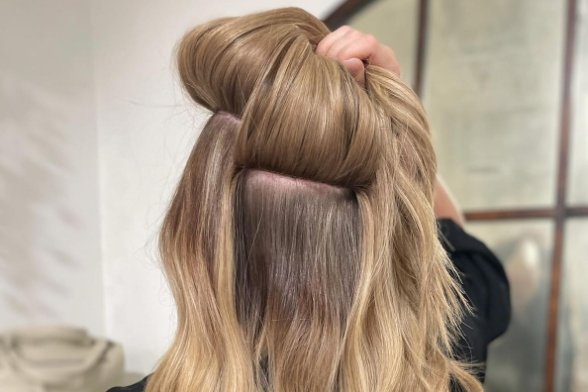
Can Genius Weft Be Cut or Customized?
Yes.
LumenFlow Genius Weft can be cut as needed, allowing the stylist to customize the width for different areas of the head.
This gives the stylist more flexibility when designing rows instead of forcing the same weft width into every placement.
Customization should still be planned around natural-hair support, concealment, and the overall installation design.
How Long Do Genius Weft Extensions Last?
There are two separate timelines to explain to clients: maintenance and the lifespan of the extension hair.
LumenFlow recommends professional Genius Weft maintenance approximately every 6–8 weeks.
The extension hair itself is made with 100% Virgin Human Hair and can last more than 12 months with proper care.
Regular maintenance, appropriate home care, heat styling habits, and professional handling can all influence how the hair performs over time.
Frequently Asked Questions About Genius Weft Sewing
Can Genius Weft be sewn in?
Yes. LumenFlow officially recommends Genius Weft installation using a beaded row foundation and sewing technique.
Does Genius Weft need beads?
The recommended LumenFlow installation method uses a beaded row foundation before the weft is sewn into place.
Can Genius Weft be cut?
Yes. LumenFlow Genius Weft can be cut as needed to customize the width for the planned placement.
Can Genius Weft be stacked?
Yes. Multiple Genius Wefts can be stacked when additional volume is needed. The amount should be planned according to the client’s natural-hair density, support, coverage, hair condition, and desired result.
How often does Genius Weft need maintenance?
LumenFlow recommends professional maintenance approximately every 6–8 weeks.
How long does Genius Weft hair last?
LumenFlow Genius Weft is made with 100% Virgin Human Hair and can last more than 12 months with proper care.