Hair extension matting at the roots can develop when naturally shed hair, grow-out, friction, moisture, product buildup, or attachment-related factors cause neighboring strands to tangle together. The first step is to determine whether the client has loose tangling that can still be separated or a dense mat that needs more controlled professional attention. Do not assume every case is simply poor aftercare.
Is It Tangling or True Root Matting?
Not every knot around an extension attachment is matting.
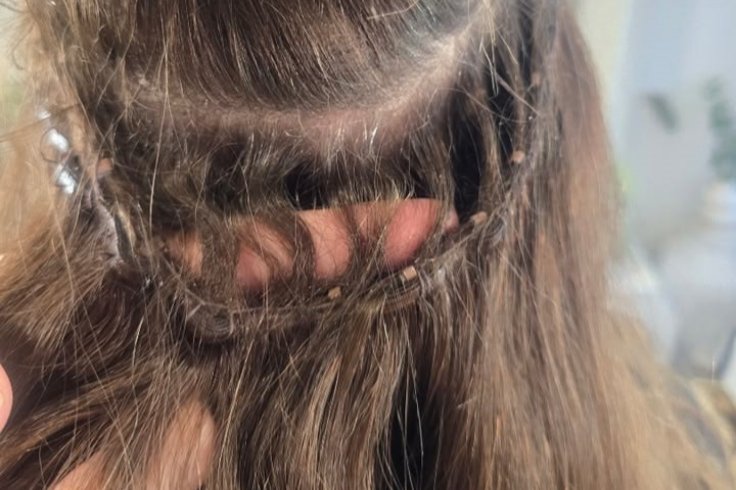
Tangling usually involves smaller, looser knots where individual strands can still be identified and separated.
Matting is more compact. Natural hair, shed strands, and sometimes neighboring attachment areas can become packed together into a dense section that is much harder to release without creating pulling.
That distinction should determine how cautiously the area is handled.
Why Do Hair Extensions Mat at the Roots?
Root matting often develops from several factors working together rather than one single mistake.
Naturally Shed Hair Can Stay Around the Attachment Area
Natural hair continues to shed during an extension wear cycle.
With semi-permanent extensions, some shed strands may remain temporarily held around the attachment instead of falling away immediately.
As the installation grows out, those loose strands can begin crossing or wrapping around neighboring hair and attachment areas. A small tangle can gradually become more compact.
Grow-Out Gives Neighboring Hair More Room to Cross Over
As the natural hair grows, attachments move farther from their original position.
That creates more movement around the root area. If neighboring attachment zones begin interacting instead of remaining clearly separated, check the grow-out and maintenance history before treating the problem as an isolated knot.
Moisture and Friction Can Make Existing Tangles Harder to Release
Pay attention to where the matting appears.
If it is concentrated around the nape or another high-friction area, look at how that zone behaves during sleep, exercise, clothing contact, and daily styling.
If the attachment area is frequently left damp, existing tangles may become harder to separate as the hair repeatedly dries in a compacted position.
Product Buildup Can Complicate Separation
Heavy residue near the root area can make neighboring strands more difficult to separate cleanly.
Buildup should be considered when the area feels coated, sticky, or unusually difficult to work through, but it should not automatically be treated as the only cause.
What Should a Stylist Check First?
Start with what you can actually see and feel before trying to detangle the area.
| What You See | Check First | What to Do Next |
|---|---|---|
| Small, loose tangles between attachments | Separation and grow-out | Check whether individual strands and attachments can still be clearly isolated |
| Dense mat close to the scalp | Severity | Stop aggressive brushing and assess how much natural hair and how many attachments are involved |
| Several attachments tangled together | Grow-out and maintenance | Decide whether the installation can still be safely separated in place |
| Matting mainly around the nape | Friction and moisture | Review whether the area is repeatedly damp, compressed, or exposed to friction |
| Heavy residue near the roots | Product buildup | Assess the attachment area before deciding what else needs correction |
| Matting with strong pulling or discomfort | Natural hair and tension | Stop manipulating the area and reassess before continuing |
How Should a Stylist Identify the Main Cause?
Look at the pattern instead of immediately deciding that the problem is aftercare, maintenance, or installation.
If matting is concentrated in a repeatedly damp or high-friction area, the client’s wear pattern may be contributing.
If several attachment areas have become tangled together and grow-out is significant, maintenance timing and accumulated shed hair deserve more attention.
If the same zone repeatedly mats across more than one wear cycle, reassess how the attachment, sectioning, placement, and natural movement behave in that area before recreating the same plan.
The pattern tells you more than assigning blame to one cause.
How Is Root Matting Different From Hair Extension Slippage?
Matting and slippage can occur during the same wear cycle, but they are not the same problem.
Slippage means an extension attachment moves from its intended position or loses its hold earlier than expected.
Root matting means natural hair, shed hair, or neighboring attachment areas become tangled together near the roots.
If the main issue is attachment movement rather than compacted tangling, use LumenFlow’s hair extension slippage guide to troubleshoot that problem separately.
When Should You Stop Trying to Detangle the Mat?
Stop treating the problem like routine tangling when the mat becomes too dense to work through without significant resistance.
Be more cautious when:
- the mat sits very close to the scalp
- several attachment points are trapped together
- the natural hair inside the mat cannot be clearly identified
- separation creates strong pulling or discomfort
- the area becomes tighter as you work
- the attachment cannot be safely accessed
At that point, aggressive brushing is not the next step.
The stylist should reassess whether controlled professional removal would provide safer access to the natural hair than continuing to work around the existing installation.
Clients should not be advised to cut out dense mats, pull through them, or remove semi-permanent attachments themselves.
When Should Extensions Be Removed or Reinstalled?
Not every matted installation needs to be removed.
The decision depends on the severity of the matting, how many attachments are involved, the amount of grow-out, the condition of the natural hair, and whether the affected area can still be safely separated while the installation remains in place.
Removal or reinstallation may be more appropriate when several attachments are trapped inside one dense mat, the stylist cannot clearly access the natural hair, grow-out is significant, or continued detangling creates unnecessary pulling.
If removal is needed, it should be handled as a professional extension service rather than a DIY correction.
What Should Change in the Next Wear Cycle?
Once the matting is resolved, use what happened to adjust the next service rather than automatically recreating the same plan.
If the main pattern involved grow-out and trapped shed hair, review the professional maintenance plan.
If matting repeatedly developed in a damp or high-friction area, address that specific wear pattern.
If neighboring attachments repeatedly became tangled in the same zone, reassess the installation plan in that area before reinstalling.
The goal is not simply to remove the mat. It is to understand why that particular area became difficult to maintain.
For broader principles around natural-hair protection during extension services, see LumenFlow’s guide to protecting the client’s natural hair.
Frequently Asked Questions
Why do hair extensions mat at the roots?
Root matting can develop from naturally shed hair becoming trapped around attachments, grow-out, friction, moisture, product buildup, delayed maintenance, or attachment-related factors. The location and pattern of the matting help determine what the stylist should investigate first.
Is root matting the same as tangling?
No. Tangling usually involves smaller, looser knots that can still be separated more easily. Matting is denser and more compact and may involve multiple strands or attachment areas.
Can naturally shed hair contribute to root matting?
Yes. Some naturally shed strands may remain temporarily trapped around semi-permanent extension attachments. As the installation grows out, those strands can become involved in tangling around neighboring hair.
Should clients cut matting out themselves?
No. Dense matting close to semi-permanent extension attachments should be professionally assessed. Cutting or pulling at the mat makes it difficult to distinguish natural hair from shed or tangled strands and can create unnecessary pulling or breakage.
When should a stylist consider removing extensions because of matting?
Removal may be appropriate when the mat is too dense to separate safely around the existing installation, several attachments are trapped together, grow-out is significant, or the natural hair and attachment area cannot be clearly and safely accessed.