Genius Weft extensions give stylists a thin, flexible, and highly customizable weft option for clients who want length or volume without unnecessary bulk at the attachment area. Because the weft can be cut to fit the planned row, it gives professionals more control over placement and customization. The best results still depend on proper client assessment, installation technique, weight distribution, and maintenance planning.
What Are Genius Weft Hair Extensions?
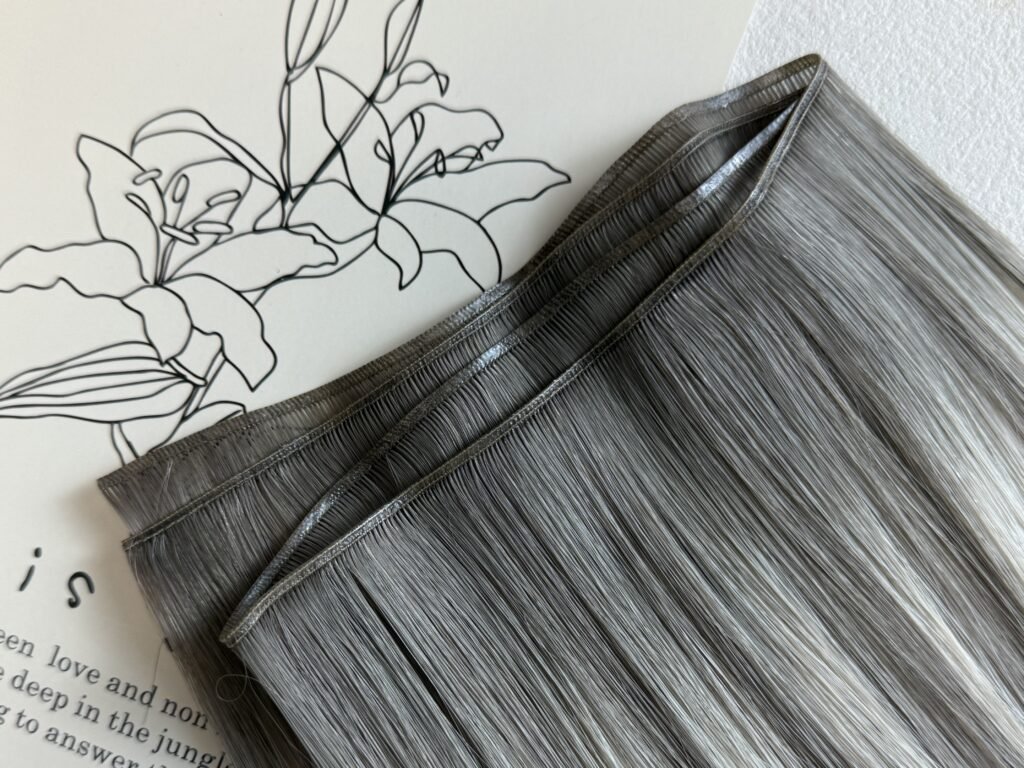
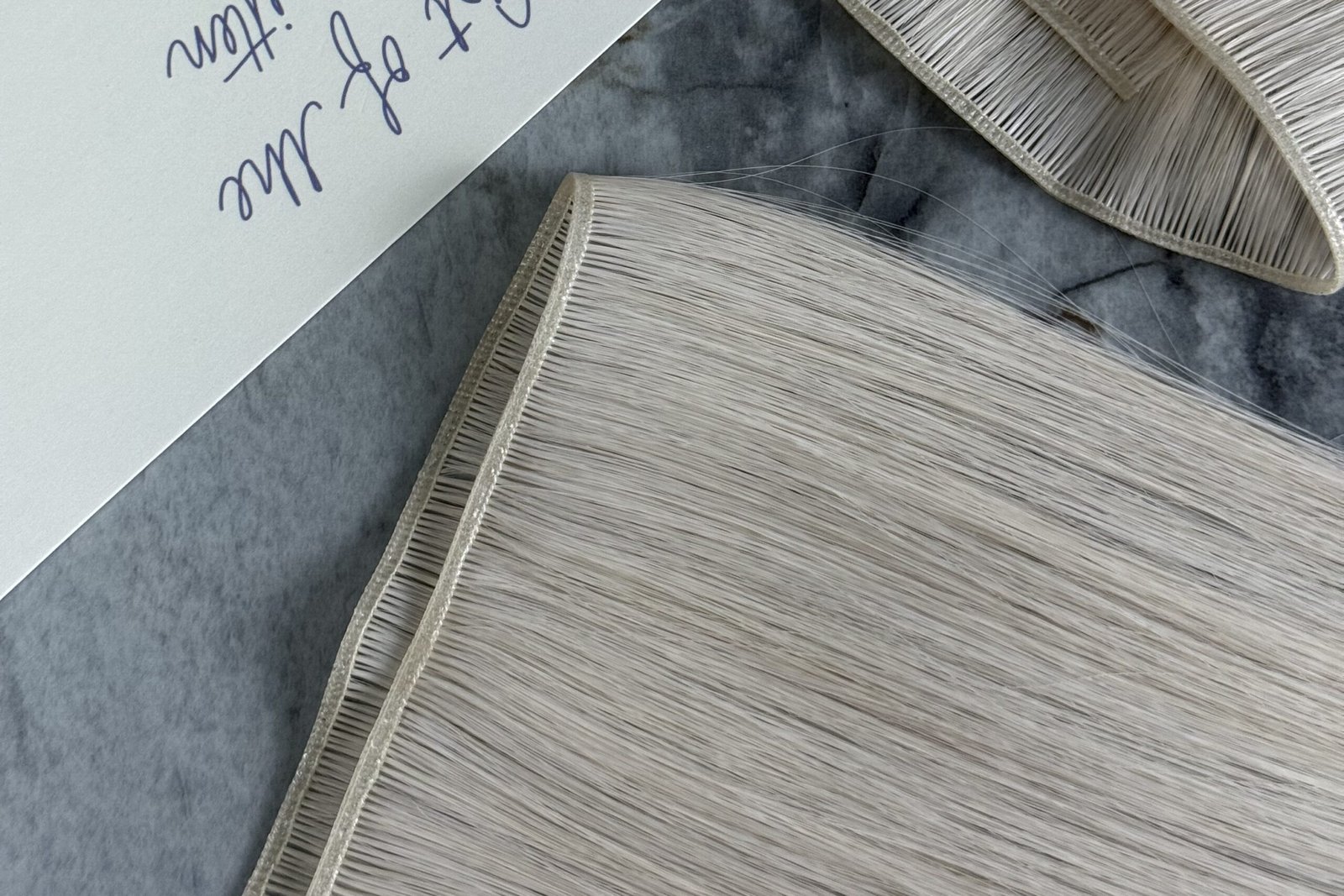
Genius Weft is a professional weft extension method designed with a thin, flexible construction that allows stylists to customize each row according to the client’s head shape and installation plan.
Unlike some traditional wefts, Genius Weft does not have short return hair along the top of the weft. This creates a cleaner attachment area and can help reduce unwanted bulk near the scalp.
LumenFlow Genius Weft is made with 100% Virgin Human Hair and can be cut where needed without requiring the stylist to seal the cut edge.
What Makes a Genius Weft Different From a Traditional Weft?
One of the biggest differences is how much control the stylist has over the row.
Traditional machine-made wefts can feel heavier or thicker at the seam, while some hand-tied wefts have limitations on where they can safely be cut. Genius Weft gives the stylist more freedom to customize the width of each section without having to fold excess weft back into the row.
That flexibility becomes especially useful when working around the temples, sides, or areas where a full-width weft would create unnecessary bulk.
Why Do Stylists Choose Genius Weft Extensions?
For professionals, the value of a weft is not only how it looks after installation. It also needs to work with the client’s natural hair, the stylist’s placement plan, and the way the row will behave between maintenance appointments.
Genius Weft gives stylists more control over those decisions.
More Control Over Row Customization
A cuttable weft makes it easier to build a row around the client’s actual head shape rather than forcing the head to fit a predetermined piece of hair.
A stylist may need a shorter section near the sides, a longer section across the back, or a different amount of hair in specific areas. Being able to customize the weft allows the installation plan to follow those needs more closely.
This can also reduce the need to fold unnecessary material back into the row.
Less Bulk at the Weft Area
A thin weft profile can help create a flatter installation, particularly when concealment is a priority.
This does not mean that every client should receive the same amount of extension hair. The stylist still needs to evaluate how much weight the natural hair can comfortably support and how much extension hair is necessary to achieve the client’s goal.
The advantage is that the weft itself does not introduce unnecessary thickness at the seam.
Flexible Placement for Different Client Needs
No two extension installations should be planned exactly the same way.
Head shape, natural density, haircut, desired length, styling habits, and the client’s preferred parting can all affect where rows should be placed.
A flexible weft gives the stylist more options when adjusting those placements.
Which Clients Are Good Candidates for Genius Weft?
Genius Weft can work for many extension clients, but method selection should always start with the natural hair rather than the extension product.
Before choosing a weft, assess the client’s density, strand strength, scalp condition, current haircut, lifestyle, and expectations for both volume and length.
Natural Hair Density and Strength
Density tells you how much natural hair is available to conceal and support the installation. Strand strength helps determine how much tension and extension weight the natural hair can reasonably manage.
Two clients may both describe their hair as “fine,” but their extension plans may need to be completely different.
One may have fine strands with good overall density, while another may have fine strands with low density. That distinction matters when planning row placement and weight distribution.
Desired Length vs. Volume
A client who only wants fullness through the ends may require a very different installation from someone looking for a major length transformation.
More extension hair is not automatically better.
Professional installations should be planned around the result the client actually needs. In some cases, strategically placed hair can create a more natural finish than simply adding more weight.
Stylists who want to review length planning can also reference LumenFlow’s hair extension length guide.
Styling and Maintenance Habits
Consultation should also include the client’s routine.
Ask how often they wear their hair up, how they normally style it, how frequently they wash, and whether they are willing to return for regular maintenance.
These details can influence row placement just as much as the client’s hair density.
Are Genius Weft Extensions Good for Fine Hair?
Genius Weft can be a useful option for some fine-haired clients because its thin construction helps reduce bulk at the attachment area. However, fine hair alone should never be the reason a stylist automatically chooses one extension method.
The natural hair still needs enough strength and density to support the planned installation.
Fine Hair Is Not the Same as Low-Density Hair
This distinction is especially important during consultation.
“Fine hair” describes the diameter of the individual strands. “Low-density hair” describes how much hair is present on the scalp.
A client can have very fine strands but still have enough density for a carefully planned weft installation. Another client may have both fine strands and very low density, which may require a different approach, lighter placement, or another extension method altogether.
For a more detailed breakdown, see LumenFlow’s professional guide to choosing extensions for fine or thin hair.
What Should Stylists Look for in a Professional Genius Weft?
Not every product sold under the name “Genius Weft” will perform exactly the same behind the chair.
For working stylists, consistency matters. The weft needs to behave predictably during customization, installation, maintenance, and reinstallation.
Weft Construction and Cut Stability
If a weft is marketed as cuttable, the construction should allow the stylist to customize it without creating unnecessary complications at the cut edge.
LumenFlow Genius Weft can be cut where needed and does not require sealing after cutting.
That gives the stylist more freedom to prepare each section around the planned row instead of working around a fixed weft width.
Hair Quality and End Density
The extension hair itself matters just as much as the seam.
Stylists should consider how the hair looks through the lengths and ends, how it blends with the client’s natural hair, and how consistent the quality is across repeat orders.
LumenFlow Genius Weft uses 100% Virgin Human Hair.
Color Matching and Shade Selection
A technically good installation can still look obvious if the color match is wrong.
Professional color matching is rarely about choosing a single shade from the root through the ends. Many clients need a combination of tones to recreate the depth and dimension already present in their natural hair.
Stylists should evaluate the client’s root area, mids, ends, highlights, lowlights, and overall tonal direction before ordering.
Consistency Across Reinstallations
Extension work is not a one-appointment service.
A professional product needs to continue performing as the client returns for maintenance and the stylist works with the hair again.
With proper care, LumenFlow Genius Weft hair can last more than 12 months, making ongoing maintenance and reinstallation planning part of the overall client experience.
Stylists can view the current LumenFlow Genius Weft collection for available professional options.
How Are Genius Weft Extensions Installed?
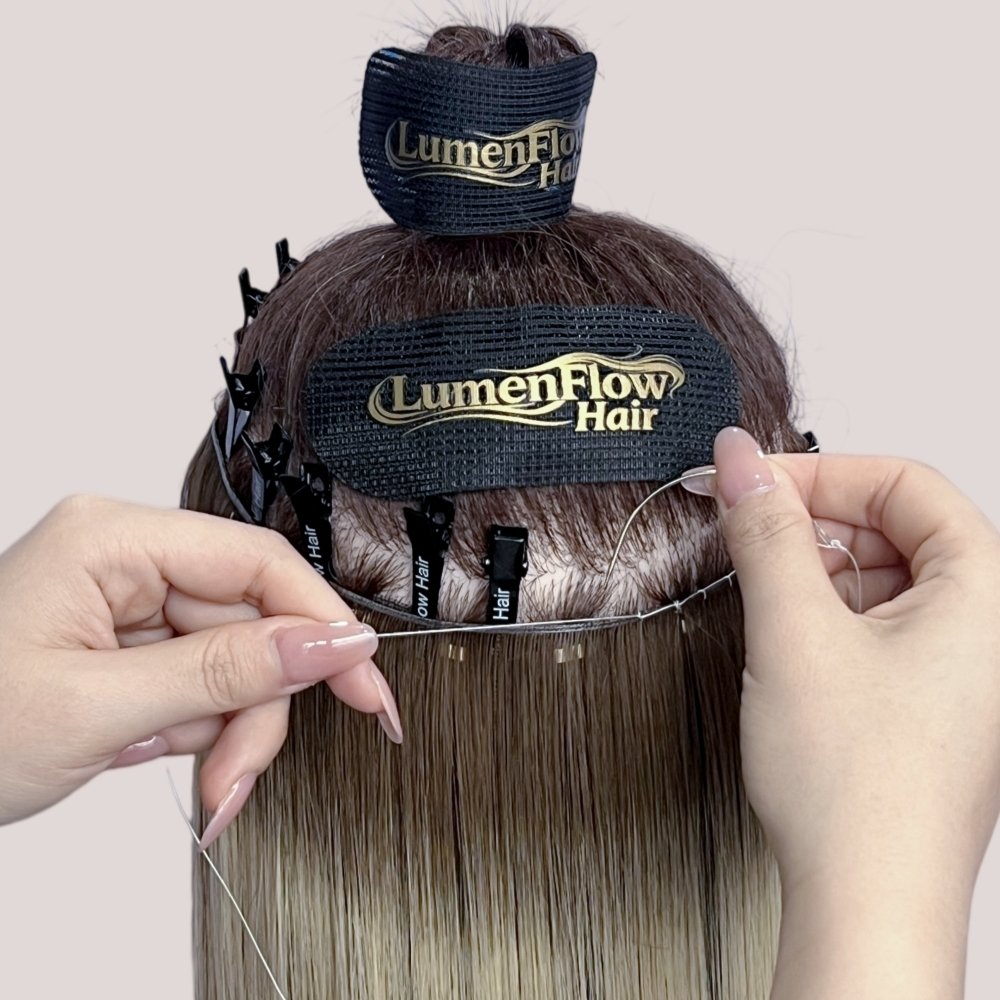
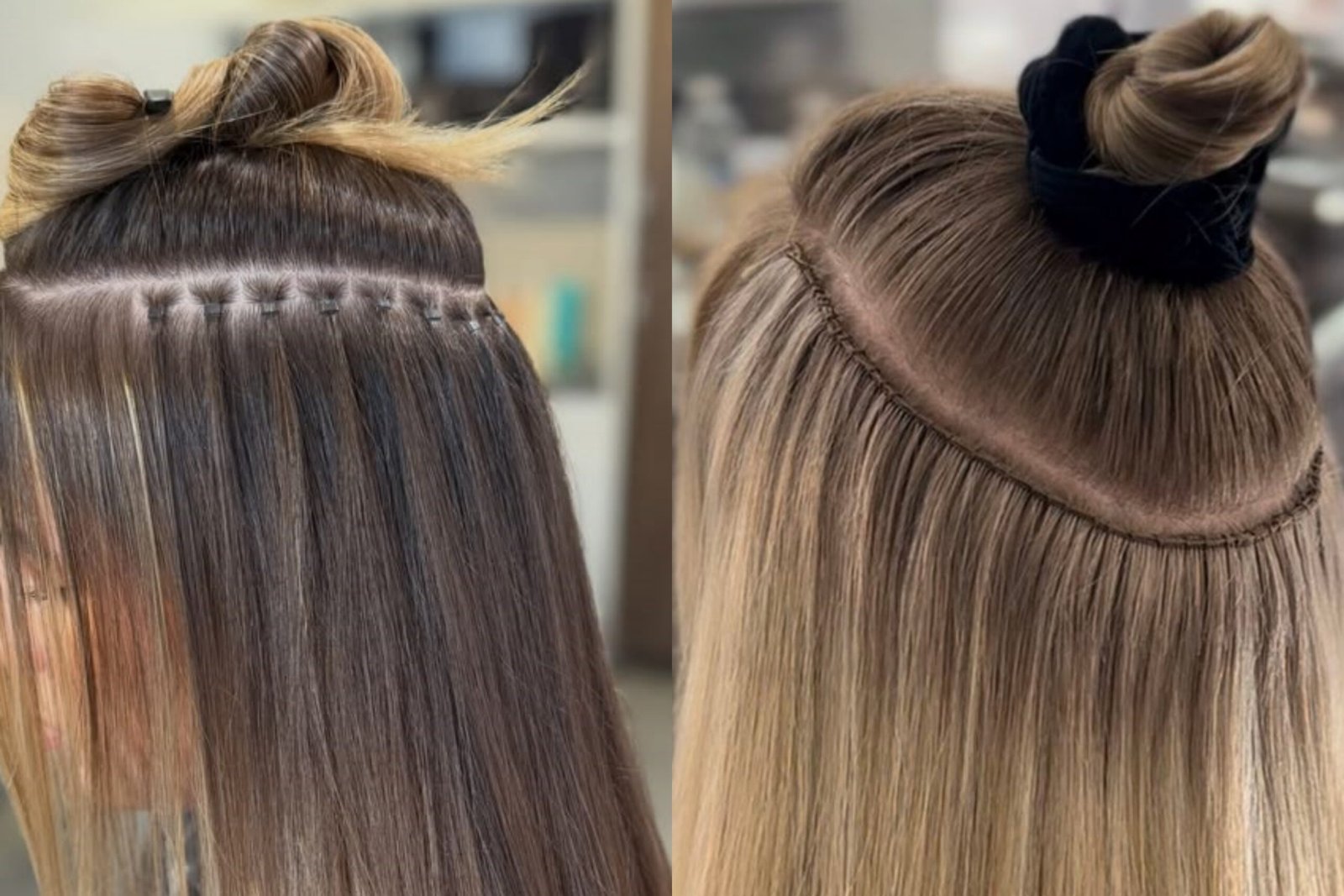
Genius Weft is commonly installed using a beaded row foundation and sewing technique. The exact row design, placement, tension, and amount of hair should be adapted to the client’s natural hair, density, styling habits, and desired result.
For a more detailed look at foundation preparation, sewing principles, tension control, and common installation mistakes, see our Genius Weft sewing technique guide.
How Often Do Genius Wefts Need Maintenance?
LumenFlow recommends a Genius Weft move-up approximately every 6–8 weeks.
The exact timing can vary based on natural hair growth, styling habits, and how well the client follows aftercare instructions. Waiting too long between appointments can change how the row sits as the natural hair grows out.
Move-up timing should not be confused with the lifespan of the extension hair itself.
With proper care, LumenFlow Genius Weft hair can last more than 12 months, while the attachment still needs regular professional maintenance during that period.
This difference is worth explaining during the initial consultation so clients understand that buying quality hair does not eliminate the need for move-up appointments.
Should You Add Genius Weft to Your Salon Service Menu?
Genius Weft can be a valuable addition for stylists who regularly work with clients seeking customized weft installations, flatter attachment areas, or more flexibility in row planning.
The decision should still be based on your client base.
If your clients frequently ask for length, density, dimensional color, or discreet weft installations, learning how to work confidently with Genius Weft can expand the range of solutions you can offer behind the chair.
That does not mean replacing every other method in your salon.
Strong extension businesses are usually built around method selection rather than method loyalty. The more clearly you understand the strengths and limitations of each system, the easier it becomes to recommend the right option during consultation.
Stylists interested in professional pricing, ongoing support, and working more closely with LumenFlow can learn more about the LumenFlow Stylist Program.
Frequently Asked Questions
Can Genius Weft extensions be cut?
Yes. LumenFlow Genius Weft can be cut where needed, allowing the stylist to customize the width of each section according to the row plan.
Do LumenFlow Genius Wefts need to be sealed after cutting?
No. LumenFlow Genius Weft does not require sealing after it is cut.
Do Genius Wefts have return hair?
LumenFlow Genius Weft is constructed without short return hair at the top of the weft, helping create a cleaner attachment area.
Are Genius Wefts suitable for fine hair?
They can be suitable for some fine-haired clients, but suitability should be determined through a professional consultation. Natural density, strand strength, planned weight, and row placement should all be considered.
How long do LumenFlow Genius Weft extensions last?
With proper care, LumenFlow Genius Weft hair can last more than 12 months.
How often should Genius Weft extensions be moved up?
LumenFlow recommends maintenance and move-up appointments approximately every 6–8 weeks.