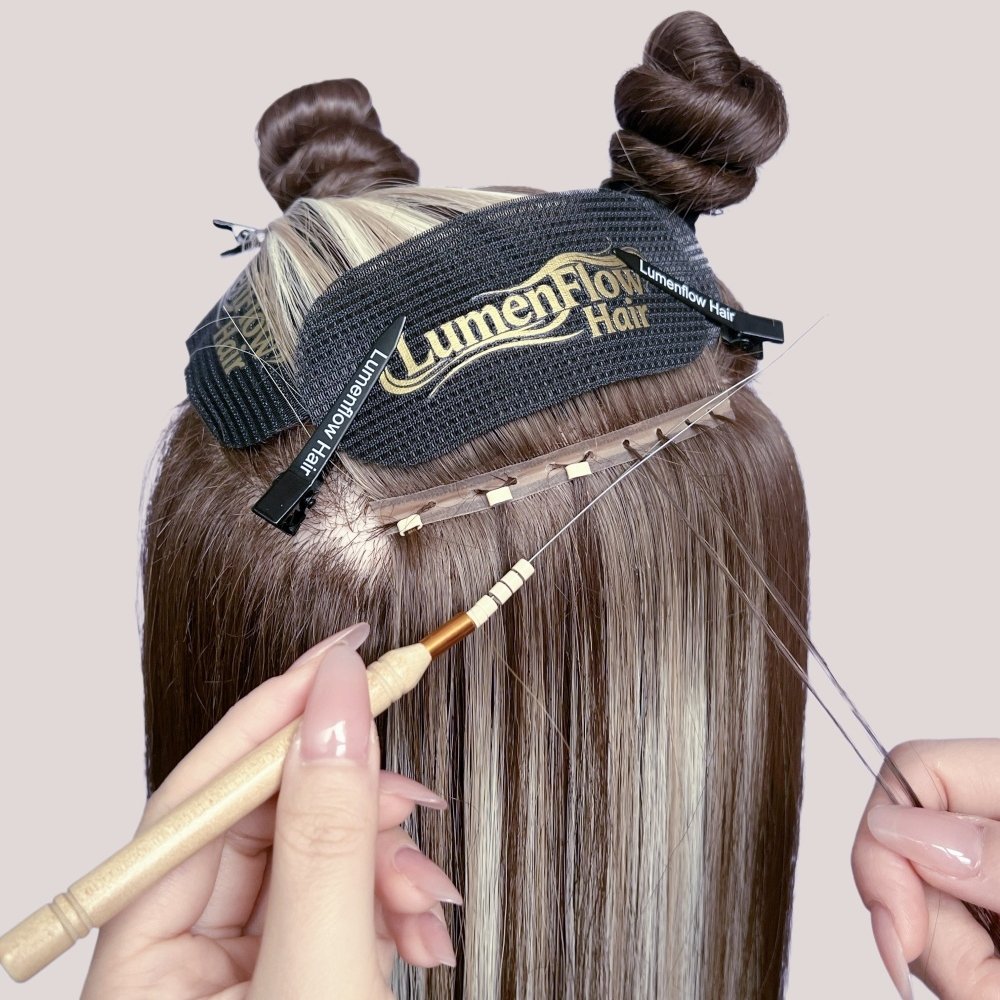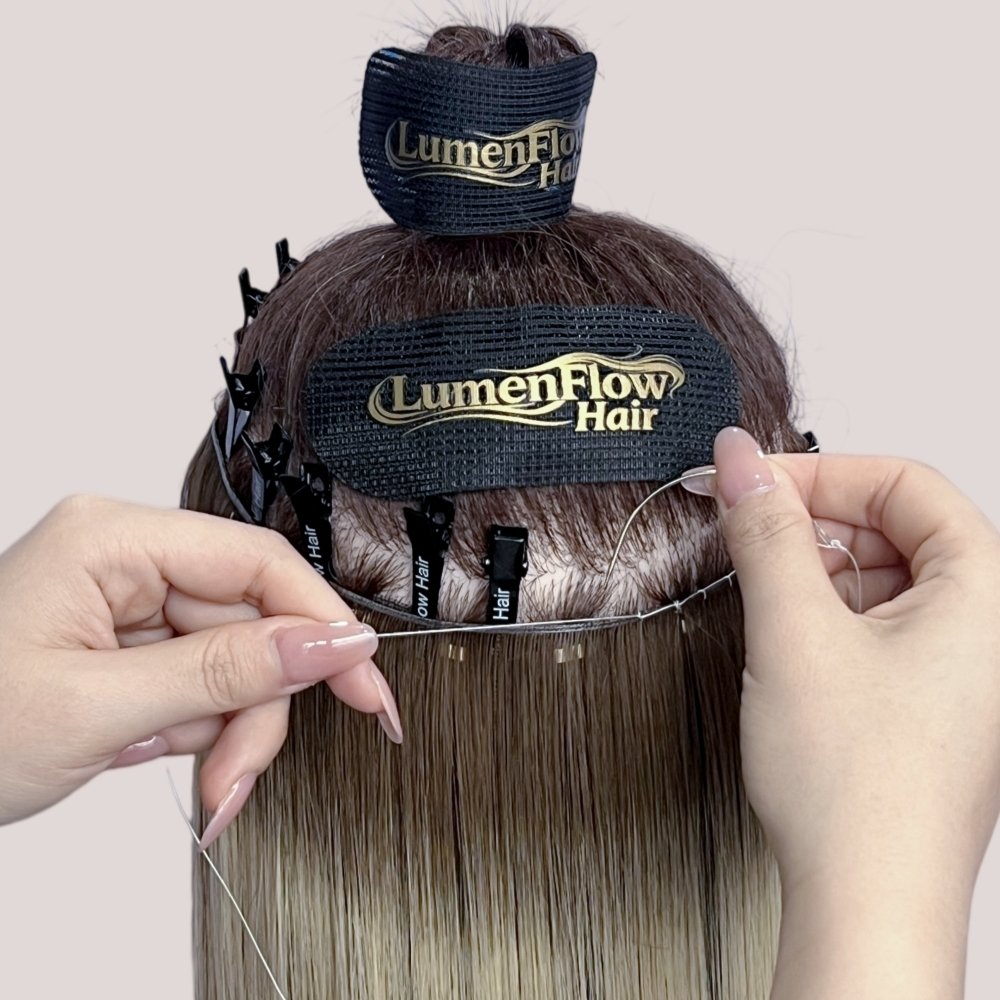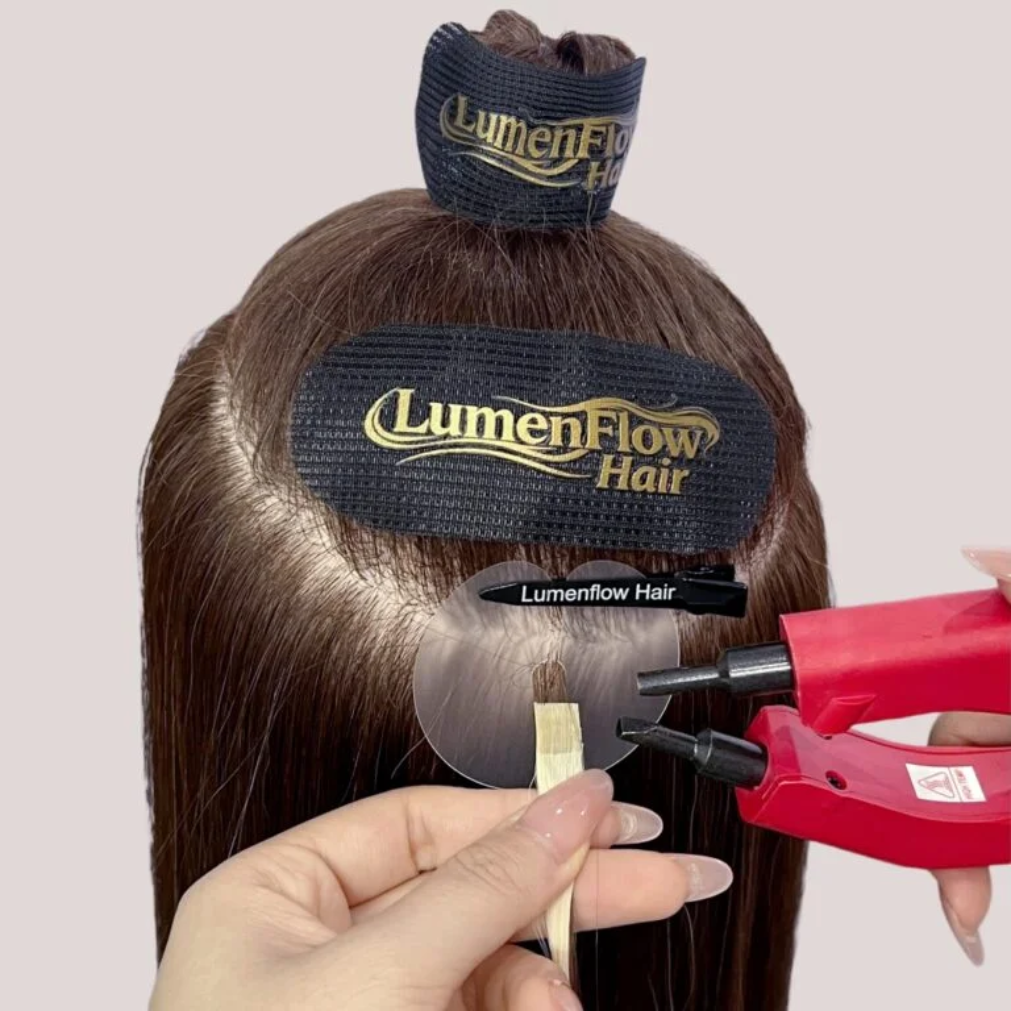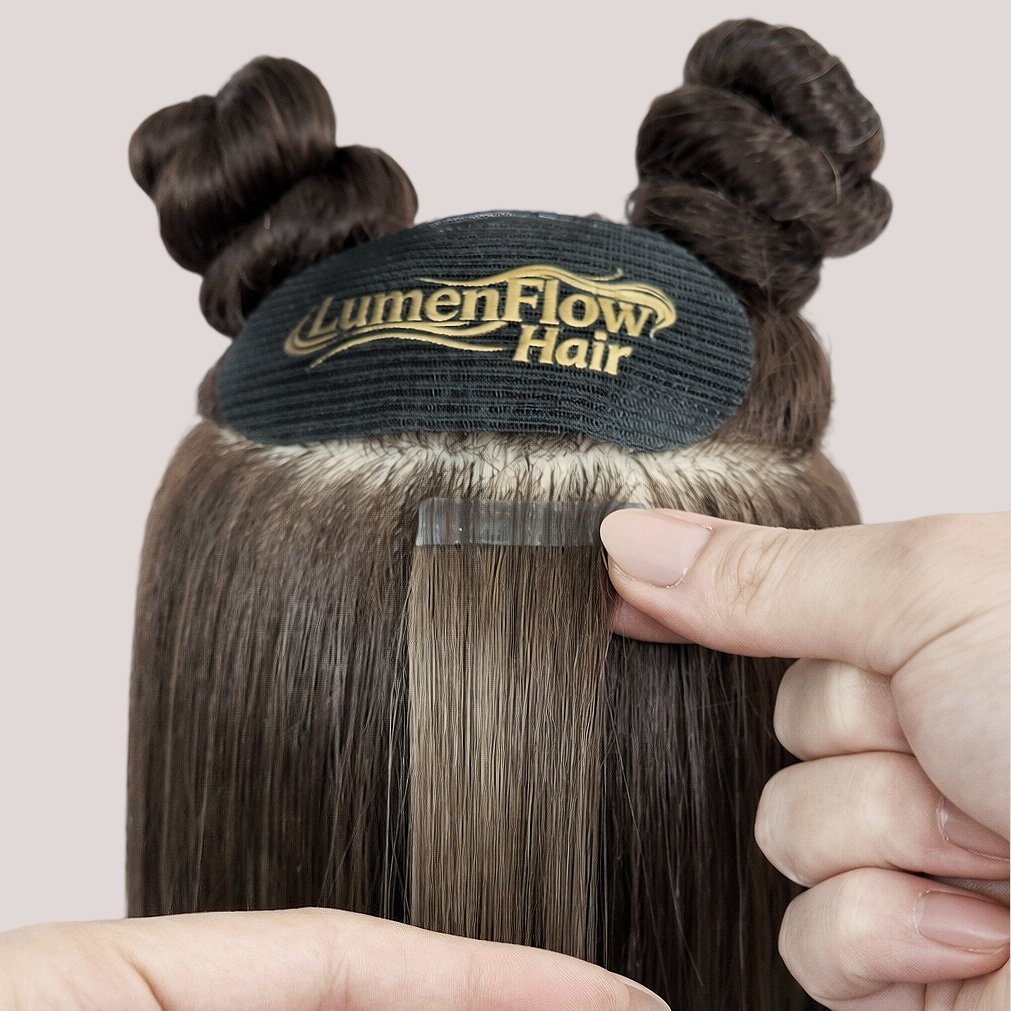
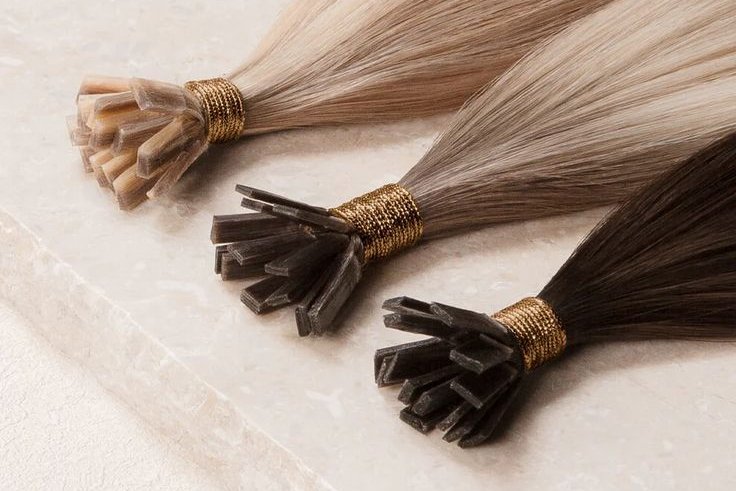
K-Tip extensions are a strand-by-strand hair extension method that uses small keratin bonds to attach individual extension strands to the natural hair. For stylists, the biggest advantage is placement control: K-Tips can be distributed strategically to build length, volume, and movement without relying on a full weft row.
What Are K-Tip Hair Extensions?
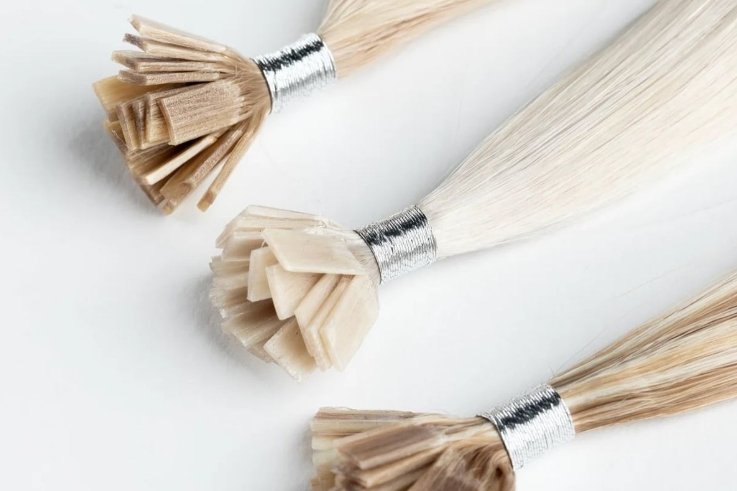
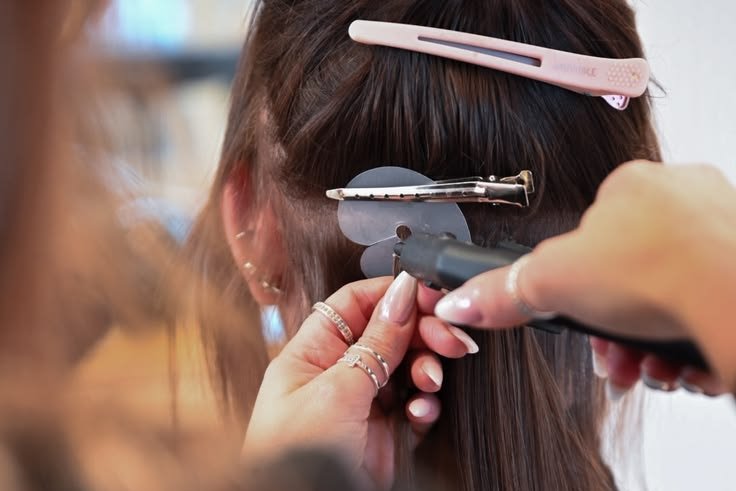
K-Tip extensions are pre-bonded strands that are attached individually to small sections of natural hair using a professional fusion tool.
Because each bond is placed separately, stylists have more control over where density is added. This can be especially useful around areas that need targeted fullness, movement, or more detailed color placement.
K-Tips are a type of keratin-bond, or fusion, hair extension. Individual pre-bonded strands are attached to small sections of natural hair using a professional fusion tool. Terminology varies between brands and salons, but the basic concept is the same: individual extension strands are secured with a keratin-based bond.
Professional stylists can view LumenFlow’s K-Tip hair extensions when planning K-Tip services.
Why Do Stylists Choose K-Tip Extensions?
The main reason is flexibility.
A weft adds hair across a wider section, while K-Tips allow the stylist to control placement strand by strand. That makes it easier to customize density and movement instead of adding the same amount of hair across every area.
K-Tips can also work well for detailed color placement. Different shades can be distributed through specific areas to create dimension without changing the client’s natural hair color.
The finished result still depends on professional placement. Bond size, sectioning, natural-hair strength, and the amount of extension hair being added all need to work together.
Who Is a Good Candidate for K-Tip Extensions?
A good candidate should have enough healthy natural hair to support the individual bonds and should be able to maintain them properly between salon visits.
The stylist should evaluate density, strand strength, hair condition, growth patterns, and the areas where additional length or volume is needed.
-
Are K-Tips Good for Fine Hair?
K-Tips can work well for some fine-haired clients because placement can be highly targeted. However, fine hair does not automatically mean a client is a good K-Tip candidate.
Fine describes the diameter of each strand, while density refers to how much hair is growing in an area. A client with fine strands and good density may require a very different plan from someone with fine, low-density hair.
For a deeper look at client selection, see LumenFlow’s guide to hair extensions for fine or thin hair.
-
When Might K-Tips Not Be the First Choice?
K-Tips may not be the best option when the natural hair is too fragile to support the planned bonds, when certain areas have very limited density, or when the client’s current hair condition makes additional tension inappropriate.
Client lifestyle matters too. Someone who is unlikely to follow professional aftercare or return for regular check-ups may not be the ideal candidate for a fusion method.
The consultation should determine the method, not the other way around.
How Does a Professional K-Tip Service Work?
A professional K-Tip service starts with consultation and placement planning.
The stylist determines where additional density is needed, how the extensions should move with the natural hair, and how the bonds can be positioned for both support and concealment.
During installation, each extension strand is bonded individually to a controlled section of natural hair. Bond placement should remain balanced and appropriate for the strength and density of the client’s hair.
After installation, the client should understand brushing, washing, heat styling, and how to avoid unnecessary stress around the bonds.
Professional removal is also part of the service. K-Tips should be removed with the correct remover and tools rather than pulled or forced from the natural hair.
For more detail, see LumenFlow’s guide to professional hair extension removal.
How Long Do K-Tip Extensions Last?
There are two different timelines to explain to clients: the current installation and the lifespan of the extension hair itself.
LumenFlow recommends a professional check-up every 6–8 weeks while the K-Tips are being worn. This allows the stylist to assess bond condition, natural-hair growth, tangling, shedding, and overall placement.
There is no single fixed removal date that applies to every client. Full removal should be based on the condition of the installation, the client’s natural-hair growth, bond placement, and how the extensions have been maintained.
The extension hair itself can last more than 12 months with proper care.
That means removal does not always mean the hair has reached the end of its useful life.
Can K-Tip Hair Be Reused?
Yes, K-Tip hair may be reused if the extension hair is still in suitable condition after removal.
The old keratin bond can be removed and the extension hair can be re-tipped before another installation. The stylist should assess the condition of the hair before deciding whether reuse is appropriate.
This is different from simply reinstalling the original bond. A proper re-tipping process creates a new keratin attachment before the hair is installed again.
What Should Stylists Look for in Professional K-Tip Hair?
Product quality matters, but so does consistency.
Stylists should look at the quality of the extension hair, the consistency of the bonds, available color options, and whether the product gives enough flexibility for the types of clients they serve.
Bond quality is especially important because every attachment point needs to behave predictably during installation and professional removal.
Color range also matters in strand-by-strand work. K-Tips give stylists the ability to distribute different shades through specific areas, so having the right tones available can make blending more precise.
Frequently Asked Questions About K-Tip Extensions
Are K-Tip extensions good for fine hair?
They can be. Suitability depends on natural-hair density, strand strength, hair condition, placement, and the amount of extension hair being added.
Do K-Tip extensions damage natural hair?
No professional extension method should be described as completely damage-free. Natural-hair condition depends on correct client selection, sectioning, bond placement, installation, aftercare, and professional removal.
How often should K-Tip clients return to the salon?
LumenFlow recommends a professional check-up approximately every 6–8 weeks during wear.
When should K-Tip extensions be removed?
There is no fixed removal time for every client. The stylist should assess natural-hair growth, bond condition, tangling, shedding, and the overall installation before deciding when full removal is appropriate.
Can K-Tip hair be reused?
Yes, if the extension hair is still in good condition. The hair can be professionally removed, re-tipped, and prepared for another installation.
What is the difference between K-Tip and I-Tip extensions?
K-Tips use a keratin bond that is applied with a professional fusion tool. I-Tips typically use a bead-based attachment instead of a fused keratin bond.