A sensitive scalp does not automatically rule out hair extensions, but it should change how the consultation is handled. Before recommending a method, clarify what the client means by “sensitive”—previous pulling, tenderness, itching, a reaction during a past service, or a current scalp concern. There is no single extension method that is automatically best for every sensitive-scalp client.
What Does “Sensitive Scalp” Mean in an Extension Consultation?
Clients use the phrase sensitive scalp to describe very different experiences.
One client may feel tender whenever her hair is pulled into a tight ponytail. Another may be referring to discomfort from a previous extension installation. Someone else may have experienced itching, burning, or visible irritation during a past service.
Those situations should not be treated as the same problem.
General Tenderness
Ask whether the client regularly experiences scalp tenderness during brushing, styling, ponytails, or other everyday services.
This gives the stylist useful context before adding an extension attachment, but it does not automatically determine which method should be used.
Previous Extension Discomfort
If the client says extensions hurt before, ask her to describe what she felt.
Was it pulling, pinching, pressure, or a headache-like feeling? Or was the main concern itching, burning, or visible irritation?
Those details lead to different questions during the consultation.
Previous Product or Material Concerns
If a client reports that a previous extension service, adhesive-based service, product, or attachment material seemed to bother her scalp, document what happened without trying to identify the medical cause.
Knowing when the reaction occurred, what the client felt, and whether the concern was ever evaluated can help determine whether the service plan needs to change or whether further assessment is appropriate before proceeding.
What Should a Stylist Ask Before Recommending a Method?
Instead of asking only, “Do you have a sensitive scalp?” ask questions that clarify what the client actually experienced.
| Client Says | Clarify | Why It Matters |
|---|---|---|
| “My scalp is sensitive.” | What does sensitive feel like? | Tenderness, pulling, itching, and burning are different concerns. |
| “Extensions hurt last time.” | Was the discomfort mainly pulling or skin irritation? | Mechanical discomfort and skin symptoms require different follow-up questions. |
| “Tape made me itchy.” | What happened during the service, and was the reaction ever evaluated? | Do not assume the adhesive was the cause without more information. |
| “My scalp is irritated today.” | Is there current pain, visible irritation, broken skin, or discomfort? | The service may need to be postponed. |
| “My hair is very fine.” | Assess density and strand strength separately. | Fine hair is not the same as scalp sensitivity. |
This does not replace a full consultation. It gives the stylist a more focused starting point when scalp sensitivity is part of the client’s history.
For the broader assessment process, LumenFlow’s professional hair extension consultation guide covers natural hair condition, density, strand strength, color, length, concealment, lifestyle, and maintenance expectations.
Is Sensitive Scalp the Same as Fine or Low-Density Hair?
No.
Fine hair describes the diameter of an individual strand.
Low-density hair refers to the overall amount of hair on the head.
In a salon consultation, scalp sensitivity may describe tenderness, discomfort with pressure or pulling, itching, previous reactions, or other scalp-related concerns reported by the client.
A client can have fine hair without having a sensitive scalp. Another client can have dense, strong hair and still report scalp sensitivity.
Natural hair support, density, strand strength, concealment, and planned extension weight still need to be assessed separately.
How Should Sensitive-Scalp History Affect Method Selection?
A history of scalp sensitivity should influence the questions the stylist asks, but it should not automatically decide the method.
Consider the Client’s Previous Experience
A client whose previous problem was pulling needs a different conversation from someone who experienced itching or visible irritation during a past service.
Do not treat every previous extension complaint as evidence that a particular method is unsuitable. Clarify what actually happened first.
Consider Weight and Placement Separately
A sensitive-scalp client still needs the same professional assessment of natural hair support, placement, and movement as any other extension client.
Sensitivity should never be used as a reason to ignore an installation that feels excessively tight.
If the concern is pulling, pinching, or mechanical discomfort around an attachment, LumenFlow’s guide to hair extension scalp tension covers that issue separately.
Consider the Full Wear Cycle
The first installation is only one part of the service.
Maintenance, grow-out, reinstallation where applicable, and professional removal should also be considered before recommending a method.
A comfortable first appointment does not replace planning for the full wear cycle.
How Do Different Extension Structures Affect the Consultation?
Different attachment structures give the stylist different factors to consider, but they do not create a universal ranking for sensitive-scalp clients.
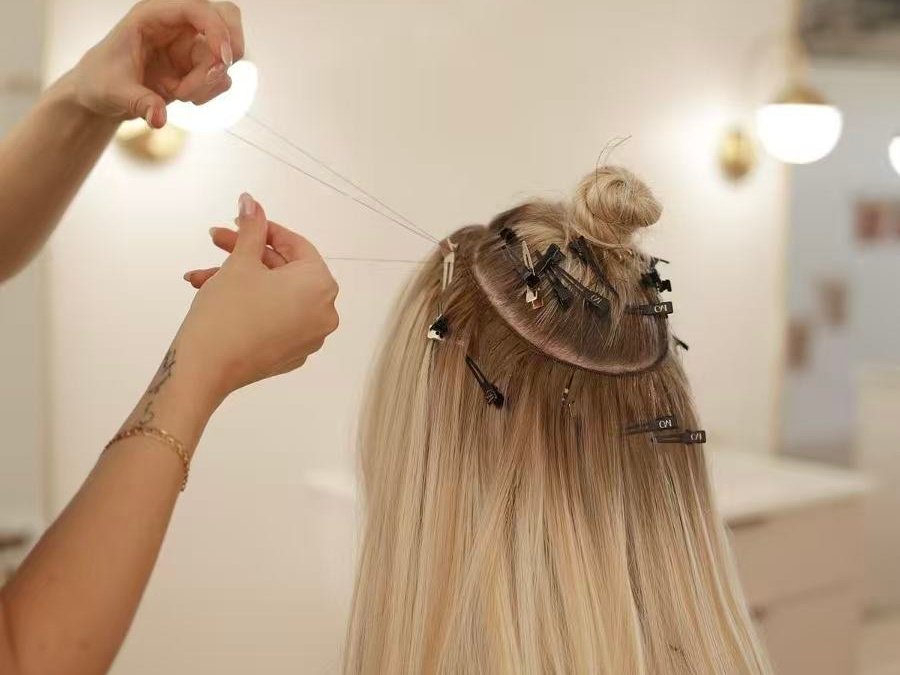
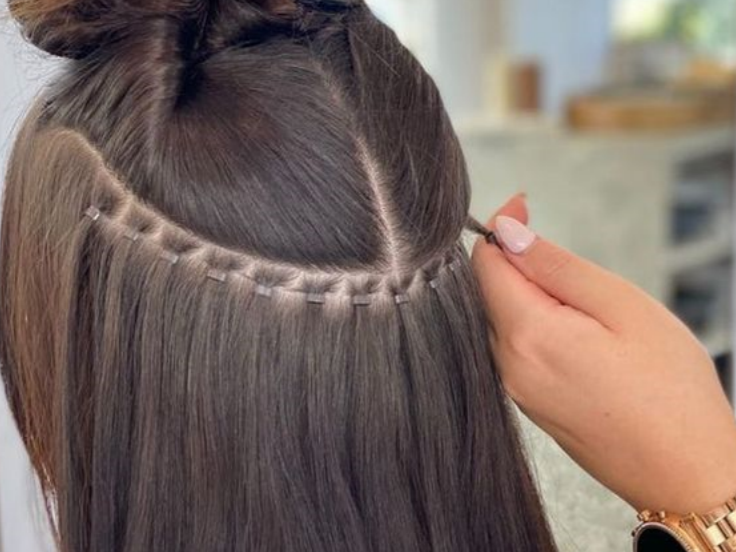
Butterfly Weft is a bead-only method. It does not require sewing, tape, glue, or heat, and uses silicone-lined beads.
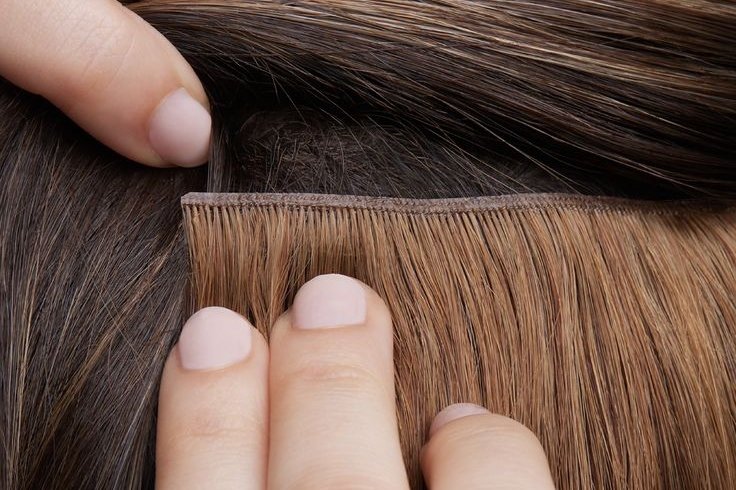
Genius Weft is installed on a beaded row and secured with sewing.
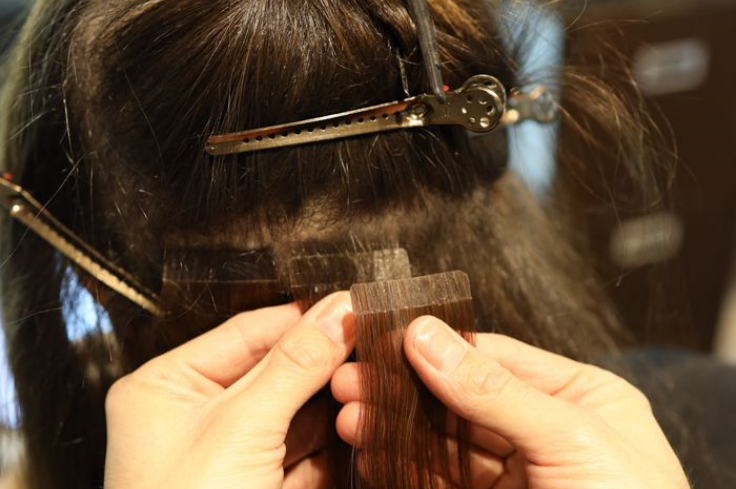
Tape-In uses adhesive-based sections and supports the sandwich method.
K-Tip uses individual keratin bonds installed strand by strand through a professional fusion process.
These structural differences should inform the consultation rather than decide it automatically.
For example, if a client reports a previous concern during an adhesive-based service, clarify what happened instead of immediately assuming all adhesive methods are unsuitable. If the previous complaint was strong pulling from another installation, investigate that history separately.
The appropriate method still depends on the natural hair, previous experience, service goals, placement needs, styling habits, maintenance plan, and professional assessment.
How Is a Sensitive Scalp Different From Extension-Related Scalp Tension?
A client can describe her scalp as sensitive before any extensions are installed.
Scalp tension refers to mechanical pulling or pressure associated with an installation or the way the extensions are wearing.
The two can overlap, but they should not be confused.
If a client with a sensitive scalp reports strong pulling, pinching, headaches associated with the installation, or persistent pain afterward, do not dismiss the complaint by assuming she is simply sensitive.
Assess the installation.
Sensitivity is part of the client’s reported history. Extension-related tension is a mechanical issue that needs its own assessment.
When Should a Stylist Pause the Extension Service?
Sometimes the correct professional decision is not to choose another method. It is to postpone the service.
Be cautious when the client currently has significant irritation, persistent unexplained pain, broken or open areas on the scalp, unusual hair loss, or a concerning reaction that has not been resolved.
The stylist should stay within the scope of a salon service rather than trying to diagnose the cause.
If a concern falls outside normal professional extension assessment, appropriate medical evaluation may be needed before proceeding.
The same applies when a previous reaction remains unclear. Switching attachment methods does not automatically resolve an unexplained scalp concern.
For broader planning around natural-hair support, see LumenFlow’s guide to protecting the client’s natural hair.
What Should Be Recorded for Future Appointments?
Do not rely on memory when a client reports scalp sensitivity.
Record what the client experienced, when it happened, what type of extension service was involved, any products or materials the client associated with the concern, the method ultimately selected, and how the client responded during wear.
Maintenance appointments can add useful information over time.
If the client reports improved comfort, new irritation, pulling in one area, or a repeated concern around the same attachment zone, those notes can help guide the next service plan.
Frequently Asked Questions
Can clients with sensitive scalps wear hair extensions?
Some can. Suitability depends on what the client means by scalp sensitivity, the current scalp condition, natural hair support, previous experiences, attachment structure, and the professional service plan.
What hair extensions are best for sensitive scalps?
There is no single method that is best for every sensitive-scalp client. Method selection should be based on the client’s history, natural hair support, attachment structure, placement, maintenance needs, and professional assessment.
Is a sensitive scalp the same as fine hair?
No. Fine hair describes strand diameter, while scalp sensitivity refers to concerns such as tenderness, discomfort, itching, or reactions reported by the client. They can occur together, but they should be assessed separately.
Is itching after hair extensions normal?
Do not automatically treat itching as a normal adjustment response. Check whether there is also pulling, product buildup, visible irritation, or a previous product or material concern. Persistent, significant, or worsening symptoms should not be diagnosed by the stylist and may require appropriate medical evaluation.
When should a stylist postpone an extension service?
Consider postponing the service when there is significant current irritation, unexplained persistent pain, broken or open skin, unusual hair loss, or an unresolved scalp concern that falls outside normal salon assessment.